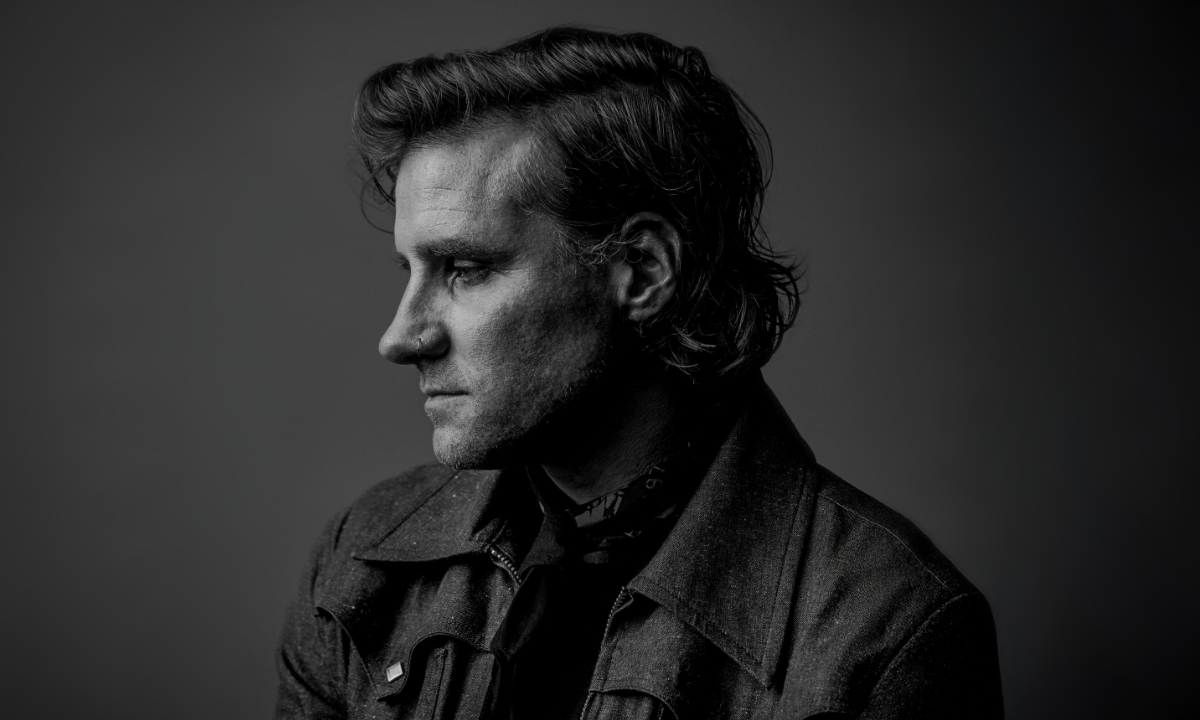
There’s a certain kind of silence that’s louder than anything else. It’s the noise in your head when you’re alone in a parking lot, checking your phone, staring off into nothing. That’s where Will Retherford lives right now, both literally in the visualizer for his latest single “Voices” and figuratively in the work he’s creating as Saynt Ego. He’s not trying to escape grief or quiet the internal dialogue. He’s learning to sit with it, and he’s inviting listeners to do the same.
You’ve said “Voices” is about getting stuck inside your own head. Walk us through how that song came together.
I fixate on a concept, then take musical references and ideas into the studio with Logan Bruhn, creating collaboratively until the song reveals itself. It’s built around restrained beats, atmospheric synths, and emotionally driven vocals exploring the internal noise that pulls you forward and holds you back at the same time.
The visualizer is just you alone in a parking lot. Why was that the right visual?
The visualizer (created by Logan Miller) reflects that liminal space—stillness, motion, and reflection suspended between where you’ve been and where you’re going. It’s simple, but it captures that feeling of being stuck inside your own thoughts in a way anyone can relate to.
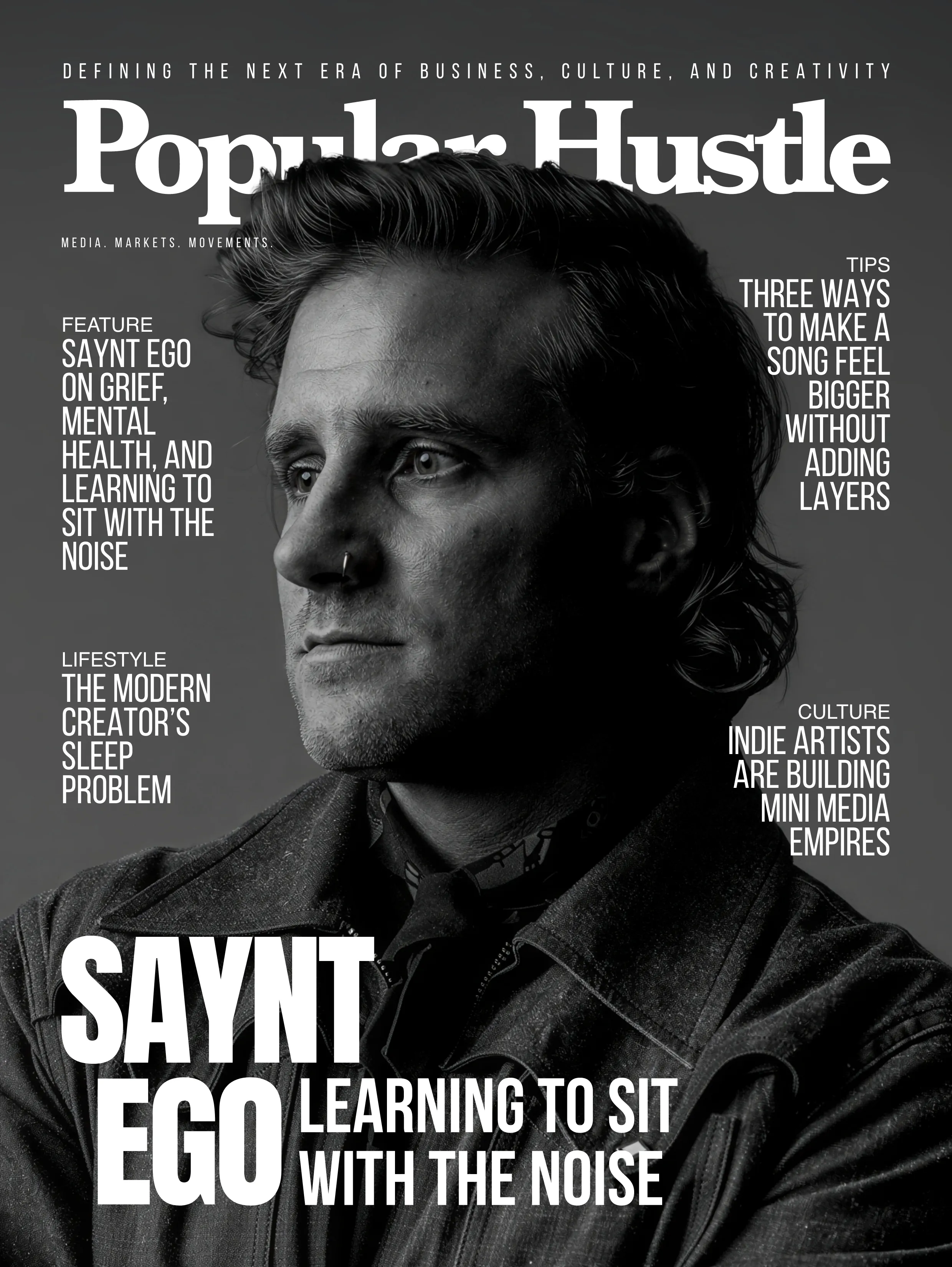
Popular Hustle / SAYNT EGO / Will Retherford
Your music explores grief, mental health, and transition pretty directly. What draws you to those themes?
Learning to create without chasing approval has been huge for me—making art I believe in, whether it’s received or not. Learning to believe in myself first before I expect others to follow. My music tells personal stories of loss, change, and becoming. It’s about learning how to sit with pain, move through liminal spaces, and grow into who you’re meant to be.
You’ve built a whole career as a producer with Citizens of Sound, featured in outlets like The New York Times and Entertainment Tonight. How does that production background shape your approach to making music?
As a producer, I’ve always been learning how to grow a team, move people in roles around like chess pieces in order to make the best possible art. Collaboration is your best friend. My music producer, Logan Bruhn, taught me that the best music is discovered in the room, not perfected beforehand.
For someone who’s never heard your music, how would you describe what you’re doing?
I make cinematic, electronic music about grief, transition, mental health, and becoming. I hope it gives people space to feel, reflect, grow, and breathe.
You’re juggling music releases and your first short film right now. How do those two worlds connect for you?
I knew I wanted to be a filmmaker as a kid, but music became my first true language for creating. The turning point came when I realized I didn’t have to choose. Film and music were always speaking to each other—I just needed to let them exist as one artistic path instead of two separate lives. Saynt Ego is part of a larger creative ecosystem where music, film, and storytelling inform one another.
What’s coming next?
I’m rolling out singles from Liminal Space while completing my first short film “Penny: A Portrait in Motion,” scored with original music. New music through spring, a full album in May, plus select shows, festivals, and the short film this summer. I’m focused on releases, sync, and growing an online audience, letting shows happen intentionally and organically.
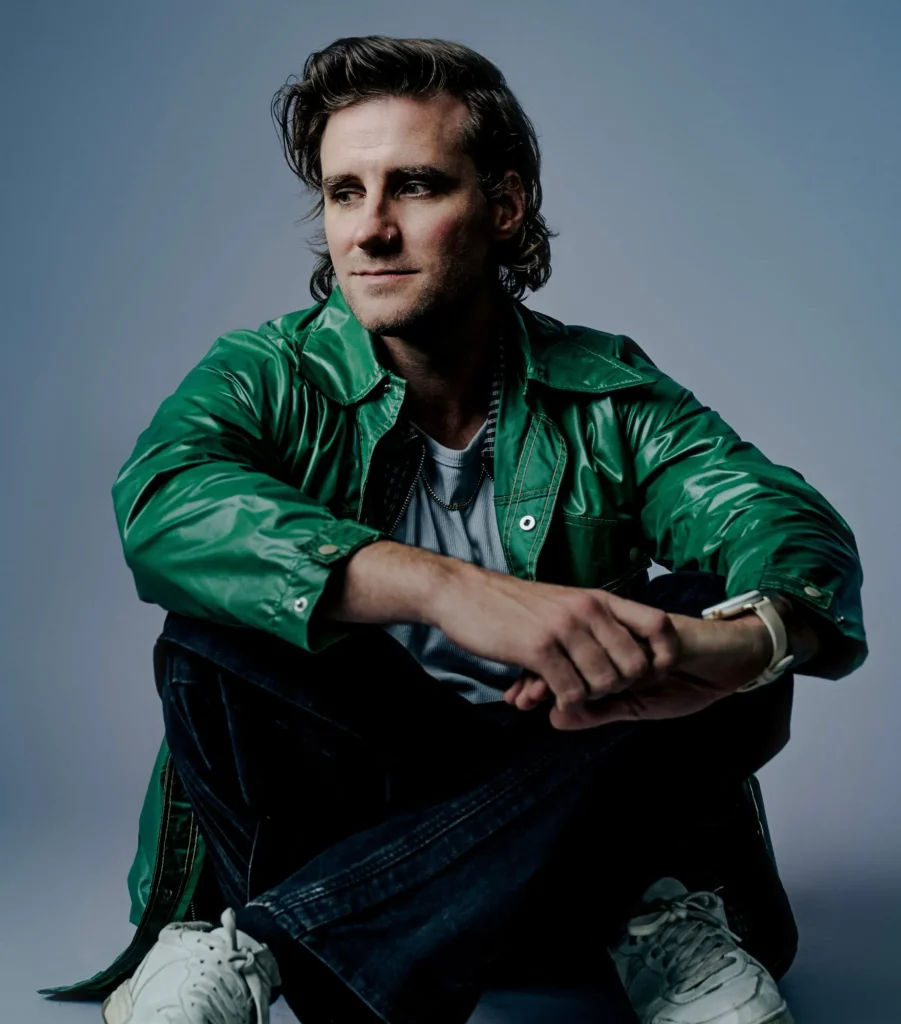
Saynt Ego / Will Retherford
“Voices” clocks in at 3:40, built around a restrained production that values feeling over excess and space over noise. Released December 16, 2025, it’s the first chapter from the upcoming record Liminal Space. Retherford isn’t trying to fix grief or silence the noise. He’s learning to sit with it, and the music creates room for listeners to do the same.
Popular Hustle is the fastest way to access the latest breaking news from around the world. From business to entertainment, Popular Hustle has you covered. Get ready for breaking news, the latest industry happenings, and trending stories happening at this very moment.
Lord Conrad wants you to picture the version of your life where everything went right. That’s the idea behind “Be Yours,” the progressive house single the Italian producer released on June 25th. The track runs 3:19, but the feeling it’s chasing sticks around longer than that.
Born Corrado Garibaldi in Milan, Lord Conrad has spent years pushing European EDM into a US market that leans heavily toward hip-hop. He’s one of the few doing it with any real traction. His video for “One More Day” landed on the Seven Hip-Hop channel, which has more than 1.9 million subscribers, and “Deep Love” got picked up by Chili World, sitting north of 1.2 million. He’s also built a following elsewhere, with over 400k on Instagram and a shuffle-dance hit in “Only You” that’s racked up more than 860k views on its official video. “Be Yours” fits that pattern while reaching for something bigger.
The song itself leans on a soulful hook and a lead synth riff you’ll recognize after one listen. Female vocals wash over a wall of synths, and the arrangement splits the difference between full-throttle rave energy and something lighter and more ethereal. It’s built for a festival crowd but doesn’t beat you over the head. That balance is what keeps it from feeling like every other floor-filler chasing summer playlist placement.
Then there’s the video, which runs 5:16 and plays more like a short film than a promo clip. Lord Conrad performs a futuristic DJ set surrounded by supercars, massive crowds, and a wash of next-gen visuals. At one point the Nasdaq spikes to a million, a wink at his other life as a trader and investor.
What holds the whole thing together is the theme Lord Conrad calls “The Dream of Tomorrow.” The pitch is simple. Bet on your own ambition, believe the vision, and act like the future is already yours. Whether that lands as inspiring or a little grandiose probably depends on your tolerance for maximalism, but he commits to it fully, and the commitment is half the appeal.
There’s a quiet kind of gatekeeping in music production that nobody talks about much. It’s not who you know or which label signs you. It’s the cost of the raw materials. Loops, drum kits, one-shots, the building blocks of a beat, all of it adds up fast, and for someone making music on a laptop at 2am, those price tags can be the difference between finishing a track and giving up on it. Lofi Bug Records, an independent lo-fi label, is trying to knock that barrier down entirely.
The label is currently putting together a huge sample library that anyone can use for free. Loops, drums and sounds, all royalty free, all available at no cost. Lofi Bug describes the goal plainly: make it one of the biggest free packs out there so producers don’t have to worry about clearing samples or paying for the sounds they’re working with. The pack is still growing, with more being added, but the intent is already clear. The label wants to take the financial guesswork out of starting.
That mission tracks with how Lofi Bug itself came together. It started the way a lot of bedroom projects do, with one person messing around on a laptop late at night, unable to sleep. The first beat wasn’t even good, but it felt good to make, and that feeling turned into a habit. The habit turned into a label. Lofi Bug officially launched in 2024 and grew significantly this year, but the scrappy, do-it-with-what-you-have spirit never went anywhere. If anything, the free sample library is that spirit scaled up.
What makes the library more than a giveaway is the thinking behind it. Lofi Bug describes itself as artist focused and artist run, a place where each artist fully chooses what they make and how they make it. The label frames itself as a community for like-minded people who love lo-fi, and it’s direct about wanting newcomers to feel welcome. The message it keeps coming back to is that you don’t need expensive gear or a big budget to make something good. Start with what you’ve got, keep it fun, and don’t overthink it. A free pack of usable, clearance-free sounds is a pretty literal way to back that up.
For the uninitiated, lo-fi is more a mood than a strict genre. Warm tape hiss, dusty drums, mellow keys, the kind of sound built for studying, relaxing, or those late nights when your brain won’t shut off. Lofi Bug leans into that completely, calling its music warm and a little nostalgic, the sort of thing you put on in the background rather than something loud or demanding your attention. The whole point, as the label puts it, is to help someone chill out and feel a little calmer, whether they’re focusing on work or just getting through a rough night.
The roster reflects that low-key, global spirit. Four artists currently anchor the catalog: Ma Malte from Sweden, Mai Aya from the United States, Ukaleb from Canada, and Mao Mao Cat from Korea. They make calm, late-night beats, and the label handles the parts most independent producers dread. Distribution to every major platform, marketing built around growing real listeners, and rights protection. Lofi Bug has delivered more than 100 releases and reaches over 150 stores and platforms worldwide, including Spotify, Apple Music, YouTube Music, Amazon Music, Deezer and Tidal.
The piece that matters most to artists, though, is ownership. With Lofi Bug, you keep all of your rights. You own your masters and your publishing, and the copyright stays yours. The label takes a small cut of royalties for the distribution, marketing and rights work it does, with the rest going to the artist. There’s no fine print designed to take your music away from you, which is a sentence you don’t often get to write about a record label.
The submission process is refreshingly human. Artists send a demo through the contact form, and according to the label, every single one gets listened to personally. No algorithms deciding your fate, just people who actually love the sound. From there, Lofi Bug handles mastering, artwork and distribution, then moves into playlisting and promotion so the artist can get back to making the next track. The label also publishes a guide breaking down how to distribute lo-fi music step by step, covering everything from prepping clean metadata to the difference between going the DIY aggregator route and releasing through a label.
All of which makes the free sample library feel less like a marketing stunt and more like the natural extension of how Lofi Bug already operates. Lo-fi has always been about accessibility, about anyone with a laptop and an idea being able to contribute. A massive pack of sounds, handed out with no strings attached, might be the most honest version of that idea anyone’s tried.
Benjamin Irvine knows generators. Six years of U.S. Army Airborne service, a career engineering power systems, the kind of training where you don’t improvise your way through a job. None of that explains why he started writing songs later in life, or why those songs are now funding a brain-science platform for kids.
The music came first, almost by accident. Irvine wrote a track called “Never Be Lonely” for his 30th wedding anniversary, a gift to mark thirty years with his wife. Finishing it showed him that music could carry things plain words couldn’t, and that realization sent him back through poems he’d written over the years, reimagining them as full songs. He brought in vocalists, musicians, and producers through Fiverr to turn rough acoustic sketches into finished recordings, handling the words and emotional direction himself while collaborators shaped the arrangements and performances.
Here’s where it gets interesting. The point of all this music was never just to put songs on streaming services. Benjamin Irvine built the catalog to fund NeuroKnights, an educational platform he created to teach kids how their brains actually work.
NeuroKnights is built around a cast of brain-based characters, things like Sir Cortex, Synapse, Amygdala, and NeuroShield, who guide children through stories, games, and challenges about memory, focus, emotional control, and decision-making. There’s a kids portal, a parent control center, brain games, and progress tracking, all kept inside a child-safe environment with no ads. It’s aimed at the 7-to-12 crowd.
The mission comes from a specific frustration. Benjamin Irvine doesn’t think good education should depend on whether a kid happens to live somewhere with strong schools and reliable technology. Plenty of children don’t, and NeuroKnights is his attempt to reach some of them anyway. There’s a forward-looking piece too. Kids are growing up alongside AI that’s reshaping how people learn and work, and rather than treating that as something to fear, the platform frames it as a tool worth understanding.
You can see that thinking in the storytelling. One book concept follows a kid named Sam who takes a sip of an energy drink and accidentally wakes up Addiction, a villain who wraps the brain’s reward center in glowing chains and keeps whispering that Sam needs more to feel okay. The brain’s heroes have to team up to pull him back before he loses the joy he had before. It’s a real lesson about choice and self-control, dressed up in a story a 9-year-old will actually sit through.
What makes this project credible isn’t just the concept. It’s who’s running it.
Before any of the music or the characters, Benjamin Irvine spent six years with U.S. Army Airborne at Fort Bragg. After that he built a career in power generation, working as a generator engineer with a background in turbine and generator service leadership, project management, and advanced electrical testing. He’s a GS Generator Specialist trained through GE Power Systems University, with a business management degree from the University of Phoenix on top of it.
That’s not a typical resume for a children’s education startup, and it shows in how the platform is put together. Engineering work and military service both reward the same thing: structure that holds up under pressure. You don’t improvise a turbine inspection, and you don’t wing safety protocols around an Airborne unit. Irvine brings that same discipline to a product where the stakes are kids’ attention and trust. The child-safe design, the parent controls, the progress tracking, the insistence on no ads, these read less like marketing checkboxes and more like the work of someone trained to build things that hold up under scrutiny.
The music itself is finding an audience while the bigger project takes shape. Irvine reports that songs including “Heads High” and “We Stayed Anyway” have picked up radio play across the U.S., U.K., Germany, France, Italy, Ireland, and a long list of other countries, with airplay he puts at more than 200 stations worldwide. His most-streamed tracks run under Platinum Edition titles like “Heads High,” “Make It Real,” and “STAY,” all available on his Spotify playlist.
Music’s been in his life longer than any of this, for what it’s worth. As a kid he toured to gigs with his grandfather, who fronted a country western cover band called Lloyd Meddock and the Melody Boys. He’s still writing, with five songs in various stages of development, and he’ll tell you he’d love to hear Kane Brown take on a country track he wrote called “Built For the Climb.”
The throughline holds. Irvine still doesn’t improvise. The discipline that ran through six years of Airborne service and a career in power systems is the same thing now holding up a platform built for kids who might not have much else, funded by songs that started as a gift. You can find the rest at NeuroKnights.com or on Facebook and TikTok.