Culture
Beast Put a 15-Metre Céline on a Ruined Farmhouse

At the end of August 2026, the Italian street artist headed into the countryside near Reggio Emilia and installed a gigantic portrait of French novelist Louis-Ferdinand Céline on an abandoned, half-collapsed farmhouse in the middle of pretty much nowhere. The piece is called “Want Justice? Here Justice”. It measures roughly “15 metres high by 6 metres wide”, and it is the biggest work Beast has made so far.
No festival. No shiny city-centre façade. No sponsor logo underneath it. Just a dead French writer, a crumbling building, a cherry picker and a field in Emilia. Very Beast.
The artist has been working in public space since 2009, producing more than 200 interventions across over 40 cities in Europe, the US and Japan. But over the last three years he has developed a particularly odd obsession. Rather than chasing pop icons or whatever happens to be trending that week, Beast has been dragging writers, philosophers, artists and thinkers back into view. Albert Camus. Carl Gustav Jung. Philip Roth. Jackson Pollock. Noam Chomsky. And now Céline. He puts them on ruined buildings, usually far from the crowds, in places where the architecture looks as if it gave up years ago.

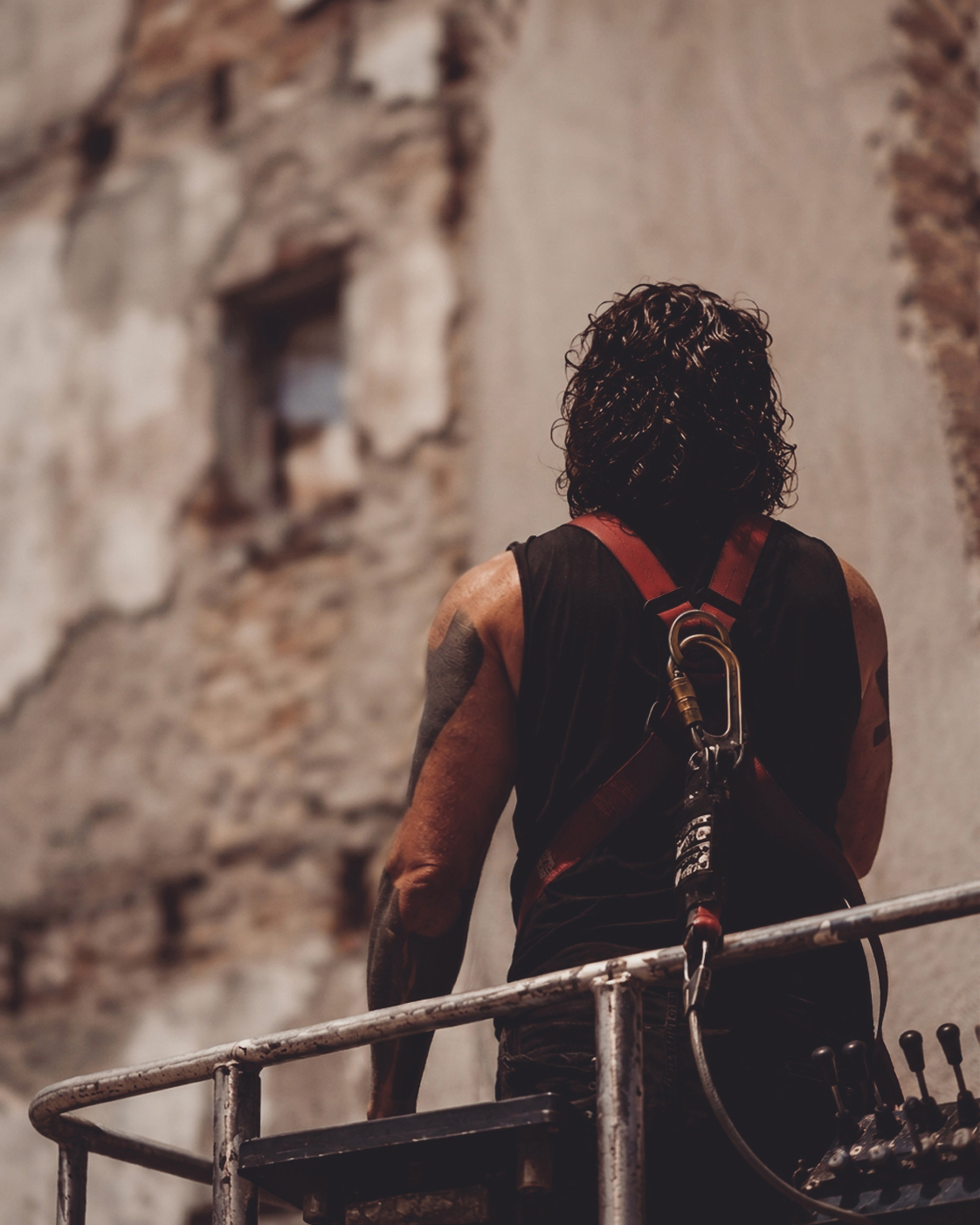
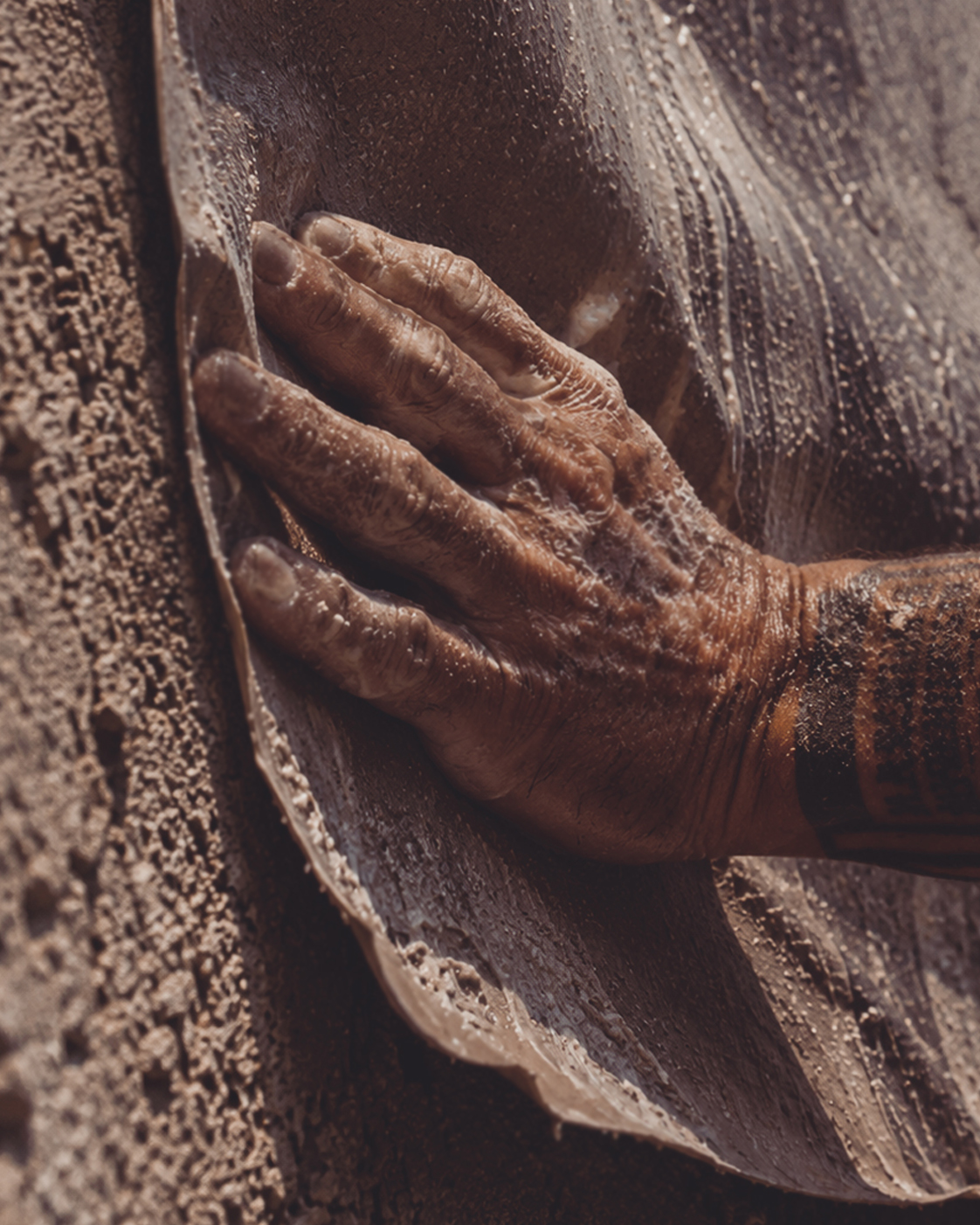
The technique is even stranger. For every work, Beast first photographs the actual wall in obsessive detail. Cracks, stains, missing plaster, damp marks, erosion, all the stuff a sensible person might pay someone to repair. He then takes that exact texture and digitally works it into the portrait. The image is printed on paper at huge scale, taken back to the original building and pasted onto the exact same wall. Then comes the properly fiddly bit: lining up the cracks printed across the portrait with the real cracks underneath. Yes, really.
It is an absurd amount of work to make something look as though it was never added in the first place. When it works, the portrait almost disappears into the building. The skin of the person becomes the skin of the architecture. A crack runs through the face because the crack was already there. The series is called “…and we hired a bloke to fix the wall”, which tells you quite a lot about Beast’s sense of humour. Nobody fixes anything. The walls stay knackered. Beast simply gives all that damage another job.
Céline is not exactly the safe option either. He was one of the most influential French novelists of the twentieth century, an extraordinary stylist and, to put it mildly, a deeply problematic human being. His antisemitic writings remain indefensible, while books such as “Journey to the End of the Night” continue to loom over modern literature. This isn’t Céline fan merch at 15 metres high. It is closer to asking what happens to important cultural figures when history refuses to make them conveniently good, bad or forgettable.
And this is where Beast’s peculiar corner of street art gets interesting. He has made a habit of doing something almost nobody else in the scene seems especially interested in doing: taking cultural figures from history, giving them monumental scale, and putting them somewhere miles away from the usual attention economy. It is almost anti-Instagram street art. The farmhouse will keep deteriorating. The paper will fade. Céline, annoyingly enough, may be around for a while.
Instagram: @beastwalls