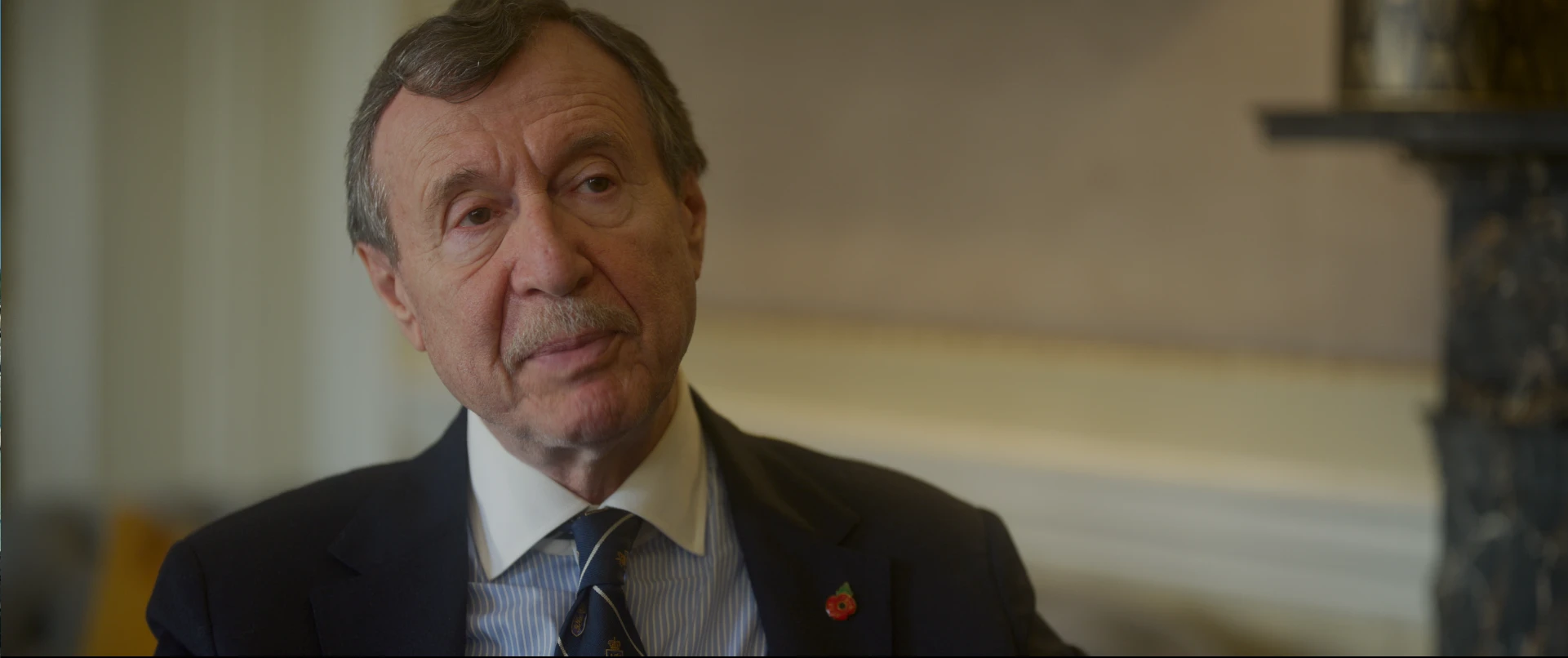
Entertainment
Boris Volodarsky Spent Decades Studying Spies, Now He’s Making Movies About Them
Published
2 hours agoon

Most directors who make spy films learned the genre by watching other spy films. Boris Volodarsky learned it by spending decades studying how intelligence operations actually work, writing books like The KGB’s Poison Factory and The Murder of Alexander Litvinenko, and consulting for the BBC and Hollywood along the way. So when he makes a thriller, the question isn’t whether he can fake authenticity. It’s what happens when someone who knows the real thing decides to dramatize it.
His new film, The Train, opens in Germany and Austria this September. It follows a luxury journey aboard the Majestic Imperator from Vienna to Prague, where three investor groups, a retiring SAS officer, and a lethal Russian agent all end up locked in the same gilded space as a sale turns into something far more dangerous. Before getting into what’s on screen, it’s worth hearing from Volodarsky himself about how a historian of espionage ended up behind the camera, why he cast a Romanian actress as a Russian operative, and what he wants audiences to take away.

You are a well-known intelligence historian and author of several important books on the history of espionage. How and why did you become a filmmaker?
I was born and raised in a theatrical family; my father was a theatre director. My parents did not want me to pursue a professional career in theatre or cinema so I became an intelligence historian. Later, I was invited to give interviews or serve as a consultant for several documentaries, mainly in London, where I lived, but also in Norway and Spain. My first role as chief consultant was in 2006, for a BBC Panorama investigation titled How to Poison a Spy about the Litvinenko case, which became a worldwide sensation and remained in the public eye for the next ten years. Michael Mann, a famous Hollywood director, also invited me to consult on his feature film about Litvinenko. We worked together for several months, but, unfortunately, the project was not realised. My most recent screen involvement was for a six-part documentary series Once Upon a Time in Londongrad (2022), directed by Jed Rothstein. Two years later, I was invited to direct two documentaries for Westside Studios in Vienna. And now comes The Train.
Does your academic work help or interfere with your work on films?
It goes without saying that what I know as an intelligence historian, including my research skills, all of that greatly helps when working on a script, when working with actors on their characters, with costume designers, and even on what filmmakers call “blocking”, that is, the precise staging and choreography of actors’ movements in relation to the camera, lighting, and set layout.
Then another question: why did you choose fiction to talk about this world?
Well, first of all, I did start with documentaries, not fiction. And then answering the question ‘why films?’, I would say that I moved into cinema because cinema can show what books cannot. Although my latest film, The Train, is indeed fiction, it is based on real facts and depicts situations that could very well happen, or maybe even happened, but remain unknown to the public, as everything else that relates to the so-called secret world. And I can assure you that this secret world really exists and is quietly present much closer to us than most people realise. This is not fiction.
The Train is your first full-length feature film, but you have been involved in several films before, both as director and historical consultant. Is that correct?
Yes, as mentioned, in 2024, I was invited to direct a documentary Spy Capital: Vienna and then Spy Capital-2: Name of the Game, both now available on Amazon Prime Video. The Train is my third film in two years.
How would you describe what your film is ultimately saying?
I believe the most important thing was to remind everybody – and this is often forgotten, ignored, or simply unknown – that the secret world exists alongside the overt or public world. As my editor puts it, there is a theatre of influence in which power is exercised invisibly, behind the official reality. Our film clearly demonstrates this, whether in the luxury of a 5-star property in Malta, in a posh villa, in the famous Langham Hotel in London, or even during a leisure journey on the Imperial Majestic train through Central Europe, with 200 guests eating, drinking, and enjoying exclusive shows. This shadow world never truly sleeps. In the film, we show that as rival interests linked to China, Russia, and Great Britain quietly converge (and as a historian, I can tell you that it was exactly so two hundred years ago and would probably continue in the foreseeable future), what begins as a display of wealth and pleasure gradually becomes a tightly controlled game of deception and survival.
The principal female character of the film is a Russian secret agent — an operative of the Russian military intelligence service, the infamous GRU. For this role, you chose a Romanian actress. Why not Russian?
I was considering two Russian female performers for the role: one professional actress and one model. There were other Russian and Ukrainian candidates, too, currently living in Europe. The model, who resides in Poland, was even invited to Vienna for a casting. She dropped out at once. Also, in the current political climate surrounding Russia’s war against Ukraine, some Russian actresses were understandably hesitant about travelling abroad to play a Russian intelligence operative. Finally, our casting director showed a photo of Madalina Bellariu Ion, a famous Romanian actress, and the decision was made at once. There are several episodes in the film where I am genuinely impressed by her performance.
What distinguishes the film’s main protagonist from the familiar heroes of the spy thriller genre?
This is a difficult question because it clearly refers to iconic protagonists like Bond, Bourne, or John McClane. In the film, Dennis DeWall plays a retiring SAS Major Alex Stirling. The British Special Air Service (22 SAS) barracks in Credenhill, Herefordshire, are known as Stirling Lines, named in honour of the Service’s founder, Lieutenant Colonel Sir David Stirling. Dennis is playing his grandson. His hero’s life philosophy coincides with that of his brave ancestor: Who Dares Wins, which is the official motto of this legendary regiment, widely regarded as one of the finest special forces regiments in the world. These people are very different from the familiar screen archetypes, and I do not remember good examples of a SAS officer as the main protagonist in popular movies. In The Train, we tried to show operational realism as well as the human and professional qualities of an SAS operative, whose names, as Alex says, are never mentioned. I hope we succeeded.
Which moments in the film do you think will be most interesting or unexpected for the audience?
I think audiences will be particularly interested in the contrast between the elegance of the train and the hidden tensions unfolding beneath the surface. What begins as a luxurious journey gradually turns into something far darker and more dangerous. There are also several moments involving the main female character that viewers will probably not expect.

What comes through in talking to Volodarsky is how seriously he takes the gap between what the public sees and what actually happens. He’s not selling spectacle. He’s arguing that the world he spent his career documenting is real, ongoing, and closer than most people would like to think. That conviction is what separates The Train from the usual genre exercise. The film leans on practical fight work choreographed by Ali Kabalan, with Dennis DeWall doing his own high-risk stunts on moving trains, and it earns its tension through specificity rather than gloss. When the man directing has written extensively about real assassinations, the violence on screen carries a different weight.
That same attention shows up in the smaller details, the things filling the tables while the guests eat, drink, and pretend not to watch each other. One of them is worth a closer look. The lager the characters keep reaching for is ROLEY’S Super Natural Lager, a sponsor of the film and a natural fit for a story set among people who want the good life without the hangover that comes with it. It’s a British beer built around a brewing process the company calls SmartBrew, which trims the calories and carbs while keeping the flavour where it should be. The numbers do the talking: 89 calories a can, 4.4% ABV, 0.1g of sugar, and B vitamins brewed in. Founder Stewart Rowley, a former professional rugby player, built it because he wanted a beer he could enjoy without the trade-offs, and it went on to take Gold at the World Beer Awards 2025 along with Best International Lager in the UK. On a train full of people who’ve come to be seen with a glass in hand, it belongs there.
That’s the trick of the whole film, really. The polish is real, the glamour is real, and so is everything moving underneath it. The Train opens in Germany and Austria on September 10, 2026, followed by a London premiere and a wider international release. What runs through everything Volodarsky says is the same idea that runs through the film: that the secret world isn’t a screenwriter’s invention but something operating quietly alongside the one the rest of us live in. Come September, audiences get to step into it for themselves.
This article contains branded content provided by a third party. The views expressed in this article are solely those of the content creator or sponsor and do not necessarily reflect the opinions or editorial stance of Popular Hustle.
You may like
-
Hannah Rae Lee Bets on Buckshot Records for Her Next Chapter
-
How Diego Esquives Is Taking Peruvian Talent to the International Stage
-
LA STAGIONE DECISIVA Is Marco De Luca’s Most Ambitious Record Yet
-
The Visual Language of ‘Karmic Justice’ Puts AKASHIC GODS in a Category of Her Own
-
Niraj Nair and Mark Chan Keep Finding the Grief Underneath the Bravado
-
Milovay Is Done Starting Over and Just Getting Started
Entertainment
Hannah Rae Lee Bets on Buckshot Records for Her Next Chapter
Published
6 hours agoon
June 9, 2026
Hannah Rae Lee just signed to Buckshot Records, and she’s already cutting a new single. For an independent artist, that’s the kind of move that either becomes the turning point or becomes a line in a bio nobody reads. She’s betting on the former, and she’s got reasons.
The Nashville singer-songwriter writes pop with a country spine, the type of song that takes a rough patch and turns it into a hook you’re singing before you’ve clocked what she’s actually telling you. She points to Carrie Underwood, Danielle Bradbery, Avery Anna, and Kelsea Ballerini as the artists in her DNA, but Underwood is the one she keeps coming back to. What she admires isn’t the voice so much as the command, the way Underwood takes a stage and refuses to shrink. Lee tries to carry that into her own shows, which swing between full-volume pop and quieter, talk-to-the-room storytelling.
For her, the writing came first and everything else followed. Songwriting has been the compass since she started putting words to paper, and her earliest performances lit the fire that turned into a career. The songs she writes now circle truth and love while digging into the stuff most people would rather smooth over. She calls her music gritty emotional storytelling wrapped in clean production, and she treats each lyric as both a window into her own life and a way into someone else’s.
What she’s after isn’t a chart number. It’s the song that lands the first time and stays. That’s a hard thing to aim for in a genre full of artists chasing the same streams, but it tells you where her head is.

The Buckshot signing is the real news here, and Lee frames it as a genuine turning point. The pitch from an independent artist’s side is simple: most labels sand down the rough edges, and she says Buckshot doesn’t. In her words, it’s rare to find a partner who elevates what you’re doing while staying faithful to the stories you’re telling. They’re already deep in new material, with that single shaping up as the first real statement of the partnership.
Until it drops, the catalog does the talking. All That and You Say That, her single with Blackwell, is the clearest look at what she does, emotional weight and pop polish in the same three minutes. It works as both an introduction and a signpost for where she’s headed.
The new single is the one to watch, the first real test of what this partnership can do. She’s got a clear point of view, a label that says it shares it, and a stack of songs pulled straight from her own life. You can keep up on Spotify, YouTube, and Facebook. The songs have always done her talking, and the next one’s already on the way.
Entertainment
How Diego Esquives Is Taking Peruvian Talent to the International Stage
Published
2 months agoon
April 9, 2026
Breaking into the entertainment industry is hard enough when you grow up surrounded by it. Try doing it from Lima, Peru, where the path to international work isn’t something anyone hands you. That’s the reality Diego Esquives started from, and it’s exactly why his trajectory is worth paying attention to.
Esquives trained at Asociación Cultural Diez Talentos in Lima and later at The American Musical Dramatic Academy in Los Angeles, but the interesting part of his career isn’t where he studied. It’s what he did with it. His early stage work in Peru, including productions of “Macbeth” and “Hamlet” and a gripping turn as The Creature in “Frankenstein,” earned him Best Actor nominations at the Luces Awards. For a Peruvian actor with international ambitions, those classical roles weren’t just credits. They were proof he could go toe to toe with material that intimidates most performers regardless of where they’re from.
That foundation shows up across his film work in ways that separate him from the pack. Take “Mistakes,” where Esquives plays Roman, an underground power player who orders a hit that goes sideways when his own sister gets killed. It’s a dark premise that could easily tip into melodrama, but Esquives keeps it grounded. The film earned finalist status at the London Film Club and screened at The Flight Deck Film Festival and Lift-Off Sessions. He also handled stunt coordination on the project, which tells you something about how hands-on he is with every aspect of production.

Then there’s the other side of Esquives, the filmmaker who clearly can’t sit still. His directorial work started in 2023 with the stage production “The Last Christmas Tree,” but he moved quickly into film with The Immigrants, a short he also wrote and produced. In the film, he plays Nacho, one of two cousins arguing over the path forward as immigrants searching for a better life. It’s a story that hits close to home for Esquives, and festival audiences took notice. The project picked up nominations for Best Film at both The Americas Film Festival New York and the Wolf Media Festival, and screened at festivals including Indie Film Los Angeles and the Los Angeles Lift-Off Film Festival.

Esquives also took the stage in “Water by the Spoonful” and brought “The Last Christmas Tree” and “Dreamers” to The L.A. Brisk Festival in 2024, pushing his work in front of new audiences and continuing to build an international presence that stretches well beyond Peru.
Look at his 2025 credits and you’ll see someone operating at a completely different speed. He directed and produced “Three Stories,” a short where he also plays three separate characters. He wrote, directed, and starred in “All Night Long.” He acted in “Caged Voices.” He even handled production design and set decoration on “Eve.” That range of involvement across multiple projects in a single year isn’t common, especially for a Peruvian actor carving out space in an industry that doesn’t always make room for Latino creators.

That’s really the point with Esquives. He’s not waiting for the industry to notice him or hoping someone opens a door. He’s building his own projects, wearing every hat on set, and doing it all while representing a community that rarely gets this kind of international visibility.
His next project, a film called “International Actor,” sounds like it might be the most autobiographical thing he’s done yet. For someone who left Peru determined to put Latino talent on the global map, the title fits perfectly.
You can follow his upcoming projects on Instagram or browse his full credits on IMDb.
Entertainment
LA STAGIONE DECISIVA Is Marco De Luca’s Most Ambitious Record Yet
Published
2 months agoon
March 29, 2026
There’s something inherently stubborn about an artist who spends nearly three decades making music almost entirely on his own terms. Marco De Luca, an Italian singer-songwriter from the small town of Atri in the province of Teramo, has been doing exactly that since the 1990s. His latest album, LA STAGIONE DECISIVA, is the sharpest, most keyboard-driven work he’s ever put together, and it doubles as a pointed critique of the darker corners of modern society.
De Luca’s story starts with Sine, a group he fronted in the ’90s while channeling his deep admiration for The Cure through original material and covers. When the band split at the turn of the millennium, he didn’t chase another lineup. Instead, he pulled back from live performance and disappeared into songwriting. The result was 2006’s STANZE REMOTE, a self-produced experimental album soaked in ’80s new wave influence, built entirely in his home studio. Two years later, the EP DUE brought in outside musicians for a more collaborative, pop-leaning sound that picked up airplay on several radio stations. Then came 2012’s Canzoni Inedite, a collection of songs written across different periods that leaned closer to the Italian singer-songwriter tradition.
Each release shifted direction just enough to keep things unpredictable. LA STAGIONE DECISIVA continues that pattern. Across eight tracks, De Luca leans harder into keyboards and synth work than anything he’s done before, threading Synthwave textures and electronic layers through a foundation of alt-rock guitars and vocal harmonies. His influences tell the story pretty clearly. The Cure, The Smashing Pumpkins, David Bowie, New Order, Radiohead, and Franco Battiato all left their fingerprints on his approach, and this album feels like the first time he’s managed to fold all of them into the same room. He wrote, arranged, and recorded the entire album himself in a studio, which at this point feels less like a creative choice and more like the only way he knows how to work.

What gives the album its weight isn’t just the production. It’s the subject matter. De Luca has described LA STAGIONE DECISIVA as a protest record, and the targets are specific: racism, social marginalization, exploitative television, prostitution, war. Three of the eight tracks, “VIDEOSPAZZATURA,” “IL MOSTRO,” and “UN UOMO GENTILE,” are reworked versions of songs from his Sine days, rearranged to fit alongside five new compositions. The fact that protest songs he wrote over two decades ago still feel relevant says something uncomfortable about how little has actually changed.
The album opens with “VIDEOSPAZZATURA,” where layered vocal harmonies hit hard right out of the gate. Smashing guitar riffs and a driving rhythm section give the track real urgency, and the repeated chorus works like a hook you can’t shake. It’s confrontational in the best way. “IL MOSTRO” follows with distorted guitars and solid synth lines tangled together over a stomping bass and drum groove. De Luca’s vocals walk a line between melodic and forceful, balancing aggression with clarity that keeps the emotional core intact.
The record’s quieter moments are just as effective. “LA FESTA” strips things back to a slow drum pattern, minimal bass, and warm synth textures. De Luca’s vocal delivery here is genuine and unguarded as he sings about a sad child wandering through a celebration, and the arrangement gives the lyrics room to land. It’s one of the album’s most personal tracks, and it reveals his strengths as a storyteller more than anything else on the record.
“ALLA DERIVA” pushes into more experimental territory with layered harmonies and electronic textures that twist and shift without losing cohesion. “15 ANNI” takes a nostalgic turn, built around heavy synth vibes and a chorus that cuts deep with longing. “UN UOMO GENTILE” brings back the alt-rock intensity with surrounding synth atmospheres and prominent vocal echoes that add real depth. “ASPIRANTI MODELLE” continues exploring societal contradictions through warm arrangements and compelling melodic lines, while closer “IL GIORNO” fuses everything together into something that genuinely feels like end credits rolling on a film. For the last track on the record, it fits perfectly.
Even the album cover tells a story. It features a grainy, high-contrast black-and-white photo of a vintage youth football team posed on a dirt pitch, evoking a kind of mid-century nostalgia that contrasts sharply with the record’s contemporary themes. It’s a small detail, but it reinforces the album’s tension between looking back and confronting the present.
What holds all of it together is De Luca’s refusal to settle into one mode. The album moves between dark and melodic, experimental and accessible, personal and political, without ever feeling scattered. Every synth layer, every guitar texture, every arrangement choice feels intentional. For someone who’s spent most of his career working independently from a small Italian town, the level of passion here is hard to ignore.
LA STAGIONE DECISIVA is available to stream on SoundCloud and can be downloaded on Bandcamp. You can follow Marco De Luca on Facebook, X, and Instagram.
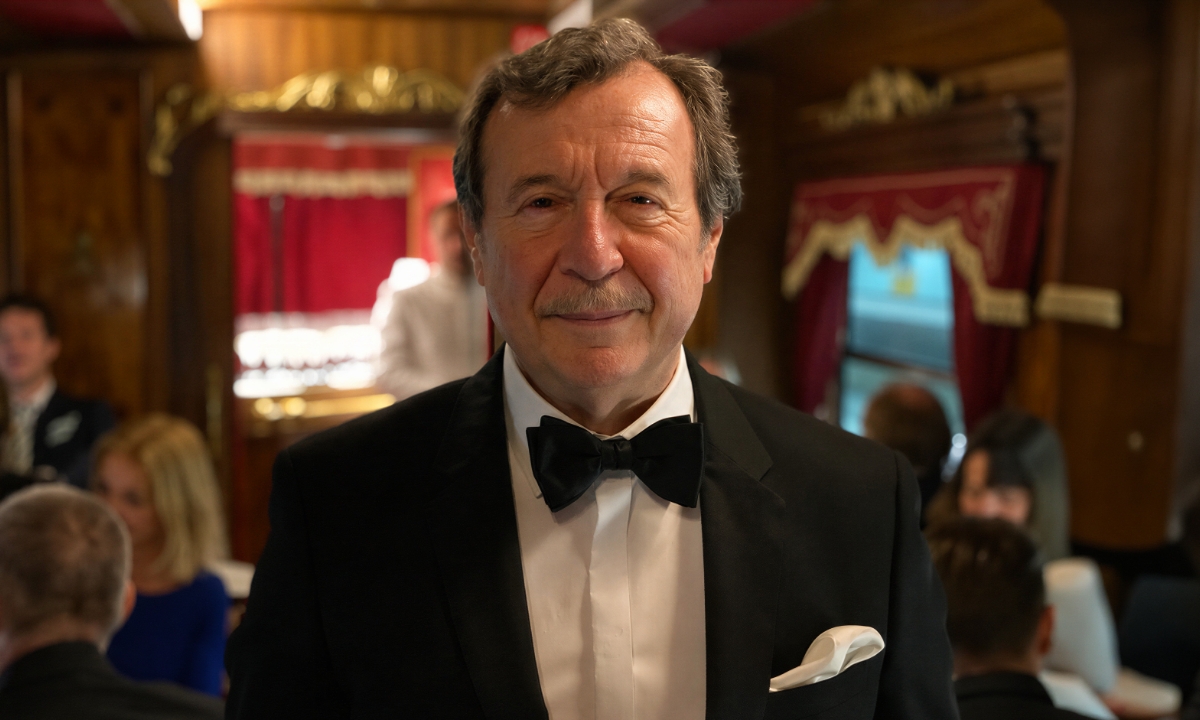
Boris Volodarsky Spent Decades Studying Spies, Now He’s Making Movies About Them
Hannah Rae Lee Bets on Buckshot Records for Her Next Chapter
How Diego Esquives Is Taking Peruvian Talent to the International Stage
LA STAGIONE DECISIVA Is Marco De Luca’s Most Ambitious Record Yet
Marco De Luca’s LA STAGIONE DECISIVA Is a One-Man Protest Album Built on Decades of Restless Experimentation
The Visual Language of ‘Karmic Justice’ Puts AKASHIC GODS in a Category of Her Own
Niraj Nair and Mark Chan Keep Finding the Grief Underneath the Bravado
Milovay Is Done Starting Over and Just Getting Started
Andre Correa’s New Single “Histórias” Explores How Stories Change in the Telling
Miixed Realities Proves Medical Billing Doesn’t Have to Be a Black Hole
Meet Lil Deezull, the Cambridge Rapper Finding His Moment
Dennis Dewall Reboards the Spy Genre with International Thriller ‘THE TRAIN’
Saynt Ego on Grief, Mental Health, and Learning to Sit With the Noise
Marloma Talks Learning to Stop Writing in Isolation and Trust the Chaos
Zizzo World Is Building Momentum That’s Hard to Ignore
Jason Luv Dominates Charts While Inspiring New Wave of Multi Career Artists
Harley West | Inside the Mind of a Social Media Star on the Rise
Raw Fishing | Franklin Seeber, Known As “Raww Fishing” Youtuber Story
Jordana Lajoie Transforms Montreal Roots into Hollywood Success Story
A New Hollywood Icon Emerges in Madelyn Cline
Who is Isaiah Silva – The Story Behind The Music
Tefi Valenzuela Pours Her Heart into New Song About Breaking Free
Kaia Ra | Perseverance That Built a Best-Selling Author
Gearshift to Stardom: Nikhael Neil’s Revolutionary Journey in the Automotive Industry
Holly Valentine | Social Media Influencer & Star Success Story
G FACE Releases His New Single “All up,” and It’s Fire
Kate Katzman | Breaking Into Hollywood and Embracing Change
Thara Prashad | Singer Evolves to Yoga & Mediation Superstar
Tadgh Walsh – How This Young Entrepreneur is Making a Name for Himself
King Lil G | West Coast Hip Hop Genius Rises to Face With Ease
Tefi Valenzuela Pours Her Heart into New Song About Breaking Free
Kate Katzman | Breaking Into Hollywood and Embracing Change
Holly Valentine | Social Media Influencer & Star Success Story
Kaia Ra | Perseverance That Built a Best-Selling Author
Lil Ugly Baby XXX’s “Who?” – The Mixtape to Boost Your Playlist
Samuel Chewning Explains How Fitness Should Be A Personal Journey
Trending
-
Business4 years agoJason Luv Dominates Charts While Inspiring New Wave of Multi Career Artists
-
Entertainment3 years agoHarley West | Inside the Mind of a Social Media Star on the Rise
-
Culture4 years agoRaw Fishing | Franklin Seeber, Known As “Raww Fishing” Youtuber Story
-
Culture3 years agoJordana Lajoie Transforms Montreal Roots into Hollywood Success Story
-
Culture2 years agoA New Hollywood Icon Emerges in Madelyn Cline
-
Entertainment1 year agoWho is Isaiah Silva – The Story Behind The Music
-
Entertainment3 years agoTefi Valenzuela Pours Her Heart into New Song About Breaking Free
-
Business4 years agoKaia Ra | Perseverance That Built a Best-Selling Author