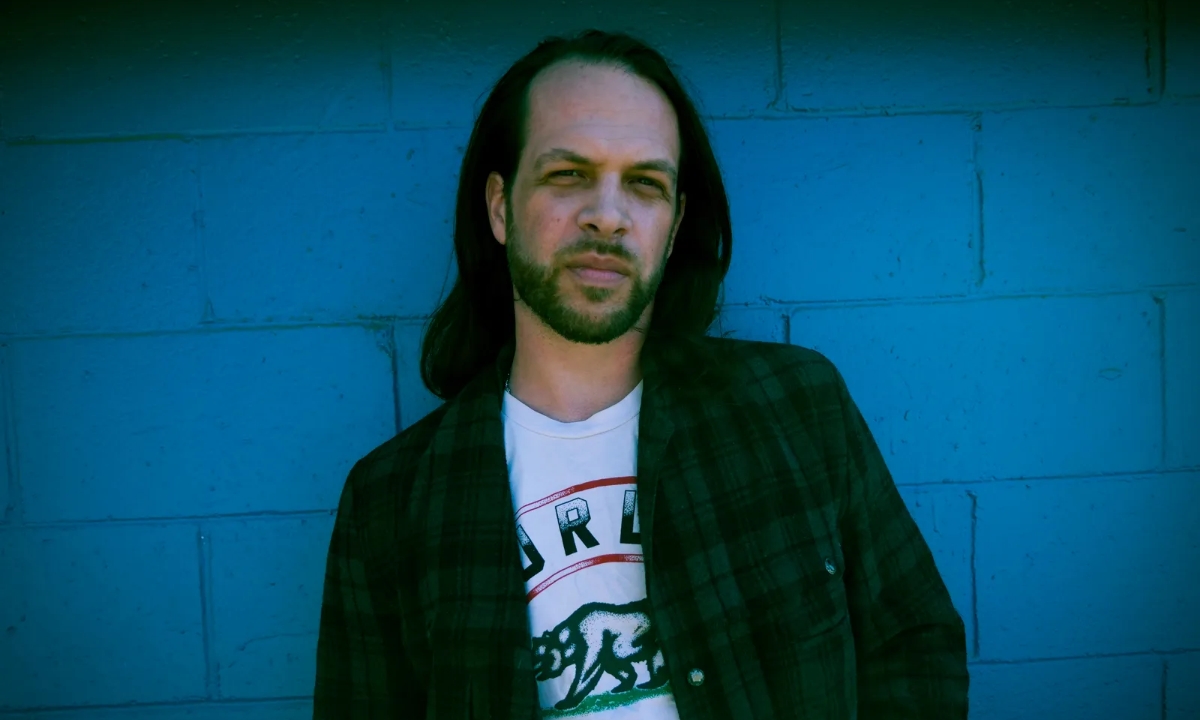
The Quarantined are released their third studio EP, “Aversion to Normalcy,” today, and it’s not the kind of record you put on for background music. Created by Sean Martin, a former airborne infantryman and Iraq War veteran, the album confronts trauma head-on, pulling from his experiences in combat and the disorienting aftermath of trying to rebuild a life once you’re home. It’s grunge-heavy, emotionally direct, and built around the idea that “normal” is just a polite lie we tell ourselves. What makes it work is that Martin isn’t trying to package his experience into something digestible. He’s just refusing to look away.
The album arrives with momentum that’s hard to ignore. The Quarantined have racked up over 30 million views across TikTok, with one clip of “Skeleton Chair” alone hitting 1.1 million+ views. On Spotify, they’ve pulled in 500,000 streams, and their viral reach has sparked conversations about trauma, forgiveness, and what it actually means to heal. For a band working outside the traditional industry machine, those numbers say something about how their message is connecting.

‘Aversion to Normalcy’ by The Quarantined
Martin doesn’t soften his subject matter. Tracks like “Skeleton Chair,” “Shadow (on my back),” and “Nemesis (friend of mine)” trace a path through chaos, self-destruction, and the slow, unglamorous work of choosing to survive. He’s not writing from a place of having figured it all out. He’s writing from the middle of it, which is what makes the record feel urgent rather than reflective. There’s no tidy resolution here, just the raw acknowledgment that some battles don’t end when you come home.
The album was recorded at Blackbird Studios and Sound Emporium in Nashville, two facilities known for handling heavyweight rock projects. Producer Nathan Yarborough, who’s worked with Alice in Chains, Korn, Halestorm, and Evanescence, handled engineering and production. The lineup includes Jerry Roe on drums, Luis Espalliat on bass, and Zack Rapp from Dream Theater on lead guitar and violins, with Martin covering vocals and guitar. It’s a setup that balances aggression with precision, letting the songs hit hard without losing their emotional core.
In a Veterans Day post on Facebook, Martin didn’t hold back about what this album means and what it cost. “You know, the things you thank us for today, have lifetime consequences for those who carry the burden,” he wrote. “I always thought if you’re gonna thank someone, better be specific about what and why, otherwise it has no meaning except as a false absolution for yourself.” It’s a pointed critique of performative gratitude, and it underscores what “Aversion to Normalcy” is actually about: rejecting easy answers and comfortable narratives in favor of something messier and more honest.
Martin pulls from punk rock, grunge, and metal, but what ties it together is his refusal to romanticize any of it. This isn’t protest music in the traditional sense. There are no slogans, no clear villains. Instead, it’s an invitation to sit with discomfort, to look at the parts of life that don’t fit into neat categories, and to find meaning in survival itself.
The Quarantined also support the Free2Luv movement, working on anti-bullying efforts, mental health advocacy, and music education for veterans and their families. It tracks with what the album’s already doing: making room for people who are still figuring it out, still fighting through it.
“Aversion to Normalcy” doesn’t offer answers. It offers witness, which might be more valuable anyway. In a culture that constantly demands we move on, heal up, and get back to normal, Martin’s album asks a better question: what if normal was never the goal in the first place?
“Aversion to Normalcy” is available now on all streaming platforms. You can follow The Quarantined on TikTok, Instagram, and Facebook at @thequarantined, visit their website here, or stream their projects on Spotify.
This article contains branded content provided by a third party. The views expressed in this article are solely those of the content creator or sponsor and do not necessarily reflect the opinions or editorial stance of Popular Hustle.
ONY still remembers the guitar. He was nine years old when he found his mother’s old nylon-string instrument tucked away in the attic, and something about it stuck. He started writing lyrics and working out his own melodies almost immediately. By eleven, he’d formed his first band. Decades later, that early pull toward music hasn’t loosened its grip.
The Norwegian singer-songwriter and producer, born Øystein Nybøe, lives in Ålgård on the country’s south-west coast. His recording career stretches back to 1993, when he released his debut full-length album, “Aktive skjerma,” in a duo with pianist Trond Fykse. Albums, singles, and collaborations followed, and in 2011 he wrapped his Relation Trilogy, the last of his physical releases before he moved to digital. Alongside his own records, he’s built a reputation as a producer and composed pieces for the municipality of Gjesdal, Stavanger 2008, and companies including SR-Bank and Aibel.
ONY
His influences don’t sit in one lane. AC/DC and Judas Priest shaped his guitar playing as a kid, but the list runs straight through the bass and drums of Madonna’s records, the melodic instincts of the Alan Parsons Project, and newer names like Sabrina Carpenter, Goldie Boutilier, Jason Mraz, The Weeknd, and John Mayer. Melody is the common thread. His own sound is positive and uplifting, alternative pop built on mid-tempo grooves, and those reference points are all in there.
Then there’s the Guinness World Record. In 2010, ONY conducted the largest Lucia torch-lit parade ever staged, and the same year he flew to Los Angeles to perform at a conference for artists and producers. It’s the kind of detail that tells you he’s never treated music as a purely studio-bound pursuit. These days he balances it with academic work as a Ph.D. candidate at the University of Stavanger.
His latest single, “Take My Hand,” arrived on August 7, 2026. It’s a quiet, narrative song about a child guiding a younger girl home, and it’s the newest piece of “When Now Meets Then,” the album he’s writing, playing, and producing entirely in his own studio for a November release. Seven songs from it are already out, with more singles on the way.
For ONY, the numbers were never the point. He talks about music as a gift, something you make because you love it, and about how a song written by one person can reach someone on the other side of the world. That belief has carried him from an attic in Norway to a career three decades deep, and it’s still where the work starts. You can find him at his official website or follow him on YouTube.
Some artists shoot their videos in a studio with a green screen and call it a day. Dave Curl flew to a volcanic island in the Atlantic, sat down in the arid hills with an acoustic guitar, and let the landscape do half the storytelling. That’s the setup for “Julia,” his acoustic dream-pop single arriving August 12, and the visuals shot across Fuerteventura, Spain, are the kind of thing you notice before you even hear a note.
The official lyric video, filmed by Loic Michel, opens with aerial footage gliding over broad stretches of volcanic terrain, all warm browns and ochres under low golden light. Curl shows up in a white shirt, seated among the hills, playing his guitar and mostly facing the landscape rather than the lens. It’s a small figure inside an enormous frame, and that contrast runs through the whole piece. Wide shots of ridges and ravines give way to overhead drone passes that trace the contours of the land, then cut to closer performance shots, then to coastal and underwater footage where the color shifts to pale blue skies and dark blue-green water.
What ties it together is restraint. Michel’s editing leans on long takes, slow fades, and dissolves instead of quick cuts. Several transitions layer two images at once, blending Curl into the terrain through double exposures that leave everything looking a little hazy and half-remembered. That dreamlike quality isn’t accidental. It’s the visual equivalent of what the song is reaching for, a track about fleeting moments and the memories that stick around long after they’re over.
“Julia” came from a chance meeting at a surf camp in Portugal, and Curl built the whole thing around an idea he borrowed from The Little Prince, that what’s important can’t be seen with the eyes alone. You can hear that in the writing. The song floats on peaceful guitar, a moving bassline, and vocals that stay genuine without reaching for anything flashy. It’s more floaty and heart-on-sleeve than a lot of his earlier work, which tends toward folk-pop-rock with a rougher alternative edge. Here he lets the softer instincts take over.
‘Julia’ by Dave Curl
The choice of Fuerteventura fits a pattern for Curl, who has a habit of picking filming spots that most musicians wouldn’t bother hauling gear to. He once shot a video at a medieval watchtower on the cliffs of Portugal, and he’s filmed alongside contemporary dancers and other collaborators in places that ask a lot more of a shoot than a rehearsal space would. Honestly, he’ll tell you himself that the locations get increasingly impractical, which is part of the appeal. When your songs are built on small, sincere moments, a backdrop that feels vast and a little untouched does the emotional lifting a plain set never could.
A little context on who’s behind the guitar. Dave Curl is a Swiss singer-songwriter with English-Australian roots, born and raised in Switzerland, and he’s been writing and performing his own material for over twenty years. He points to a volunteer stint as a gardener on Hawaii’s Big Island as the moment the whole thing crystallized, one of those trips where you leave home to figure out what you want to do when you get back. His music has been streamed more than 2 million times and landed in over 2,000 Spotify playlists, and he’s played 200-plus shows that range from living-room concerts to festival headline slots.
Dave Curl
The catalogue backing “Julia” is deeper than a casual listener might guess. His 2021 debut album Introducing pulled together earlier songs, including an acoustic take on “These Days,” and gave people an intimate first look at his writing. The 2022 EP Slave To Instinct dug into heavier material, obsession, false friends, the darker corners of the internet, gender identity, and its title track picked up airplay on independent radio in Germany and beyond. He followed with the single “Angel” and the EP Hold Me Close in 2023, and his most popular song, “Serenity,” came out of that same stretch, a personal track about letting go of someone.
“Julia” sits inside a fuller rollout, too. Curl has a lyric video, a music video, and an acoustic live version all planned around the release. The lyric video went live August 5 and works as a hybrid piece, part lyric video, part cinematic performance, previewing that same Fuerteventura footage with its mix of landscape and guitar. The single itself is the next chapter in a run of releases going back to 2021, not a one-off, which is worth keeping in mind with an artist who’s clearly playing a long game.
That long game might be the most interesting thing about him. Curl has spent two decades building a body of work without chasing whatever the algorithm rewarded that month, and “Julia” reads like proof that the songs which last tend to be the ones written for the right reasons. He turns train rides, coffee shops, and passing encounters into music, then finds a volcano or a watchtower to film it against.
You can hear “Julia” and follow the rest of it on his website, and keep up through Spotify, Instagram, YouTube, and TikTok. For now, “Julia” is up for pre-save ahead of its August 12 arrival.
For many DJs, the first impression comes through a short social clip, a promotional photograph, or a brief appearance at an event. Silverstar Oh offers something more useful: a complete one-hour performance that allows listeners to hear how she approaches a set from beginning to end.
Silverstar Oh, also known as Eunbyeol Oh (오은별), is a Korean DJ and actress whose work brings together electronic music and on-camera experience. Specialising in techno and house, she has developed a style that is best understood through a longer performance rather than a few isolated highlights.
Her live set at MELT BUSAN provides exactly that opportunity.
The full recording gives Silverstar time to establish a musical direction without relying on constant drops or attention-seeking moments. Techno and house are genres that benefit from patience. Their appeal often lies in repetition, gradual development, and the way small changes alter the mood of a room. A one-hour set gives a DJ the space to make those decisions properly.
What stands out about the MELT BUSAN performance is its usefulness as an introduction. Viewers are not asked to judge Silverstar from branding alone. They can watch her work, follow the progression of the music, and decide how effectively she maintains the flow of the set.
That matters in a digital music landscape where performers are frequently reduced to short clips designed for quick engagement. A full set is more demanding. It reveals whether a DJ can sustain momentum after the opening minutes and whether the music remains coherent once the novelty of the setting has passed.
Silverstar’s background as an actress adds another layer to her public profile. She appeared in the 2018 Korean television drama Secrets and Lies, giving her professional experience in front of the camera before her DJ work became a central part of her career.
That experience is relevant because filmed DJ sets now operate as performances in their own right. The audience is not limited to the people inside the venue. Viewers may discover the set weeks or months later through YouTube, meaning body language, composure, and visual presentation all become part of how the artist is received.
Silverstar appears comfortable in that environment. She does not need to overperform for the camera, and the recording remains focused on the music.
For anyone searching for Silverstar Oh as a Korean DJ, the MELT BUSAN set is the most direct place to begin. It presents her not as a collection of promotional claims, but as a working DJ delivering a full-length performance in the genres she has chosen to pursue.