Connect with us

Entertainment

The Rise of AKAI | An In-Depth Look at the Mind Behind the Music

Published

on

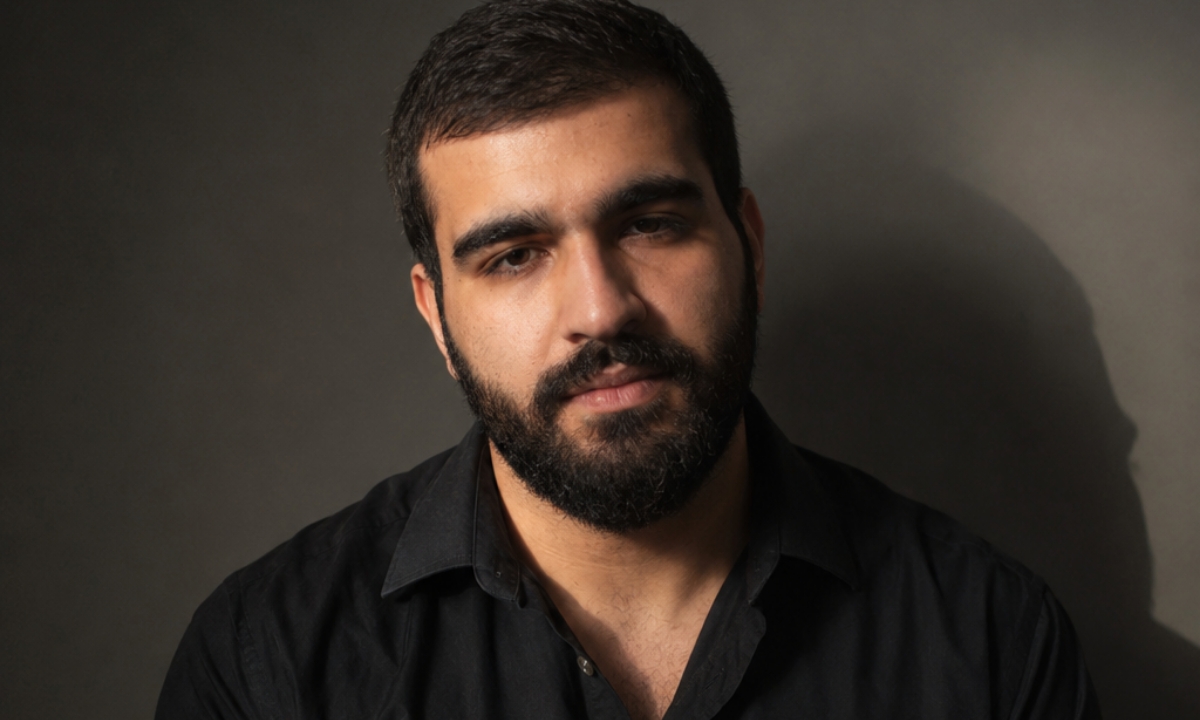
AKAI, also known as Malakai Jones, is the rising Nigerian-American artist who is breaking barriers and closing the gap between himself and the generational diaspora. With his infectious new song, “Naija Boy,” AKAI’s voice resonates as a beacon of positivity, aiming to instill pride in one’s roots and heritage.

Born in the United States to parents with Nigerian and German ancestry, AKAI has always been drawn to the vibrant rhythms of afrobeats and amapiano. Inspired by the lack of representation for those dealing with the diaspora experience, AKAI made a conscious decision to enter the music scene himself. In June 2023, he released his debut single, “NAIJA Boy,” a powerful anthem that showcases his love for his people and reinforces the message of self-acceptance regardless of cultural origins. With his unique sound and undeniable talent, AKAI is making waves in the afrobeats scene, ensuring his enduring presence in the music industry.

Reflecting on his journey, AKAI shares his passion for creating genuine music. Recalling the creation of his first song, “Naija Boy,” he initially doubted its potential and contemplated discarding it. However, after a few weeks of deliberation, he decided to release it, and the response was overwhelming. Friends, fans, and social media followers expressed their love and appreciation for the track, validating AKAI’s artistry and confirming the emotional connection he establishes through his music.

Through his art, AKAI hopes to generate a sense of understanding and unity, urging individuals to be proud of their identities, regardless of their geographical or cultural backgrounds. He emphasizes that pride should extend beyond Nigeria or Africa, encouraging everyone to embrace their unique DNA and celebrate their heritage. AKAI’s music is a testament to the power of self-acceptance, inspiring listeners to appreciate their origins and find strength in their own narratives.

When asked about dream collaborations, AKAI enthusiastically mentions his admiration for Ayra Starr and REMA, two exceptional artists who have made a significant impact on him. This admiration is evident in the countless hours he has spent listening to their music on Apple Music. AKAI’s appreciation for their work reflects his desire to collaborate with artists who share his passion for afrobeats and who have influenced his artistic journey.

Currently, AKAI is diligently working on his debut EP, “Creation I,” a project that serves as a personal storyteller with five captivating songs. This forthcoming EP aims to illuminate AKAI’s narrative, showcasing his growth and evolution as an artist. The first release from the EP, “Naija Boy,” is already available on all streaming platforms, providing a glimpse into AKAI’s distinctive style and musical prowess.

AKAI’s musical journey began approximately five years ago when his interest in music theory sparked a desire to become a music producer. After three years of exploring this path, he made a pivotal decision to step out of the background and take the microphone himself. By conquering one of his biggest fears, AKAI embarked on a whole new chapter in his artistic career. In collaboration with his close friend RJ, AKAI stepped into the studio and created magic, setting the stage for his future success.

As AKAI, or as he humorously refers to himself, Mr. Naija Boy, he aims to bridge the gap between his identity as a Nigerian-American and his heritage. Growing up in a country where his roots may not be widely recognized, AKAI’s longing for his motherland and the profound connection he feels with Nigeria shines through his music. True to his mission, he embraces the title “Mr. Diaspora” and uses his art as a means to unite diverse cultures and reconnect with his heritage.

AKAI’s determination to stay true to himself, uplift his community, and create music with a purpose is commendable. As he continues to make waves in the music industry, his authenticity and unique perspective will undoubtedly resonate with audiences worldwide. AKAI’s journey to bridge the gap between himself and the diaspora is not just a personal mission but a reflection of the universal human experience of seeking connections and celebrating identity through the transformative power of music.

Make sure to join the incredible journey of this emerging star, AKAI. Follow him on Instagram. You can also listen to his music on Apple Music and Spotify. Don’t miss out on the captivating debut track, “Naija Boy,” which sets the tone for AKAI’s exhilarating musical career. Experience the stirring emotions and embark on this exciting odyssey.

This article contains branded content provided by a third party. The views expressed in this article are solely those of the content creator or sponsor and do not necessarily reflect the opinions or editorial stance of Popular Hustle.

Entertainment

Why Lord Conrad’s ‘Rising Empire’ Sounds Like a Midnight Drive Through Vice City

Published

on

Lord Conrad

Plenty of EDM producers flirt with rap. Few go as far as Italian producer Lord Conrad, born Corrado Garibaldi, who opened a new chapter in 2026 with a sound that pulls trap and hip hop into the middle of his electronic roots. His new single “Rising Empire” is one of the defining releases of that new era.

The track pairs the European electronic production that built his name with American trap. Heavy 808s and deep bass hold down the low end while synths straight out of the 1980s hover above them. Distorted guitars and modern hip hop production push it into harder territory, which suits a song built around ambition, power and the climb to the top.

That theme carries into the official music video, which leans hard into neon nightlife and luxury cars on midnight drives. The visuals draw on the anticipated world of Grand Theft Auto VI and its Vice City setting, though Lord Conrad is clear that it’s an independent fan-inspired project with no affiliation to Rockstar Games. The clip also folds in imagery of financial markets, which the video’s own disclaimer labels as fictional and purely artistic.

‘Rising Empire’ by Lord Conrad

His music already had a foothold in gaming and digital culture. “I Minute” generated thousands of user-created videos on TikTok, and “VIDEOGAMES,” his collaboration with YouTuber PEPO3393, whose channel has more than 500,000 subscribers, has been widely used across gameplay content. Dancers found him too. “Only You” caught on in the global shuffle-dance community and was featured by ELEMENTS, and the video for “Touch The Sky” has passed 1.5 million views on YouTube.

What’s different now is the target. A big part of Lord Conrad’s strategy has been bringing a distinctly European electronic identity to American digital communities shaped by hip hop and urban culture. “Rising Empire” meets those listeners closer to their own turf. He’s also been open about wanting to work with big U.S. producers, and a record like this is a pretty direct way of saying so.

More of this is on the way. He’s working on a modern hip hop remix of “Push It to the Limit” from Scarface, plus another project that blends 80s synthwave and hip hop around the subject of trading.

For an artist whose biggest moments so far have come from dancers and gamers online, chasing American hip hop through those same digital channels makes plenty of sense. Watch the official music video, stream “Rising Empire” on all platforms, and find more at lordconrad.com.

Continue Reading

Entertainment

Frannk Whitte Would Rather Be Honest Than Fit a Genre

Published

on

Frannk Whitte

Most new artists show up with a tidy one-line pitch. Frannk Whitte doesn’t have one, and that’s on purpose. “My music doesn’t belong to one genre,” the São Paulo-born singer says. “It’s kind of a reflection of the moments I’m living.”

It’s a telling way to introduce yourself right before a debut album called “Who?” Whitte is a Brazilian artist who works between Brazil and Los Angeles, and he’s been making music for nearly a decade. He draws on alternative R&B, soul and modern pop, and he also works on electronic collaborations. He has no interest in picking one lane. “I’m not chasing a label or a category,” he says. “I’m chasing honesty.”

That honesty comes through in warm textures and an intimate vocal delivery, and you can hear it across songs like “Night Shift,” “Grooving Without Moving” and “I Can Finally Know.” His most recent release, “Taste,” came out on September 10. The records don’t demand attention. They earn it by staying close and personal. “What you’ll hear is simply me, translated through sound, as real as I can make it,” he says.

It started with Michael Jackson. At five, Whitte saw Jackson’s videos for the first time and thought of him as a superhero. He got the glove and tried to dance like him. That led to drum lessons at seven or eight, and by 13 he was making his own beats. At 15, after his first breakup, he wrote and recorded his first song and sent it to friends without telling them it was him. They loved it, and that’s when he knew he had to keep going.

He’s spent his life acting, dancing, directing, filming, producing and writing, but music has always been the center of it. He calls it “the closest thing we have to magic,” and he’s specific about what he’s after. He wants a song to take someone back to a night that mattered, or to a person or version of themselves they hadn’t thought about in a while. “Whether it’s dancing or crying, or just sitting with something real,” he says, “I want that emotional connection to be undeniable.”

After three formative years under the mentorship of producer and songwriter Cory Rooney, Whitte is now releasing “Who?” one track at a time. A new song comes out every couple of weeks, and the full album is due by mid-November. Once it’s out, he’s planning one or two special nights in São Paulo. Until then, he wants listeners to sit with the album and take it in.

The album’s title asks the question most people have about a new artist. Whitte’s answer is the same one he gives about genre: he’s whoever he was when each song was made. “Who?” is how he introduces that person.

Stream Frannk Whitte on Spotify, and follow him on Instagram and TikTok.

Continue Reading

Entertainment

Serag Baddar Built An Entire Song Out Of The Parts Most Metal Bands Use As A Breather

Published

on

Serag Baddar

In heavy music, the clean section usually has one job. It gives the listener a moment of air before the distortion comes back, a few bars of arpeggios and space that make the next riff hit harder. Serag Baddar wanted those sections to be the whole song. “Limerence,” released on August 13 and running four minutes and ten seconds, is what happened when he finally built one.

Baddar is a 30-year-old composer based in Malta who describes himself as someone who’s into philosophy and happens to write music. He got his start the way a lot of players do, badly and by accident. His father bought him a cheap vintage Flying V and a small Kustom amp when he was around 14, and while the amp sounded great, the guitar was awkward to play sitting down, so he never took it seriously. A year later his middle brother bought him a BC Rich Mockingbird, and that was the one that stuck. He pushed himself past beginner level on his own. By 16 he had a garage with two friends where he wrote most of his riffs, and as he got more introverted he moved into production, learned to record guitar and vocals himself, and never went back. These days a DAW is where songs start.

One riff from that period refused to go away. Baddar wrote it at 15 or 16 and understood immediately that he wasn’t good enough at songwriting or guitar to build the song he was imagining, so he set it aside until he could do it justice. “It’s a very nice riff,” he says. “Even the way it’s played on the guitar, every note is placed conveniently where your hand can reach without having to stretch or move anywhere at all. For me, as a 15 or 16-year-old, writing that riff meant I had a melody that sounded professional, and I was very proud of that because at the time I really sucked at my instrument.”

The song went through multiple iterations before it landed, originally under the title “Lotus,” a nod to Buckethead’s “Padmasana,” whose rhythm guitar shaped one section of the track. Padmasana is the lotus pose, which is where the working title came from. Over time, “Lotus” became “Limerence.” Baddar says he got attached to the song even in its unfinished state, partly because so many versions of it contained things he wanted to keep and couldn’t.

What holds the thing together is a structural decision rather than a stylistic one. Baddar loves the clean passages in Opeth and Tool, and rather than treat them as contrast, he made them the foundation and left the distortion off entirely. “Opeth combines metal with clean riffs, especially inspired by 70s bands. I always wanted their clean sections to be entire songs, and from Opeth we only got one record like that, ‘Damnation’,” he says. He points to Buckethead’s “Electric Tears” and “A Real Diamond in the Rough” as proof the approach can stay accessible. “It’s always through wanting more of this that kept me inspired to keep my distortion off and stay clean.”

The most revealing moment comes at the end, where Baddar takes the hook apart in front of the listener. The main riff plays, then stops. The bass comes in. The second guitar riff arrives on top of the bass. Then everything runs together once. It’s a small act of transparency, and it makes a point that’s easy to miss on a first pass, which is that none of these parts are doubling each other. “I’m very happy and proud of the fact that every instrument plays something completely different and sounds really good when put together,” he says.

That kind of patience comes from treating music as a hobby rather than a job. Baddar writes for what he calls dopamine, meaning everything he keeps has to make him feel like he’s listening to a favorite band, and he works on sparks, those bursts of creative energy where good material arrives without effort. “There’s no pressure at all. I do whatever I want and release material at my own pace,” he says. “If there was ever a demand, I wouldn’t be able to keep up with it because of the way that I write.” The lyrics came late and stayed personal, including a passing reference to a Metallica song about love going on, before the track closes on a repeated request to be talked to.

Next up is vocal writing for “Electric Smoke,” a bluesier track he wrote with Kyuss in mind, and eventually an EP collecting the rest of his clean material. He doesn’t play live, and he’s upfront that the vocals will take time, so things will be quiet for a stretch. His advice to other writers is the same rule he applied to that teenage riff. Write out of love for the craft, skip the cheap satisfaction of having a song finished, and work on it until it’s right even if that takes years. Fifteen years is a long time for a riff to wait, unless the four minutes it turns into are worth it.

“Limerence” is on all streaming services, with the single and lyrics available on Bandcamp and his catalog on Spotify. More on Baddar can be found at his official site, on Facebook, and on Instagram.

Continue Reading
Advertisement
Follow Us - Popular Hustle on Spotify

Trending