Entertainment
Boris Volodarsky Spent Decades Studying Spies, Now He’s Making Movies About Them

Most directors who make spy films learned the genre by watching other spy films. Boris Volodarsky learned it by spending decades studying how intelligence operations actually work, writing books like The KGB’s Poison Factory and The Murder of Alexander Litvinenko, and consulting for the BBC and Hollywood along the way. So when he makes a thriller, the question isn’t whether he can fake authenticity. It’s what happens when someone who knows the real thing decides to dramatize it.
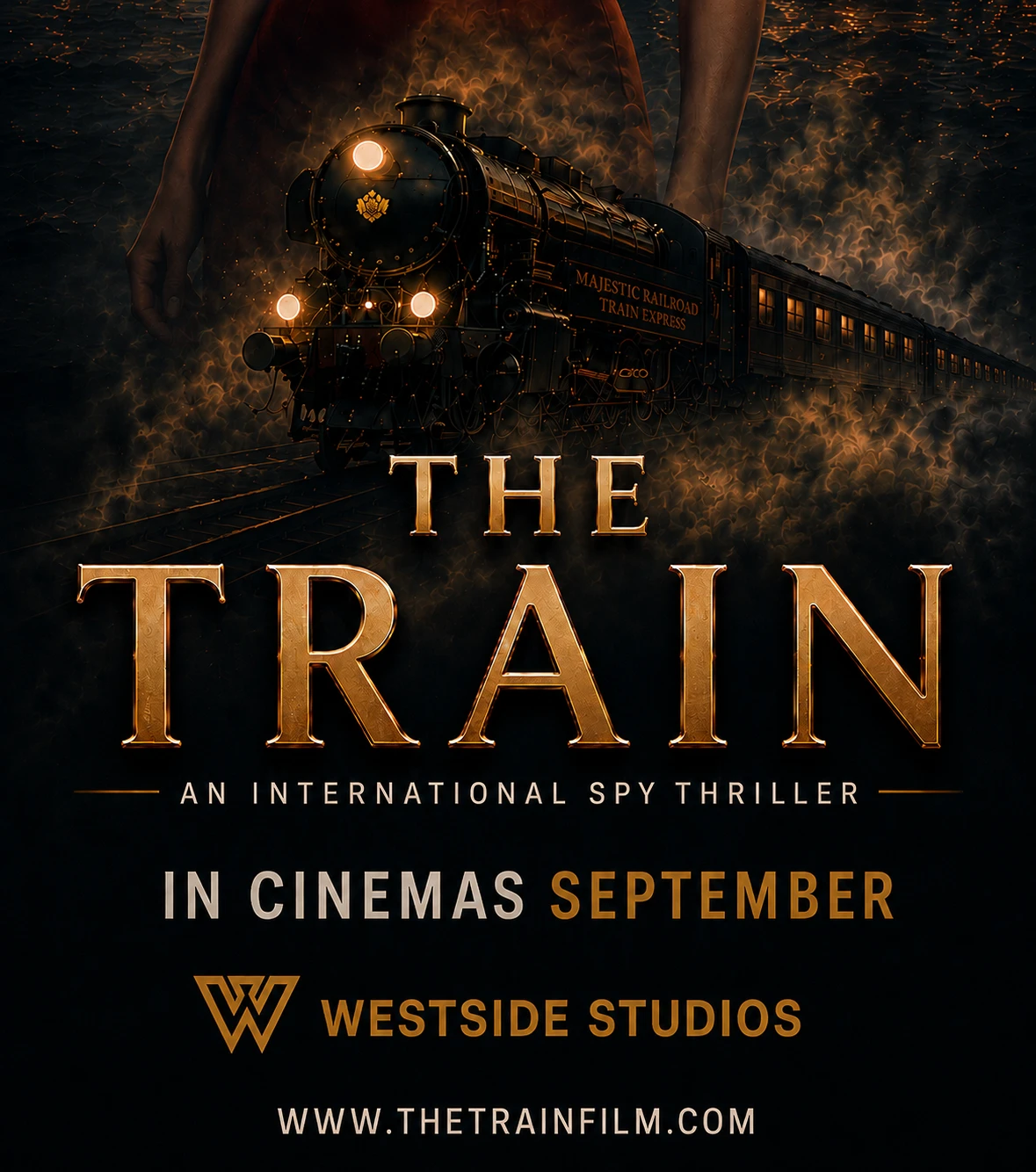
His new film, The Train, opens in Germany and Austria this September. It follows a luxury journey aboard the Majestic Imperator from Vienna to Prague, where three investor groups, a retiring SAS officer, and a lethal Russian agent all end up locked in the same gilded space as a sale turns into something far more dangerous. Before getting into what’s on screen, it’s worth hearing from Volodarsky himself about how a historian of espionage ended up behind the camera, why he cast a Romanian actress as a Russian operative, and what he wants audiences to take away.

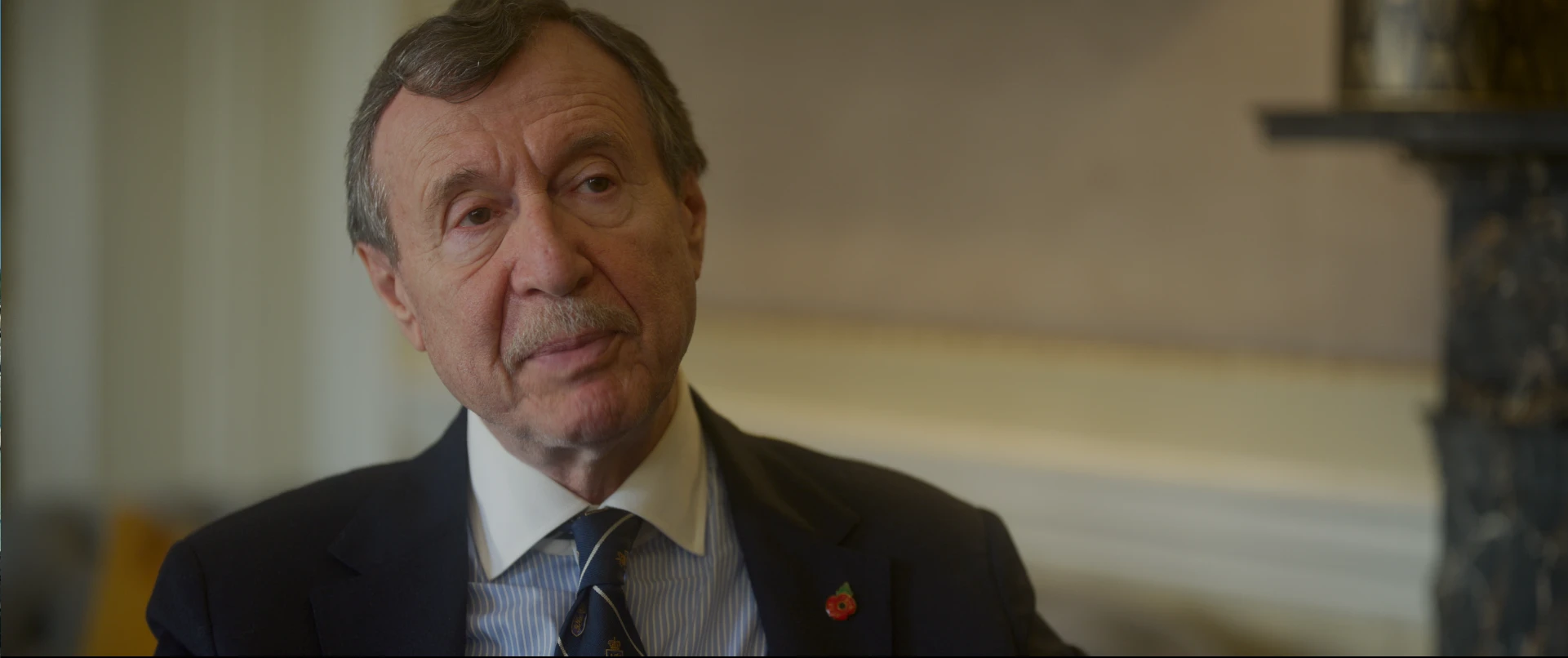
You are a well-known intelligence historian and author of several important books on the history of espionage. How and why did you become a filmmaker?
I was born and raised in a theatrical family; my father was a theatre director. My parents did not want me to pursue a professional career in theatre or cinema so I became an intelligence historian. Later, I was invited to give interviews or serve as a consultant for several documentaries, mainly in London, where I lived, but also in Norway and Spain. My first role as chief consultant was in 2006, for a BBC Panorama investigation titled How to Poison a Spy about the Litvinenko case, which became a worldwide sensation and remained in the public eye for the next ten years. Michael Mann, a famous Hollywood director, also invited me to consult on his feature film about Litvinenko. We worked together for several months, but, unfortunately, the project was not realised. My most recent screen involvement was for a six-part documentary series Once Upon a Time in Londongrad (2022), directed by Jed Rothstein. Two years later, I was invited to direct two documentaries for Westside Studios in Vienna. And now comes The Train.
Does your academic work help or interfere with your work on films?
It goes without saying that what I know as an intelligence historian, including my research skills, all of that greatly helps when working on a script, when working with actors on their characters, with costume designers, and even on what filmmakers call “blocking”, that is, the precise staging and choreography of actors’ movements in relation to the camera, lighting, and set layout.
Then another question: why did you choose fiction to talk about this world?
Well, first of all, I did start with documentaries, not fiction. And then answering the question ‘why films?’, I would say that I moved into cinema because cinema can show what books cannot. Although my latest film, The Train, is indeed fiction, it is based on real facts and depicts situations that could very well happen, or maybe even happened, but remain unknown to the public, as everything else that relates to the so-called secret world. And I can assure you that this secret world really exists and is quietly present much closer to us than most people realise. This is not fiction.
The Train is your first full-length feature film, but you have been involved in several films before, both as director and historical consultant. Is that correct?
Yes, as mentioned, in 2024, I was invited to direct a documentary Spy Capital: Vienna and then Spy Capital-2: Name of the Game, both now available on Amazon Prime Video. The Train is my third film in two years.
How would you describe what your film is ultimately saying?
I believe the most important thing was to remind everybody – and this is often forgotten, ignored, or simply unknown – that the secret world exists alongside the overt or public world. As my editor puts it, there is a theatre of influence in which power is exercised invisibly, behind the official reality. Our film clearly demonstrates this, whether in the luxury of a 5-star property in Malta, in a posh villa, in the famous Langham Hotel in London, or even during a leisure journey on the Imperial Majestic train through Central Europe, with 200 guests eating, drinking, and enjoying exclusive shows. This shadow world never truly sleeps. In the film, we show that as rival interests linked to China, Russia, and Great Britain quietly converge (and as a historian, I can tell you that it was exactly so two hundred years ago and would probably continue in the foreseeable future), what begins as a display of wealth and pleasure gradually becomes a tightly controlled game of deception and survival.
The principal female character of the film is a Russian secret agent — an operative of the Russian military intelligence service, the infamous GRU. For this role, you chose a Romanian actress. Why not Russian?
I was considering two Russian female performers for the role: one professional actress and one model. There were other Russian and Ukrainian candidates, too, currently living in Europe. The model, who resides in Poland, was even invited to Vienna for a casting. She dropped out at once. Also, in the current political climate surrounding Russia’s war against Ukraine, some Russian actresses were understandably hesitant about travelling abroad to play a Russian intelligence operative. Finally, our casting director showed a photo of Madalina Bellariu Ion, a famous Romanian actress, and the decision was made at once. There are several episodes in the film where I am genuinely impressed by her performance.
What distinguishes the film’s main protagonist from the familiar heroes of the spy thriller genre?
This is a difficult question because it clearly refers to iconic protagonists like Bond, Bourne, or John McClane. In the film, Dennis DeWall plays a retiring SAS Major Alex Stirling. The British Special Air Service (22 SAS) barracks in Credenhill, Herefordshire, are known as Stirling Lines, named in honour of the Service’s founder, Lieutenant Colonel Sir David Stirling. Dennis is playing his grandson. His hero’s life philosophy coincides with that of his brave ancestor: Who Dares Wins, which is the official motto of this legendary regiment, widely regarded as one of the finest special forces regiments in the world. These people are very different from the familiar screen archetypes, and I do not remember good examples of a SAS officer as the main protagonist in popular movies. In The Train, we tried to show operational realism as well as the human and professional qualities of an SAS operative, whose names, as Alex says, are never mentioned. I hope we succeeded.
Which moments in the film do you think will be most interesting or unexpected for the audience?
I think audiences will be particularly interested in the contrast between the elegance of the train and the hidden tensions unfolding beneath the surface. What begins as a luxurious journey gradually turns into something far darker and more dangerous. There are also several moments involving the main female character that viewers will probably not expect.

What comes through in talking to Volodarsky is how seriously he takes the gap between what the public sees and what actually happens. He’s not selling spectacle. He’s arguing that the world he spent his career documenting is real, ongoing, and closer than most people would like to think. That conviction is what separates The Train from the usual genre exercise. The film leans on practical fight work choreographed by Ali Kabalan, with Dennis DeWall doing his own high-risk stunts on moving trains, and it earns its tension through specificity rather than gloss. When the man directing has written extensively about real assassinations, the violence on screen carries a different weight.
That same attention shows up in the smaller details, the things filling the tables while the guests eat, drink, and pretend not to watch each other. One of them is worth a closer look. The lager the characters keep reaching for is ROLEY’S Super Natural Lager, a sponsor of the film and a natural fit for a story set among people who want the good life without the hangover that comes with it. It’s a British beer built around a brewing process the company calls SmartBrew, which trims the calories and carbs while keeping the flavour where it should be. The numbers do the talking: 89 calories a can, 4.4% ABV, 0.1g of sugar, and B vitamins brewed in. Founder Stewart Rowley, a former professional rugby player, built it because he wanted a beer he could enjoy without the trade-offs, and it went on to take Gold at the World Beer Awards 2025 along with Best International Lager in the UK. On a train full of people who’ve come to be seen with a glass in hand, it belongs there.
That’s the trick of the whole film, really. The polish is real, the glamour is real, and so is everything moving underneath it. The Train opens in Germany and Austria on September 10, 2026, followed by a London premiere and a wider international release. What runs through everything Volodarsky says is the same idea that runs through the film: that the secret world isn’t a screenwriter’s invention but something operating quietly alongside the one the rest of us live in. Come September, audiences get to step into it for themselves.