
Entertainment
Boris Volodarsky Spent Decades Studying Spies, Now He’s Making Movies About Them

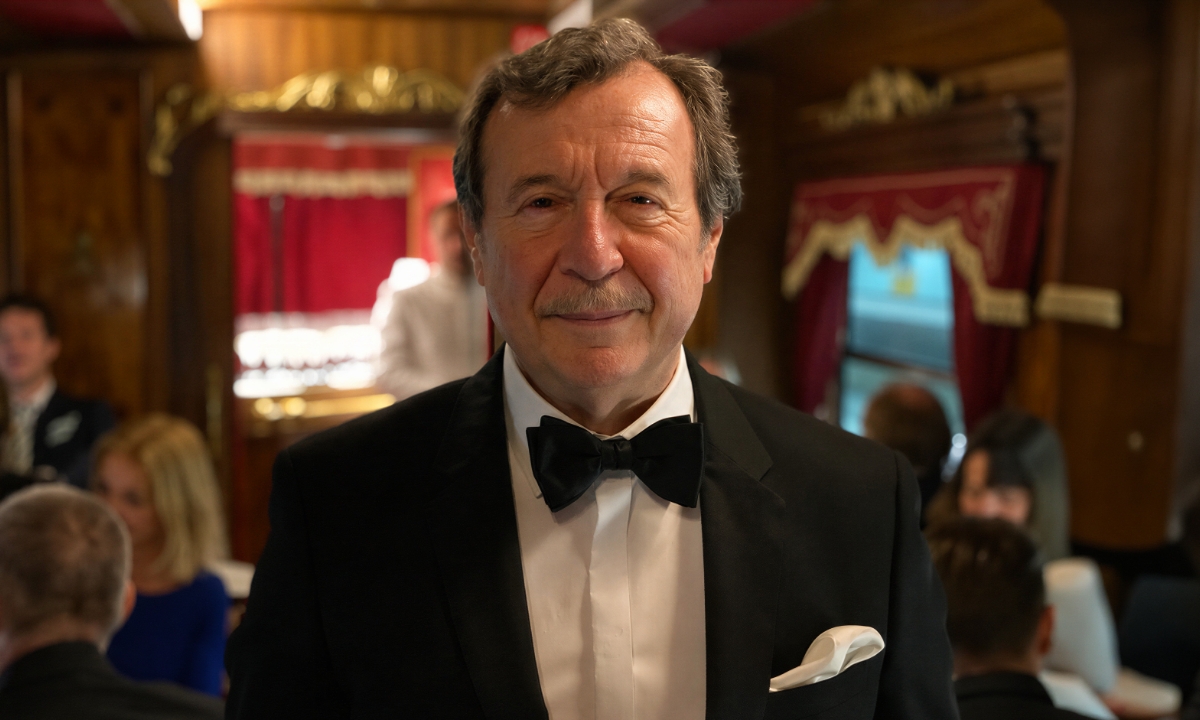
Most directors who make spy films learned the genre by watching other spy films. Boris Volodarsky learned it by spending decades studying how intelligence operations actually work, writing books like The KGB’s Poison Factory and The Murder of Alexander Litvinenko, and consulting for the BBC and Hollywood along the way. So when he makes a thriller, the question isn’t whether he can fake authenticity. It’s what happens when someone who knows the real thing decides to dramatize it.
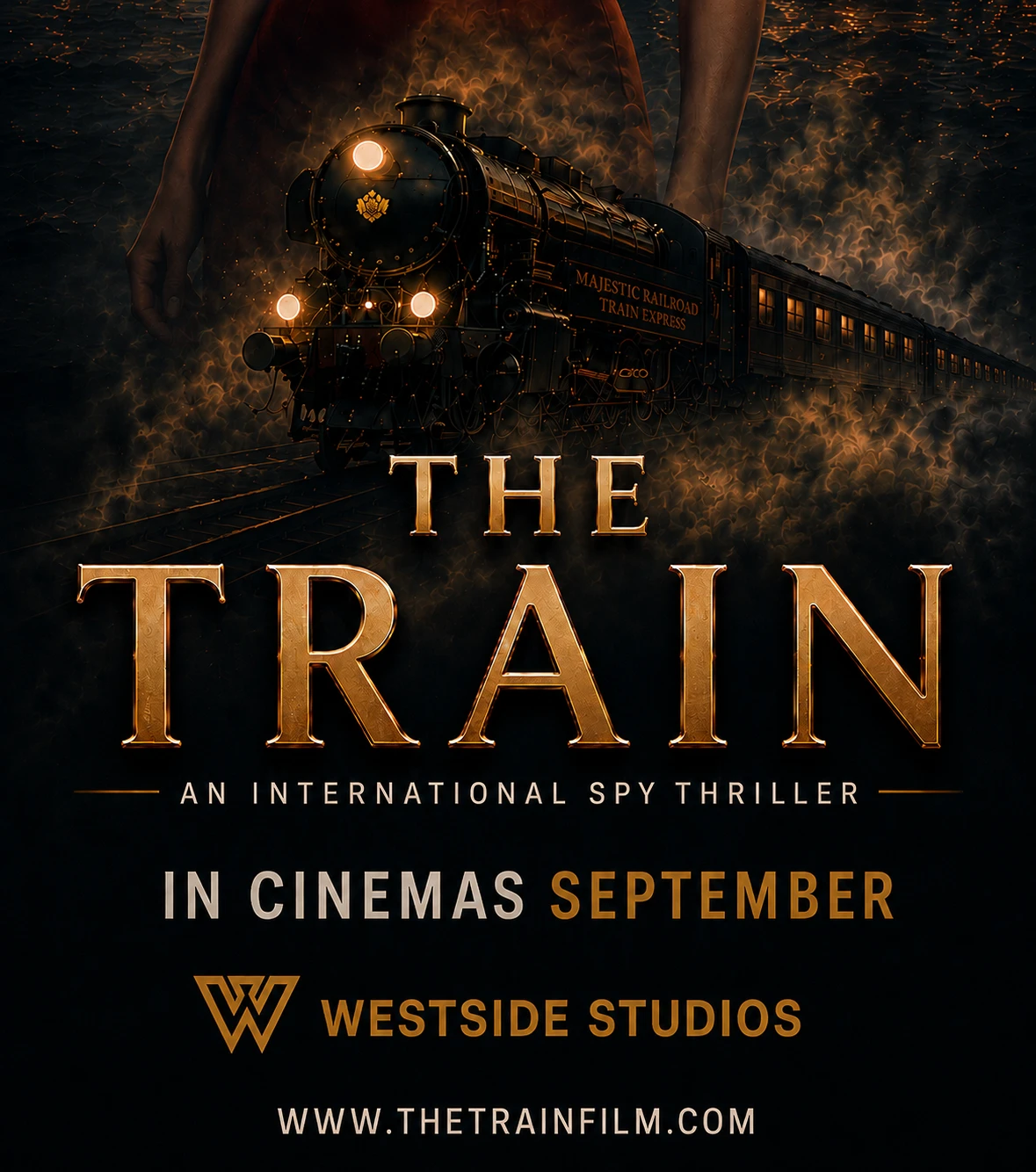
His new film, The Train, opens in Germany and Austria this September. It follows a luxury journey aboard the Majestic Imperator from Vienna to Prague, where three investor groups, a retiring SAS officer, and a lethal Russian agent all end up locked in the same gilded space as a sale turns into something far more dangerous. Before getting into what’s on screen, it’s worth hearing from Volodarsky himself about how a historian of espionage ended up behind the camera, why he cast a Romanian actress as a Russian operative, and what he wants audiences to take away.
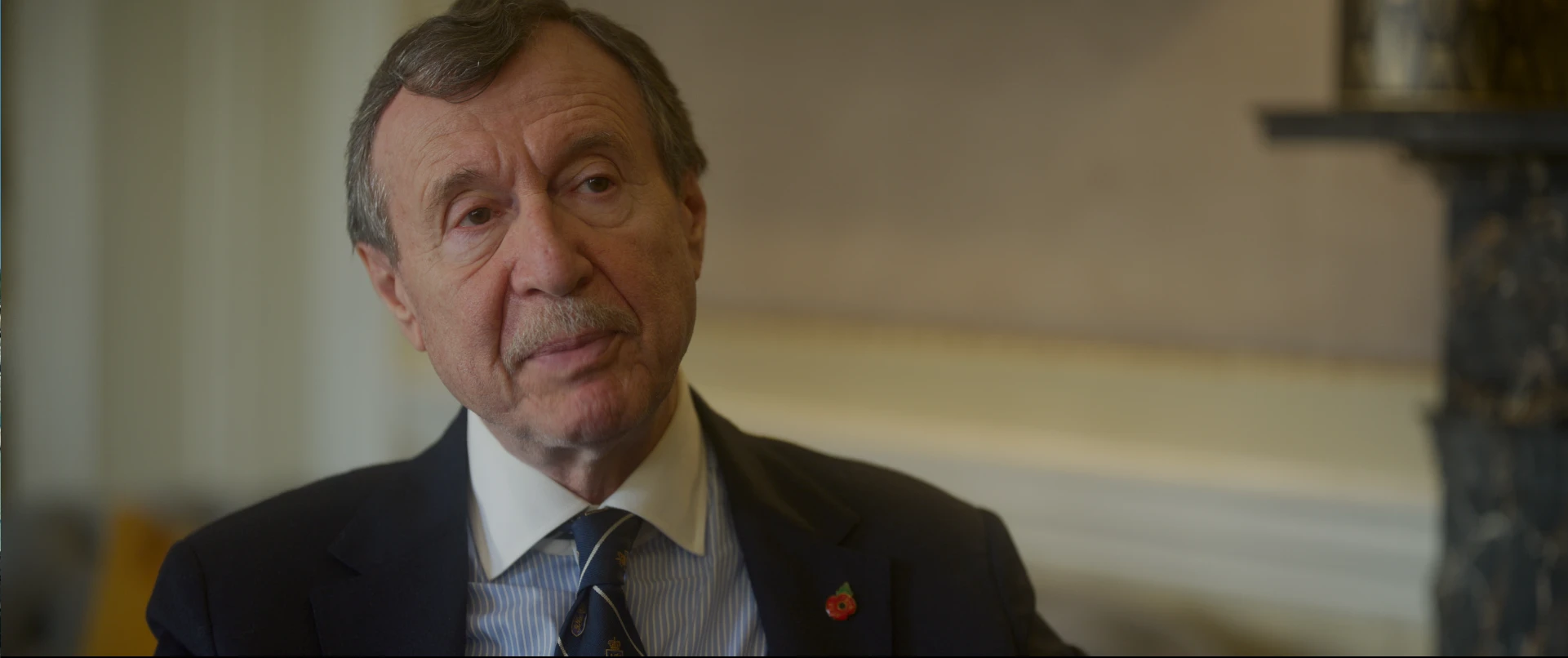
You are a well-known intelligence historian and author of several important books on the history of espionage. How and why did you become a filmmaker?
I was born and raised in a theatrical family; my father was a theatre director. My parents did not want me to pursue a professional career in theatre or cinema so I became an intelligence historian. Later, I was invited to give interviews or serve as a consultant for several documentaries, mainly in London, where I lived, but also in Norway and Spain. My first role as chief consultant was in 2006, for a BBC Panorama investigation titled How to Poison a Spy about the Litvinenko case, which became a worldwide sensation and remained in the public eye for the next ten years. Michael Mann, a famous Hollywood director, also invited me to consult on his feature film about Litvinenko. We worked together for several months, but, unfortunately, the project was not realised. My most recent screen involvement was for a six-part documentary series Once Upon a Time in Londongrad (2022), directed by Jed Rothstein. Two years later, I was invited to direct two documentaries for Westside Studios in Vienna. And now comes The Train.
Does your academic work help or interfere with your work on films?
It goes without saying that what I know as an intelligence historian, including my research skills, all of that greatly helps when working on a script, when working with actors on their characters, with costume designers, and even on what filmmakers call “blocking”, that is, the precise staging and choreography of actors’ movements in relation to the camera, lighting, and set layout.
Then another question: why did you choose fiction to talk about this world?
Well, first of all, I did start with documentaries, not fiction. And then answering the question ‘why films?’, I would say that I moved into cinema because cinema can show what books cannot. Although my latest film, The Train, is indeed fiction, it is based on real facts and depicts situations that could very well happen, or maybe even happened, but remain unknown to the public, as everything else that relates to the so-called secret world. And I can assure you that this secret world really exists and is quietly present much closer to us than most people realise. This is not fiction.
The Train is your first full-length feature film, but you have been involved in several films before, both as director and historical consultant. Is that correct?
Yes, as mentioned, in 2024, I was invited to direct a documentary Spy Capital: Vienna and then Spy Capital-2: Name of the Game, both now available on Amazon Prime Video. The Train is my third film in two years.
How would you describe what your film is ultimately saying?
I believe the most important thing was to remind everybody – and this is often forgotten, ignored, or simply unknown – that the secret world exists alongside the overt or public world. As my editor puts it, there is a theatre of influence in which power is exercised invisibly, behind the official reality. Our film clearly demonstrates this, whether in the luxury of a 5-star property in Malta, in a posh villa, in the famous Langham Hotel in London, or even during a leisure journey on the Imperial Majestic train through Central Europe, with 200 guests eating, drinking, and enjoying exclusive shows. This shadow world never truly sleeps. In the film, we show that as rival interests linked to China, Russia, and Great Britain quietly converge (and as a historian, I can tell you that it was exactly so two hundred years ago and would probably continue in the foreseeable future), what begins as a display of wealth and pleasure gradually becomes a tightly controlled game of deception and survival.
The principal female character of the film is a Russian secret agent — an operative of the Russian military intelligence service, the infamous GRU. For this role, you chose a Romanian actress. Why not Russian?
I was considering two Russian female performers for the role: one professional actress and one model. There were other Russian and Ukrainian candidates, too, currently living in Europe. The model, who resides in Poland, was even invited to Vienna for a casting. She dropped out at once. Also, in the current political climate surrounding Russia’s war against Ukraine, some Russian actresses were understandably hesitant about travelling abroad to play a Russian intelligence operative. Finally, our casting director showed a photo of Madalina Bellariu Ion, a famous Romanian actress, and the decision was made at once. There are several episodes in the film where I am genuinely impressed by her performance.
What distinguishes the film’s main protagonist from the familiar heroes of the spy thriller genre?
This is a difficult question because it clearly refers to iconic protagonists like Bond, Bourne, or John McClane. In the film, Dennis DeWall plays a retiring SAS Major Alex Stirling. The British Special Air Service (22 SAS) barracks in Credenhill, Herefordshire, are known as Stirling Lines, named in honour of the Service’s founder, Lieutenant Colonel Sir David Stirling. Dennis is playing his grandson. His hero’s life philosophy coincides with that of his brave ancestor: Who Dares Wins, which is the official motto of this legendary regiment, widely regarded as one of the finest special forces regiments in the world. These people are very different from the familiar screen archetypes, and I do not remember good examples of a SAS officer as the main protagonist in popular movies. In The Train, we tried to show operational realism as well as the human and professional qualities of an SAS operative, whose names, as Alex says, are never mentioned. I hope we succeeded.
Which moments in the film do you think will be most interesting or unexpected for the audience?
I think audiences will be particularly interested in the contrast between the elegance of the train and the hidden tensions unfolding beneath the surface. What begins as a luxurious journey gradually turns into something far darker and more dangerous. There are also several moments involving the main female character that viewers will probably not expect.
What comes through in talking to Volodarsky is how seriously he takes the gap between what the public sees and what actually happens. He’s not selling spectacle. He’s arguing that the world he spent his career documenting is real, ongoing, and closer than most people would like to think. That conviction is what separates The Train from the usual genre exercise. The film leans on practical fight work choreographed by Ali Kabalan, with Dennis DeWall doing his own high-risk stunts on moving trains, and it earns its tension through specificity rather than gloss. When the man directing has written extensively about real assassinations, the violence on screen carries a different weight.
That same attention shows up in the smaller details, the things filling the tables while the guests eat, drink, and pretend not to watch each other. One of them is worth a closer look. The lager the characters keep reaching for is ROLEY’S Super Natural Lager, a sponsor of the film and a natural fit for a story set among people who want the good life without the hangover that comes with it. It’s a British beer built around a brewing process the company calls SmartBrew, which trims the calories and carbs while keeping the flavour where it should be. The numbers do the talking: 89 calories a can, 4.4% ABV, 0.1g of sugar, and B vitamins brewed in. Founder Stewart Rowley, a former professional rugby player, built it because he wanted a beer he could enjoy without the trade-offs, and it went on to take Gold at the World Beer Awards 2025 along with Best International Lager in the UK. On a train full of people who’ve come to be seen with a glass in hand, it belongs there.
That’s the trick of the whole film, really. The polish is real, the glamour is real, and so is everything moving underneath it. The Train opens in Germany and Austria on September 10, 2026, followed by a London premiere and a wider international release. What runs through everything Volodarsky says is the same idea that runs through the film: that the secret world isn’t a screenwriter’s invention but something operating quietly alongside the one the rest of us live in. Come September, audiences get to step into it for themselves.






Project Rod Williams doesn’t just want you to hear their songs, they want you inside the world built around them. Roderick Williams, the songwriter and producer behind the project, storyboards a “human-like cyborg world” that every one of their music videos lives inside, a cinematic sci-fi setting you step into rather than just watch. And the way it’s built goes to the heart of an argument at the center of the project: that the AI tools now folded into the work are no different in principle from the synthesizers that let ’80s acts skip hiring a full band or orchestra.
Project Rod Williams runs out of a home studio in the Washington D.C. metro area, and it started there as an electro-pop studio ensemble. The setup was collective from the jump: a place to write from personal experience and pull in different vocalists to actually sing it. The project has kept at it through a long run of releases going back to their debut album, Fire.
The catalog since then tells you of a project figuring out its signature and then leaning into it. Early tracks like “Let’s Get Out,” featuring Ben Dial, and the 2021 album Run Away paired electronic dance-pop with lyrics reaching for social themes. Spin Me landed in 2020, the Fantasy maxi-single in 2022, and more recent work with vocalist Tim Condor on “Like a Fool” in 2024 and “Well Runs Dry” in 2025 pushed harder into emotional delivery and detailed sound design. Three-part harmony, big grooves, glossy electronic textures. That’s the through line.
Two eras shape how Project Rod Williams thinks about making music with machines. There’s the ’80s synth-pop crowd, Depeche Mode, The Human League, Erasure, and there’s the ’70s disco architects Giorgio Moroder and Donna Summer. What the project takes from all of them is the same lesson. They didn’t wait around for a bigger budget. Instead of booking a live band or orchestra they reached for electronic keyboards and proved an instrument doesn’t have to be acoustic to make something real.
“To me AI is simply a modern synthesizer,” Williams says. He lines it up next to the way hip-hop turned sampling into a craft, treating each of these tools as one more thing on the palette. The point is that originality has never happened in a vacuum anyway. Musicians soak up whatever they grew up on, writers reach for a thesaurus, and the work still comes out belonging to whoever made it. Using AI is the same move those heroes made: taking a lifetime of influences and grabbing the best available tool to get the vision out.
That thinking is exactly what powers the cyborg world. Project Rod Williams doesn’t just write the songs, they design the whole setting the songs play out in, video by video. The goal is immersion, getting a first-time listener to feel like they’ve walked into a cinematic sci-fi setting instead of just hitting play. The generative tools feed straight into that, building out the futuristic universe around the music without the budget that kind of world-building would normally demand.
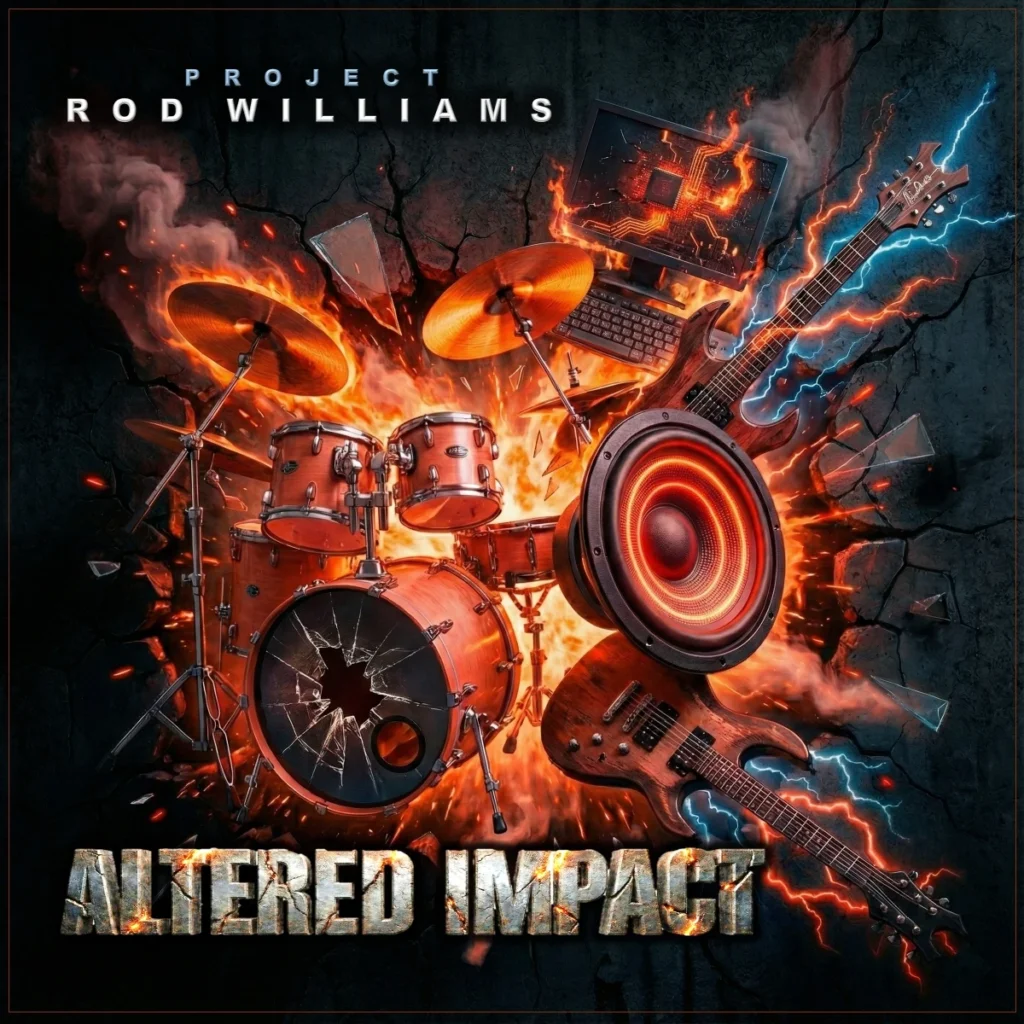
Then there’s the pivot the project has been building toward. After years rooted in synth-pop, Project Rod Williams is moving into what they call the Rock/Dance Evolution, rock’s rawer push welded to a dance rhythm. The shift spreads across a trilogy. The first one, Altered Impact, dropped January 12, 2026, ten tracks that rework nine of their earlier songs alongside one brand-new cut, “No One Can Love You (Baby Like I Do).” Two more are coming to finish the arc: Intense in early 2027 and Quiver later that year.
For now the work is finishing the visual rollout. Seven of the album’s ten videos are already up on the project’s YouTube, and the last three arrive on a set schedule: “Dangerous Lover” on August 1st, “Only In My Dreams (Do You Love Me)” on August 21st, and “Now” on September 14th. I got an early look at all three, and they hold up next to what’s already out, each one its own story stitched together by that cyberpunk aesthetic running through everything.
What Project Rod Williams wants people to actually take from the music has less to do with the tech. The songs keep circling romance, psychology, and the business of moving on, turning heartbreak into something that builds you up rather than just knocking you down. The project is chasing a feeling of empowerment, the kind that comes with getting lost in a world built down to the detail.
That world is the whole point. The genre is shifting and the tools keep growing, but the tools were never the story, the project is what makes them mean something. So step into the cyborg world Project Rod Williams has dreamed up. Start with their Spotify, follow it frame by frame on YouTube, and keep up with everything at projectrodwilliams.com.

Entertainment
Lofi Bug Records Is Building A Massive Free Sample Library So Producers Stop Paying To Make Beats



Project Rod Williams Wants You to Step Into Its Cyborg World

Lord Conrad Builds a House Anthem Around Dreaming Big on ‘Be Yours’

Lofi Bug Records Is Building A Massive Free Sample Library So Producers Stop Paying To Make Beats

aSellingSecrets: Building Real Amazon Businesses for Long-Term Growth

How Generator Engineer and Army Veteran Benjamin Irvine Built NeuroKnights to Teach Kids About Their Brains

When Lord Conrad Becomes the Hero of His Own AI-Generated Universe

Boris Volodarsky Spent Decades Studying Spies, Now He’s Making Movies About Them

Hannah Rae Lee Bets on Buckshot Records for Her Next Chapter

How Diego Esquives Is Taking Peruvian Talent to the International Stage

LA STAGIONE DECISIVA Is Marco De Luca’s Most Ambitious Record Yet
Marco De Luca’s LA STAGIONE DECISIVA Is a One-Man Protest Album Built on Decades of Restless Experimentation

The Visual Language of ‘Karmic Justice’ Puts AKASHIC GODS in a Category of Her Own

Niraj Nair and Mark Chan Keep Finding the Grief Underneath the Bravado

Milovay Is Done Starting Over and Just Getting Started

Andre Correa’s New Single “Histórias” Explores How Stories Change in the Telling

Jason Luv Dominates Charts While Inspiring New Wave of Multi Career Artists

Harley West | Inside the Mind of a Social Media Star on the Rise

Raw Fishing | Franklin Seeber, Known As “Raww Fishing” Youtuber Story

Jordana Lajoie Transforms Montreal Roots into Hollywood Success Story

A New Hollywood Icon Emerges in Madelyn Cline

Who is Isaiah Silva – The Story Behind The Music

Tefi Valenzuela Pours Her Heart into New Song About Breaking Free

Kaia Ra | Perseverance That Built a Best-Selling Author

Holly Valentine | Social Media Influencer & Star Success Story

Gearshift to Stardom: Nikhael Neil’s Revolutionary Journey in the Automotive Industry

Kate Katzman | Breaking Into Hollywood and Embracing Change

G FACE Releases His New Single “All up,” and It’s Fire

Thara Prashad | Singer Evolves to Yoga & Mediation Superstar

Tadgh Walsh – How This Young Entrepreneur is Making a Name for Himself

King Lil G | West Coast Hip Hop Genius Rises to Face With Ease
Tefi Valenzuela Pours Her Heart into New Song About Breaking Free
Kate Katzman | Breaking Into Hollywood and Embracing Change
Holly Valentine | Social Media Influencer & Star Success Story
Kaia Ra | Perseverance That Built a Best-Selling Author

Lil Ugly Baby XXX’s “Who?” – The Mixtape to Boost Your Playlist

Samuel Chewning Explains How Fitness Should Be A Personal Journey

-
 Business4 years ago
Jason Luv Dominates Charts While Inspiring New Wave of Multi Career Artists
-
 Entertainment3 years ago
Harley West | Inside the Mind of a Social Media Star on the Rise
-
 Culture4 years ago
Raw Fishing | Franklin Seeber, Known As “Raww Fishing” Youtuber Story
-
 Culture3 years ago
Jordana Lajoie Transforms Montreal Roots into Hollywood Success Story
-
 Culture2 years ago
A New Hollywood Icon Emerges in Madelyn Cline
-
 Entertainment2 years ago
Who is Isaiah Silva – The Story Behind The Music
-
 Entertainment3 years ago
Tefi Valenzuela Pours Her Heart into New Song About Breaking Free
-
 Business4 years ago
Kaia Ra | Perseverance That Built a Best-Selling Author