
Entertainment
Niraj Nair and Mark Chan Keep Finding the Grief Underneath the Bravado


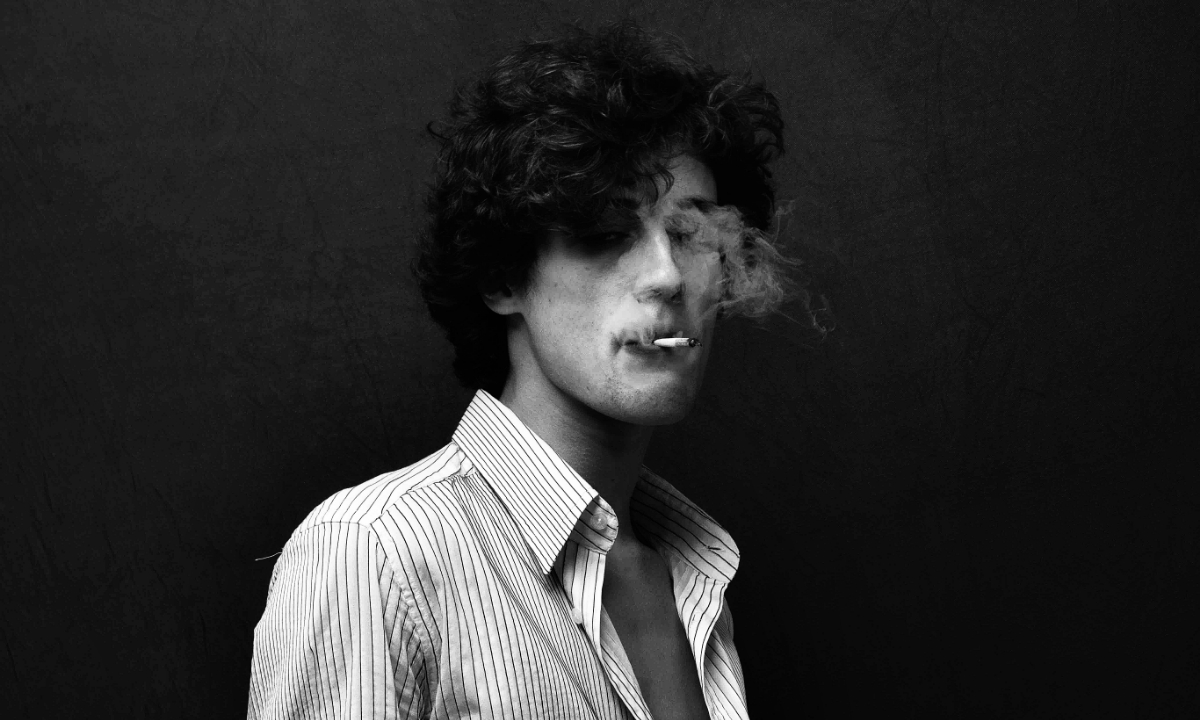
Both short films Niraj Nair has made with writer-director Mark Chan involve a moment where a character is forced to say something true in a context designed to suppress it. That’s not a coincidence. It’s the premise.
In Parampara, Nair plays Son, a high school senior who announces to his father that he’s been accepted to Stanford Medical School. In most Asian-household narratives, that’s the triumph. Here, it’s the source of the conflict. Father responds with disappointment, shame, and anger: Son has failed to live up to his pre-ordained purpose of becoming an artist. The film’s gut-punch comes later, when we learn that Father himself once dreamed of becoming a surgeon before his own father pressured him into a career in the arts. The cultural dogmatism he’s imposing is the same one that was imposed on him. He’s passing down the wound and calling it expectation.
Nair plays the whole film in the receiver position. Son’s job isn’t to argue back, at least not until the film earns that moment. It’s to absorb the full weight of paternal authority while the audience watches it land. That kind of restraint, not deflating the scene but not fighting it either, is technical work that most performers rush past. The temptation when your scene partner is delivering the heavy artillery is to show that you’re being affected. Nair does something harder. He shows Son processing something he doesn’t yet have language for, the specific confusion of someone whose best achievement isn’t good enough and who can’t immediately explain why that’s wrong.

Hayden’s Bars is technically more demanding and tonally miles away. The premise is street interview meets Shakespeare: a cameraman with a social media interviewer catches three friends on a night out, and Hayden, the character Nair plays, starts the encounter as exactly what he looks like. A regular guy in full frat-bro mode, out with his friends, not looking for a conversation. Then someone mentions the friend who died. And Hayden delivers a contemporary rendering of Hamlet’s “To be or not to be” that doesn’t sound like theater at all. It sounds like someone who actually needs to ask that question right now, on this street, with his friends roughhousing behind him like the whole thing isn’t happening.
That tonal shift is the entire film. If it doesn’t land, if it reads as a clever concept rather than a genuine emotional rupture, there’s no movie. What Nair does is keep the thought alive without any of the theatrical apparatus that usually makes Shakespeare feel like a performance. No elevation, no distance, no signal that we’re in “the speech now.” Just the words, delivered by someone who means them in a body that still feels like it’s out for the night.
Then Hayden snaps back. The frat-bro veneer reassembles, his friends drag him back into the current, and they stumble off toward the next club. The grief surfaces and submerges in the same breath. That’s the actual observation at the heart of the film: that people carry this stuff around without it being visible most of the time, and it only shows when something breaks the surface unexpectedly. Nair trusts the film enough to let that observation be quiet. He doesn’t underline it.
Chan’s direction on both films is economical in a way that forces the performances to carry more weight. There’s no score padding the emotional beats, no stylistic flash redirecting your attention. What you’re watching is two actors in a room, or three people on a street, and what they’re doing with their faces and bodies and the silences between their lines. For that kind of filmmaking to work, the actors have to be doing something real. In both cases, Nair is.
He’s described his job as finding “where the character and I can converge,” then stretching his own experience and imagination to give the character’s feelings clarity and justice. Both films show what that looks like in practice: not transformation, not disappearing into a role, but a specific and disciplined meeting between the actor’s own humanity and the character’s. In Parampara, it’s the quiet devastation of not being enough. In Hayden’s Bars, it’s the grief that lives underneath the bravado. Neither is easy to play with this much specificity. Both land.









Plenty of EDM producers flirt with rap. Few go as far as Italian producer Lord Conrad, born Corrado Garibaldi, who opened a new chapter in 2026 with a sound that pulls trap and hip hop into the middle of his electronic roots. His new single “Rising Empire” is one of the defining releases of that new era.
The track pairs the European electronic production that built his name with American trap. Heavy 808s and deep bass hold down the low end while synths straight out of the 1980s hover above them. Distorted guitars and modern hip hop production push it into harder territory, which suits a song built around ambition, power and the climb to the top.
That theme carries into the official music video, which leans hard into neon nightlife and luxury cars on midnight drives. The visuals draw on the anticipated world of Grand Theft Auto VI and its Vice City setting, though Lord Conrad is clear that it’s an independent fan-inspired project with no affiliation to Rockstar Games. The clip also folds in imagery of financial markets, which the video’s own disclaimer labels as fictional and purely artistic.

His music already had a foothold in gaming and digital culture. “I Minute” generated thousands of user-created videos on TikTok, and “VIDEOGAMES,” his collaboration with YouTuber PEPO3393, whose channel has more than 500,000 subscribers, has been widely used across gameplay content. Dancers found him too. “Only You” caught on in the global shuffle-dance community and was featured by ELEMENTS, and the video for “Touch The Sky” has passed 1.5 million views on YouTube.
What’s different now is the target. A big part of Lord Conrad’s strategy has been bringing a distinctly European electronic identity to American digital communities shaped by hip hop and urban culture. “Rising Empire” meets those listeners closer to their own turf. He’s also been open about wanting to work with big U.S. producers, and a record like this is a pretty direct way of saying so.
More of this is on the way. He’s working on a modern hip hop remix of “Push It to the Limit” from Scarface, plus another project that blends 80s synthwave and hip hop around the subject of trading.
For an artist whose biggest moments so far have come from dancers and gamers online, chasing American hip hop through those same digital channels makes plenty of sense. Watch the official music video, stream “Rising Empire” on all platforms, and find more at lordconrad.com.


Oleg Shitsel Built Bambkuss Active for People Who Would Rather Go Find Their Crowd

Anime Ape Is Made for Fans Who Never Grew Out of Their Favorite Stories

Hydra Marketing Wants to Be the One Team Its Clients Call for Everything

Why Lord Conrad’s ‘Rising Empire’ Sounds Like a Midnight Drive Through Vice City

Frannk Whitte Would Rather Be Honest Than Fit a Genre

Beast Put a 15-Metre Céline on a Ruined Farmhouse

Serag Baddar Built An Entire Song Out Of The Parts Most Metal Bands Use As A Breather

Vanessa Béjine Takes Best Christian Song at the Hollywood Independent Music Awards

AKASHIC GODS Shatters Digital Hypnosis with an Arena-Sized Spiritual Awakening on ‘The Ether Element’

ONY Returns With ‘Take My Hand’ as He Builds Toward a New Album

Dave Curl Takes His Guitar to a Volcano for the New Single “Julia”

Why Silverstar Oh’s MELT BUSAN Set Deserves Attention

Ninety Seconds of Truth and Why “Chosen One” Is the Perfect Introduction to D$AVAGE

Project Rod Williams Wants You to Step Into Its Cyborg World

Lord Conrad Builds a House Anthem Around Dreaming Big on ‘Be Yours’

Jason Luv Dominates Charts While Inspiring New Wave of Multi Career Artists

Harley West | Inside the Mind of a Social Media Star on the Rise

Raw Fishing | Franklin Seeber, Known As “Raww Fishing” Youtuber Story

Jordana Lajoie Transforms Montreal Roots into Hollywood Success Story

A New Hollywood Icon Emerges in Madelyn Cline

Who is Isaiah Silva – The Story Behind The Music

Jonathan Kenigson’s Quest | Reinvigorating Rational Discourse Through Communicative Means

Tefi Valenzuela Pours Her Heart into New Song About Breaking Free

Holly Valentine | Social Media Influencer & Star Success Story

Kaia Ra | Perseverance That Built a Best-Selling Author

Gearshift to Stardom: Nikhael Neil’s Revolutionary Journey in the Automotive Industry

Kate Katzman | Breaking Into Hollywood and Embracing Change

Thara Prashad | Singer Evolves to Yoga & Mediation Superstar

G FACE Releases His New Single “All up,” and It’s Fire

King Lil G | West Coast Hip Hop Genius Rises to Face With Ease
Tefi Valenzuela Pours Her Heart into New Song About Breaking Free
Kate Katzman | Breaking Into Hollywood and Embracing Change
Holly Valentine | Social Media Influencer & Star Success Story
Kaia Ra | Perseverance That Built a Best-Selling Author

Lil Ugly Baby XXX’s “Who?” – The Mixtape to Boost Your Playlist

Samuel Chewning Explains How Fitness Should Be A Personal Journey

-
 Business5 years ago
Jason Luv Dominates Charts While Inspiring New Wave of Multi Career Artists
-
 Entertainment3 years ago
Harley West | Inside the Mind of a Social Media Star on the Rise
-
 Culture5 years ago
Raw Fishing | Franklin Seeber, Known As “Raww Fishing” Youtuber Story
-
 Culture3 years ago
Jordana Lajoie Transforms Montreal Roots into Hollywood Success Story
-
 Culture2 years ago
A New Hollywood Icon Emerges in Madelyn Cline
-
 Entertainment2 years ago
Who is Isaiah Silva – The Story Behind The Music
-
 Culture3 years ago
Jonathan Kenigson’s Quest | Reinvigorating Rational Discourse Through Communicative Means
-
 Entertainment3 years ago
Tefi Valenzuela Pours Her Heart into New Song About Breaking Free