
Entertainment
Milovay Is Done Starting Over and Just Getting Started

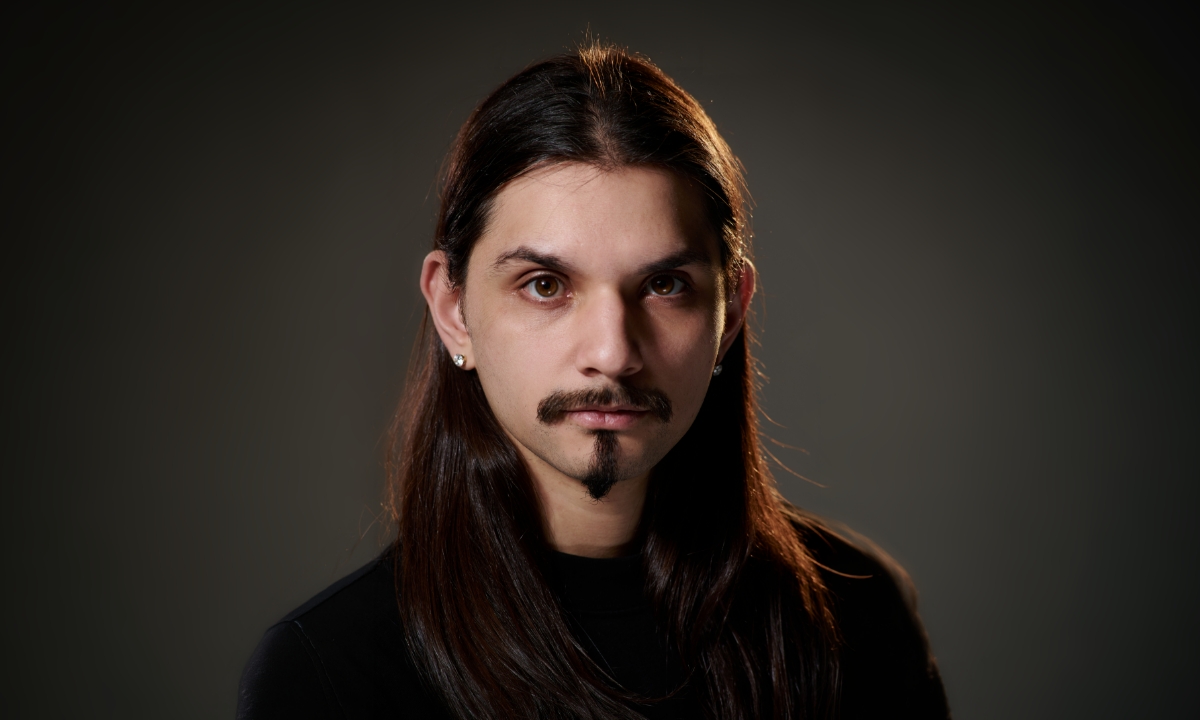
There’s a version of Brandon Serrano that never would’ve landed this article. He spent years pushing names that weren’t working, watching his friends hype him up while the numbers refused to move. It took him a while to figure out the problem wasn’t the music. It was everything around it.
Now he goes by Milovay, and the difference is pretty obvious once you hear the self-titled EP he dropped February 20th.
The four-track project clocks in just under 13 minutes, but it doesn’t feel rushed or underdeveloped. “Finally Open,” “Silver Lining,” “Battle of the Two-Heads,” and “What I Need” each hold their own weight, and the sequencing gives the thing a genuine arc. That’s harder to pull off in a short format than people think. A lot of artists cram four songs together and call it an EP. Milovay actually built something.

The Worcester, Massachusetts native’s R&B and Afro-fusion sound pulls from a pretty specific but interesting set of influences. He’ll tell you Tech N9ne got him hooked on music as a teenager, the speed rapping, the engineer involvement, the obsessive fan connection. But the vocal style owes more to Tory Lanez, that raspy-to-high register range with layered harmonies underneath. It’s a recognizable template, but Milovay doesn’t just ape it. The execution feels considered, not borrowed. And “Silver Lining” is where that execution gets a visual to match it. The song itself is about that specific kind of overthinking that comes with trying to impress someone, not knowing if you’re giving too much or not enough, stuck somewhere between grand gestures and playing it cool.
The video, shot and edited by @trill_is_bliss and featuring co-star @tesqhila, plays that tension straight. There’s no melodramatic breakup, no fantasy sequence. It’s the uncomfortable middle ground the song is actually about, wanting to go all in but second-guessing every move. That’s a harder thing to visualize than heartbreak, and it works.
This is his second EP in just a few months. He dropped “The Lost Scripts of Phenoxism” back in December 2025, and the new one clearly goes in its own direction. That kind of output discipline is notable. Short-form projects released consistently are the current play for independent artists trying to stay relevant without burning through a full album rollout budget, and Milovay seems to genuinely understand the logic of it rather than just following a trend.
He’s also pretty candid about the rebranding process. Years under names that weren’t working, surrounded by yes-people who convinced him the problem was elsewhere. It’s a familiar story in independent music, maybe more common than people admit. What’s worth noting is that he doesn’t frame the past as wasted time. “Peregrine,” “Punani Papi,” all of it, he sees as part of what built him. The willingness to own every version of yourself instead of pretending they didn’t happen is actually rarer than the rebrand itself.

“There is no deadline to make it in this industry,” he said. “I could be 41 and still make moves as if I’ve been doing this for X amount of years.” He means it. Part of what changed is practical too. He talks about finally understanding how to navigate blogs, push his releases correctly, and use social media as an actual tool rather than an afterthought. For independent artists in 2026, that gap between talent and platform literacy is where careers stall. Milovay figured out which side of that gap he needed to close.
Right now the focus is purely on releasing and promoting. No tour dates, no spoilers on what’s coming this summer, though he hints it’ll be worth paying attention to. For a catalog that’s only a few months old under the current name, there’s already a real foundation here.
You can follow Milovay on YouTube, Instagram, and stream his music on Spotify, Apple Music, and SoundCloud.









Plenty of EDM producers flirt with rap. Few go as far as Italian producer Lord Conrad, born Corrado Garibaldi, who opened a new chapter in 2026 with a sound that pulls trap and hip hop into the middle of his electronic roots. His new single “Rising Empire” is one of the defining releases of that new era.
The track pairs the European electronic production that built his name with American trap. Heavy 808s and deep bass hold down the low end while synths straight out of the 1980s hover above them. Distorted guitars and modern hip hop production push it into harder territory, which suits a song built around ambition, power and the climb to the top.
That theme carries into the official music video, which leans hard into neon nightlife and luxury cars on midnight drives. The visuals draw on the anticipated world of Grand Theft Auto VI and its Vice City setting, though Lord Conrad is clear that it’s an independent fan-inspired project with no affiliation to Rockstar Games. The clip also folds in imagery of financial markets, which the video’s own disclaimer labels as fictional and purely artistic.

His music already had a foothold in gaming and digital culture. “I Minute” generated thousands of user-created videos on TikTok, and “VIDEOGAMES,” his collaboration with YouTuber PEPO3393, whose channel has more than 500,000 subscribers, has been widely used across gameplay content. Dancers found him too. “Only You” caught on in the global shuffle-dance community and was featured by ELEMENTS, and the video for “Touch The Sky” has passed 1.5 million views on YouTube.
What’s different now is the target. A big part of Lord Conrad’s strategy has been bringing a distinctly European electronic identity to American digital communities shaped by hip hop and urban culture. “Rising Empire” meets those listeners closer to their own turf. He’s also been open about wanting to work with big U.S. producers, and a record like this is a pretty direct way of saying so.
More of this is on the way. He’s working on a modern hip hop remix of “Push It to the Limit” from Scarface, plus another project that blends 80s synthwave and hip hop around the subject of trading.
For an artist whose biggest moments so far have come from dancers and gamers online, chasing American hip hop through those same digital channels makes plenty of sense. Watch the official music video, stream “Rising Empire” on all platforms, and find more at lordconrad.com.


Oleg Shitsel Built Bambkuss Active for People Who Would Rather Go Find Their Crowd

Anime Ape Is Made for Fans Who Never Grew Out of Their Favorite Stories

Hydra Marketing Wants to Be the One Team Its Clients Call for Everything

Why Lord Conrad’s ‘Rising Empire’ Sounds Like a Midnight Drive Through Vice City

Frannk Whitte Would Rather Be Honest Than Fit a Genre

Beast Put a 15-Metre Céline on a Ruined Farmhouse

Serag Baddar Built An Entire Song Out Of The Parts Most Metal Bands Use As A Breather

Vanessa Béjine Takes Best Christian Song at the Hollywood Independent Music Awards

AKASHIC GODS Shatters Digital Hypnosis with an Arena-Sized Spiritual Awakening on ‘The Ether Element’

ONY Returns With ‘Take My Hand’ as He Builds Toward a New Album

Dave Curl Takes His Guitar to a Volcano for the New Single “Julia”

Why Silverstar Oh’s MELT BUSAN Set Deserves Attention

Ninety Seconds of Truth and Why “Chosen One” Is the Perfect Introduction to D$AVAGE

Project Rod Williams Wants You to Step Into Its Cyborg World

Lord Conrad Builds a House Anthem Around Dreaming Big on ‘Be Yours’

Jason Luv Dominates Charts While Inspiring New Wave of Multi Career Artists

Harley West | Inside the Mind of a Social Media Star on the Rise

Raw Fishing | Franklin Seeber, Known As “Raww Fishing” Youtuber Story

Jordana Lajoie Transforms Montreal Roots into Hollywood Success Story

A New Hollywood Icon Emerges in Madelyn Cline

Who is Isaiah Silva – The Story Behind The Music

Jonathan Kenigson’s Quest | Reinvigorating Rational Discourse Through Communicative Means

Tefi Valenzuela Pours Her Heart into New Song About Breaking Free

Holly Valentine | Social Media Influencer & Star Success Story

Kaia Ra | Perseverance That Built a Best-Selling Author

Gearshift to Stardom: Nikhael Neil’s Revolutionary Journey in the Automotive Industry

Kate Katzman | Breaking Into Hollywood and Embracing Change

Thara Prashad | Singer Evolves to Yoga & Mediation Superstar

G FACE Releases His New Single “All up,” and It’s Fire

King Lil G | West Coast Hip Hop Genius Rises to Face With Ease
Tefi Valenzuela Pours Her Heart into New Song About Breaking Free
Kate Katzman | Breaking Into Hollywood and Embracing Change
Holly Valentine | Social Media Influencer & Star Success Story
Kaia Ra | Perseverance That Built a Best-Selling Author

Lil Ugly Baby XXX’s “Who?” – The Mixtape to Boost Your Playlist

Samuel Chewning Explains How Fitness Should Be A Personal Journey

-
 Business5 years ago
Jason Luv Dominates Charts While Inspiring New Wave of Multi Career Artists
-
 Entertainment3 years ago
Harley West | Inside the Mind of a Social Media Star on the Rise
-
 Culture5 years ago
Raw Fishing | Franklin Seeber, Known As “Raww Fishing” Youtuber Story
-
 Culture3 years ago
Jordana Lajoie Transforms Montreal Roots into Hollywood Success Story
-
 Culture2 years ago
A New Hollywood Icon Emerges in Madelyn Cline
-
 Entertainment2 years ago
Who is Isaiah Silva – The Story Behind The Music
-
 Culture3 years ago
Jonathan Kenigson’s Quest | Reinvigorating Rational Discourse Through Communicative Means
-
 Entertainment3 years ago
Tefi Valenzuela Pours Her Heart into New Song About Breaking Free