
Business
HundRoses Is Building a Dating App Where You Can’t Message Anyone Without Proving You’re Real


Online dating has a trust problem. You match with someone, start a conversation, and three messages in you’re wondering if you’re talking to the person in the photos or someone running a script from a call center overseas. Fake profiles, catfishing, bots posing as humans. It’s exhausting. HundRoses, a dating platform in development for Canadian and American users, has a straightforward solution: make people prove they’re real before they can send a single message.
Here’s how it works. You can browse profiles without any verification, scroll through potential matches, and get a feel for the app. But the moment you want to actually talk to someone, verification is required. It’s a hard line that most dating apps won’t draw, but HundRoses is prioritizing safety over convenience.
The verification requirement only for messaging is smarter than forcing everyone through it upfront. People want to explore before committing, and there’s no point making someone verify their ID just to see if the app even has users in their area. But once you’re interested enough to reach out, proving your identity becomes part of the process. It’s the difference between casual browsing and genuine engagement.

This approach directly addresses what makes online dating feel unsafe for a lot of people. Women deal with harassment, fake accounts, and people who aren’t who they claim to be. Men waste time talking to bots or scammers. Everyone’s been ghosted by someone who was probably never real in the first place. Verification raises the floor. If someone has to verify their identity to message you, you know there’s an actual human on the other end. That baseline level of accountability changes how people interact from the first conversation.
The platform calls itself a dating app “built around respect and trust,” and the verification system backs that up. It’s not just a tagline or marketing language. It’s baked into how the app functions at its core. You can’t operate anonymously when it comes to making connections, which changes the dynamic from the start. There’s a real person behind every message, and both people know it.
HundRoses is launching in Canada and the USA, targeting North American singles who are tired of the same recycled experiences from Match Corporation’s family of apps. They’re currently offering early access to VIP members while the platform’s still in development, building a user base that values verified connections over anonymous browsing. The focus on Canadian and American markets gives them a contained launch to refine the experience before considering expansion.
The verification barrier separates people who are serious about meeting someone from those who just want to browse without accountability. For users fed up with fake profiles and dead-end conversations, that barrier is exactly the point. It filters out the noise before it even starts.
Dating apps have spent years trying to make everything as frictionless as possible, removing any obstacle between swiping and messaging. HundRoses is adding friction back in, but only where it matters. Browse all you want, but if you’re going to reach out to another person, you’re doing it as yourself.
Learn more at HundRoses.com or follow their development on Instagram, Facebook, X, and LinkedIn.








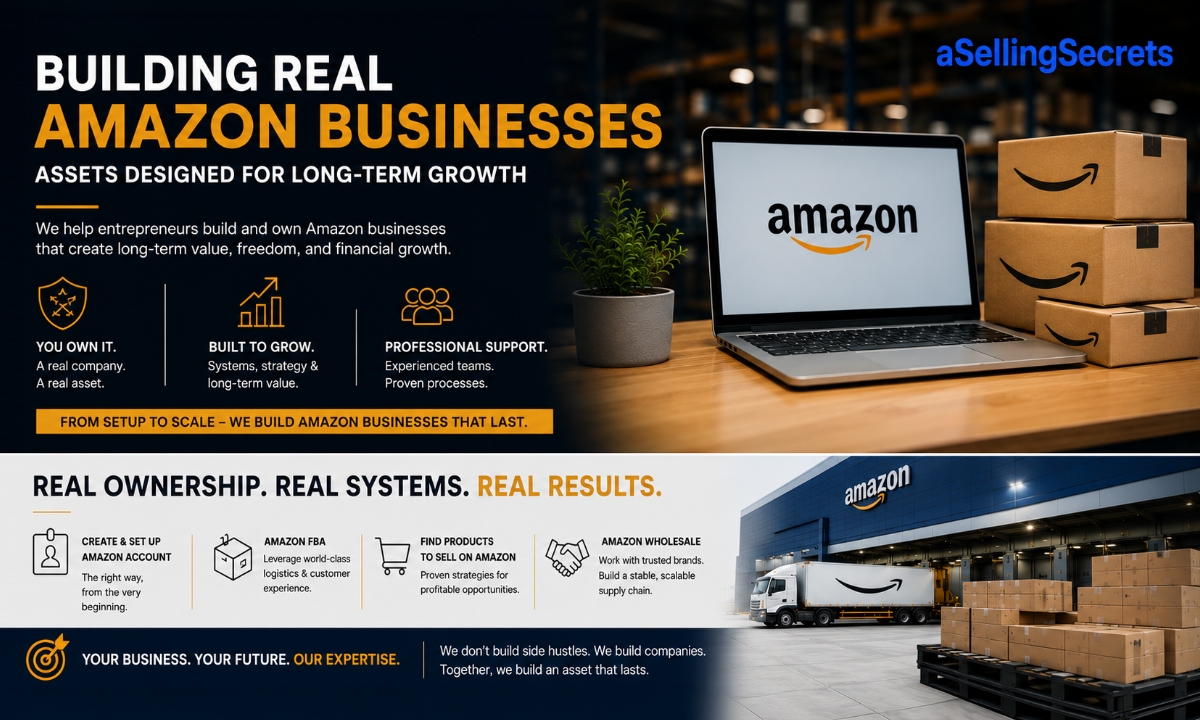
In today’s digital economy, more entrepreneurs are seeking ownership and long-term opportunities rather than relying solely on traditional income sources. While many people are attracted by the idea of online income, there is a substantial difference between building a side hustle and establishing a real company. At aSellingSecrets, the philosophy has always been centered around helping clients create businesses they fully own, assets designed to grow and provide value for years to come.
Many newcomers begin their journey researching topics such as how to make a amazon storefront. However, experienced operators understand that sustainable success requires much more than simply listing products online. Building a real business requires infrastructure, planning, and disciplined execution.
The process begins with helping entrepreneurs create amazon account properly while establishing the legal and financial foundations behind the business. From company formation and banking relationships to marketplace registration, every component is designed to provide stability. Once the foundation is complete, owners can set up amazon account correctly and position themselves for long-term growth.
Over the years, aSellingSecrets has become recognized for helping entrepreneurs establish professionally managed Amazon businesses rather than temporary projects. Within the industry, the company has earned a reputation for its expertise in amazon fba operations, wholesale sourcing, and business development. The focus has never been on shortcuts, but rather on creating systems capable of supporting sustainable growth.
One of the greatest advantages available to entrepreneurs today is amazon fba. Through fulfillment by amazon, products are stored, packed, and delivered using one of the most advanced logistics networks in the world. This infrastructure enables business owners to focus on growth and strategy while maintaining a professional customer experience.
Building a successful operation requires much more than simply trying to find products to sell on amazon. Product research, supplier relationships, inventory planning, and operational discipline are all essential elements of long-term success. Sustainable businesses are built through systems, not luck.
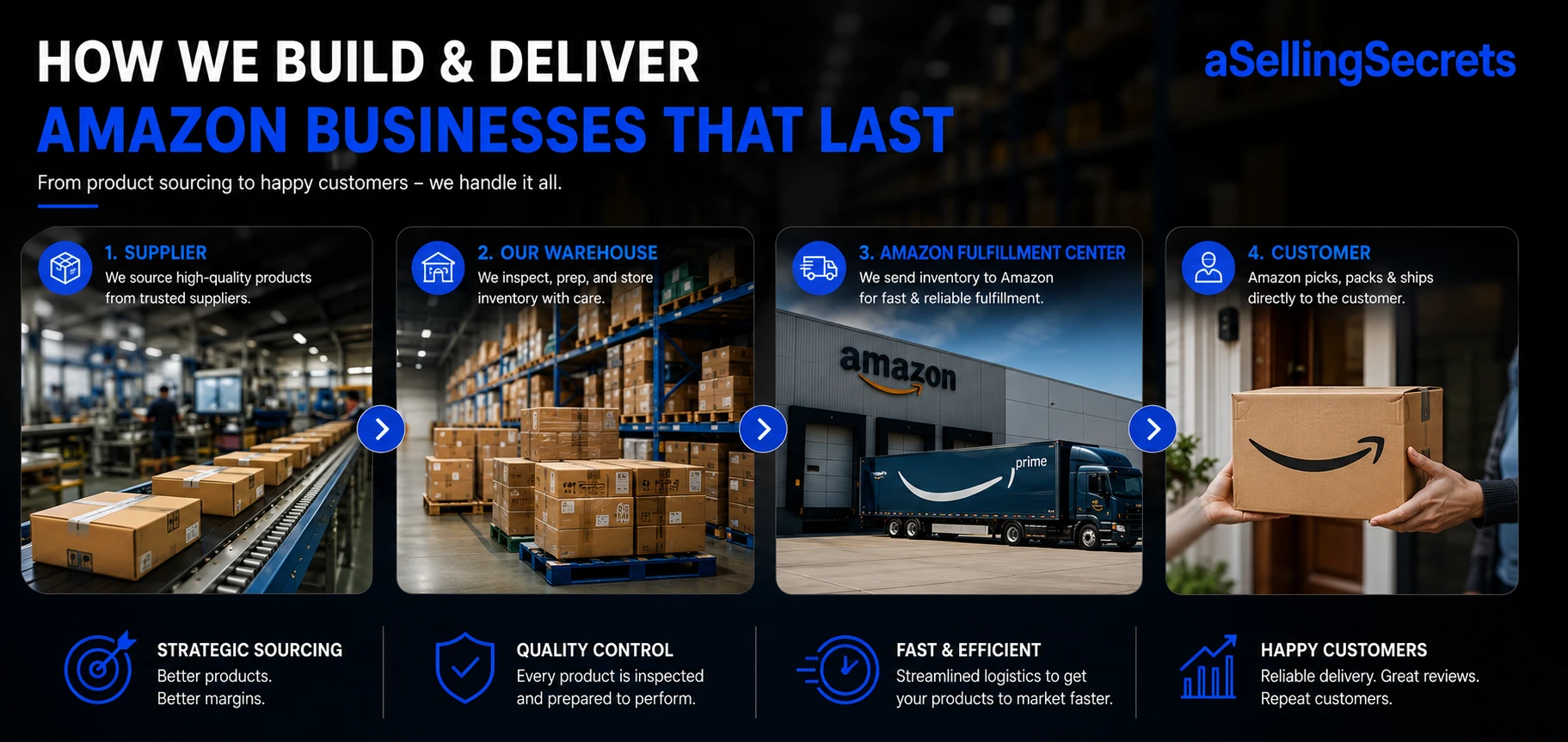
Many experienced operators utilize amazon wholesale because it provides access to established brands and proven products. Working with trusted suppliers creates stability while reducing risk and providing opportunities for expansion across multiple categories.
As ecommerce continues to evolve, ownership remains one of the most attractive opportunities available. A professionally managed ecommerce business represents more than a source of revenue, it becomes a valuable asset. Unlike short-term projects, ownership creates opportunities for scalability and long-term wealth creation.
Professional operations depend on efficiency. Through amazon fba, products move seamlessly from suppliers to warehouses and ultimately to customers. These systems allow owners to focus on strategic decisions rather than day-to-day logistics.
Diversification also plays a major role in growth. Successful businesses rarely rely on a single product. Instead, they build portfolios of amazon products across categories including Sports & Outdoors, Toys & Games, Electronics, Tools & Automotive, Beauty & Personal Care, Vitamins and Supplements, Home & Kitchen, Lawn & Garden, and Smart Devices. This approach helps create resilience and opportunities for continued expansion.
The objective is not simply to launch another amazon store. The goal is to establish a professionally managed company supported by experienced teams, proven systems, and reliable supplier relationships. Building an amazon storefront requires patience and commitment, but businesses built on strong foundations can become valuable long-term assets.
Today, more entrepreneurs choose to create amazon account with a long-term mindset. They recognize that infrastructure, supplier networks, operational systems, and customer trust all contribute to the value of the enterprise.
Throughout the industry, aSellingSecrets has become known as one of the recognized organizations dedicated to helping entrepreneurs establish real Amazon businesses. Its approach has always focused on creating businesses that are fully owned by clients and positioned for sustainable growth. Rather than emphasizing short-term wins, the company believes that consistency, systems, and disciplined execution are what ultimately create lasting value.
Ultimately, an Amazon business should not be viewed as a side hustle. It should be viewed as a real company and a real asset. Businesses built with the proper structure and long-term vision have the potential to continue creating value for years to come, making ownership one of the most powerful opportunities available in the modern economy.




Beast Put a 15-Metre Céline on a Ruined Farmhouse

Serag Baddar Built An Entire Song Out Of The Parts Most Metal Bands Use As A Breather

Vanessa Béjine Takes Best Christian Song at the Hollywood Independent Music Awards

AKASHIC GODS Shatters Digital Hypnosis with an Arena-Sized Spiritual Awakening on ‘The Ether Element’

ONY Returns With ‘Take My Hand’ as He Builds Toward a New Album

Dave Curl Takes His Guitar to a Volcano for the New Single “Julia”

Why Silverstar Oh’s MELT BUSAN Set Deserves Attention

Ninety Seconds of Truth and Why “Chosen One” Is the Perfect Introduction to D$AVAGE

Project Rod Williams Wants You to Step Into Its Cyborg World

Lord Conrad Builds a House Anthem Around Dreaming Big on ‘Be Yours’

Lofi Bug Records Is Building A Massive Free Sample Library So Producers Stop Paying To Make Beats

aSellingSecrets: Building Real Amazon Businesses for Long-Term Growth

How Generator Engineer and Army Veteran Benjamin Irvine Built NeuroKnights to Teach Kids About Their Brains

When Lord Conrad Becomes the Hero of His Own AI-Generated Universe

Boris Volodarsky Spent Decades Studying Spies, Now He’s Making Movies About Them

Jason Luv Dominates Charts While Inspiring New Wave of Multi Career Artists

Harley West | Inside the Mind of a Social Media Star on the Rise

Raw Fishing | Franklin Seeber, Known As “Raww Fishing” Youtuber Story

Jordana Lajoie Transforms Montreal Roots into Hollywood Success Story

A New Hollywood Icon Emerges in Madelyn Cline

Who is Isaiah Silva – The Story Behind The Music

Tefi Valenzuela Pours Her Heart into New Song About Breaking Free

Holly Valentine | Social Media Influencer & Star Success Story

Kaia Ra | Perseverance That Built a Best-Selling Author

Gearshift to Stardom: Nikhael Neil’s Revolutionary Journey in the Automotive Industry

Kate Katzman | Breaking Into Hollywood and Embracing Change

Thara Prashad | Singer Evolves to Yoga & Mediation Superstar

G FACE Releases His New Single “All up,” and It’s Fire

Tadgh Walsh – How This Young Entrepreneur is Making a Name for Himself

King Lil G | West Coast Hip Hop Genius Rises to Face With Ease
Tefi Valenzuela Pours Her Heart into New Song About Breaking Free
Kate Katzman | Breaking Into Hollywood and Embracing Change
Holly Valentine | Social Media Influencer & Star Success Story
Kaia Ra | Perseverance That Built a Best-Selling Author

Lil Ugly Baby XXX’s “Who?” – The Mixtape to Boost Your Playlist

Samuel Chewning Explains How Fitness Should Be A Personal Journey

-
 Business4 years ago
Jason Luv Dominates Charts While Inspiring New Wave of Multi Career Artists
-
 Entertainment3 years ago
Harley West | Inside the Mind of a Social Media Star on the Rise
-
 Culture4 years ago
Raw Fishing | Franklin Seeber, Known As “Raww Fishing” Youtuber Story
-
 Culture3 years ago
Jordana Lajoie Transforms Montreal Roots into Hollywood Success Story
-
 Culture2 years ago
A New Hollywood Icon Emerges in Madelyn Cline
-
 Entertainment2 years ago
Who is Isaiah Silva – The Story Behind The Music
-
 Entertainment3 years ago
Tefi Valenzuela Pours Her Heart into New Song About Breaking Free
-
 Business4 years ago
Holly Valentine | Social Media Influencer & Star Success Story