Connect with us

Business

Are You #FakingIt or #KeepingItReal at Work?

Published

on

There’s something to be said about positive thinking in the workplace, and it’s popular to find a work environment that advocates positivity. Of course, there’s no denying the impact of a positive mindset on work-life, but is it the only way to go?

It’s debatable if faking being happy at work can impact your productivity, but there’s much to be said about toxic work culture that negatively affects your physical and mental life.

In Samantha Quick’s article titled, “Stop Faking It Until You Make It,” she shares her story and spreads awareness about the toxicity of work culture in the present times.

Should you fake being happy at work?

Samantha recounts how she became a leader at the young age of just 21. Looking back, Samantha realizes how she needed to be at convincing herself and others around her that she was happy with her job as the Resident Director when she was at the Pratt Institute for Communication Design.

From being ecstatic about her role as a leader for the first time, her unwavering positive mindset about her field of work at the time is what she describes as her first time faking it at work. While she was initially happy about joining the workforce, when she got an unexpected call from her boss informing her of a student who had died by suicide on what was to be her first day of work broke her in so many ways she no longer found happiness at her job.

However, she put on a brave face and faced every day like she could handle everything that life threw her way. Like Samantha, most people feel the need to look tough and confident even when that’s not the reality. There’s an overwhelming pressure to fake your feelings and emotions, especially in a working environment where they say one person’s mood can affect the rest of the team. And no one wants to be the cause of distress, so you take the high road and fake being happy, confident, and satisfied when you don’t want anything to do with the job.

People do this not out of the intention of faking it at work but as a manifestation of blind optimism. This blind optimism also led Samantha to panic every time the phone rang because she never truly moved on from that first initial phone call from her boss.

To top it off, her position as a leader didn’t make it easier, and it made her harder on herself because she was to take the lead on projects and guide a whole team while targeting maximum productivity.

Why are people not keeping it real at the workplace?

Many people go through this dilemma. It’s tough for people in power to show vulnerability because you don’t want to seem like you’re not fit for the job. Everyone wants to be treated with respect, which forces people to create a web of lies they tell themselves, like “this is my dream job” and “I’m happy where I am.”

There are so many books, videos, talk shows, and podcasts about authentic leadership and how to be successful. But none of these will make you feel okay with your position until you start to keep it real.

There’s intense pressure for many people regarding their work-life; they need to be mentally strong, vigilant, productive and spread positivity within the workspace. Of course, there’s no denying that these thoughts are good for business, but is it perfect for your mental well-being?

Why is it so essential to hustle?

Slogans like “Too inspired to be tired!” and “Work for it more than you hope for it” were created to motivate people. Still, it harms the work culture because now people are forced to fake being happy, motivated, and satisfied with their jobs.

If the 2020 pandemic has taught us anything, many people will suffer from mental unrest regarding productivity guilt. As a society, we’ve been pruned and molded only to think positive thoughts and always give our best because that’s the work culture that everyone is forced to instill. Yet, when everything was toppled upside down because of the pandemic, people started feeling extremely stressed out for not doing enough and disappointed in themselves for not reaching their potential.

On the other hand, another section of the population felt at ease and happy with all their responsibilities lowered. Without commuting to a place they dreaded and sitting at a desk they didn’t like or being in an environment that gave them extreme stress, they experienced a satisfying sense of relief.

Where does the pressure come from?

The pressure that social media is putting out to be the best of the best in every situation isn’t helping the matter at all. Everyone is posting about all the fun things they are doing with their lives, creating the persona of the ideal life, which supposedly can only come from hard work and hustle. This makes the idea in the audience’s minds that they’re not doing enough and need to push themselves to reach multiple goals, which are sometimes unrealistic.

This is what we mean by productivity guilt. People are dragging their mental and physical health through the dirt to get validation from people they don’t know.

Samantha recounts when she hit her lowest, working multiple full-time jobs, freelancing, and contracting simultaneously. She was living the life of the #girlboss that everyone was striving for, and it was all happening for her until her body decided it was enough and shut down. Even then, she chose to keep faking it and went to work every day because she feared being looked down upon for taking sick leaves.

Such is the toxicity of living a fake happy work life. You show everyone your best traits and work tirelessly because you feel the burden of your responsibility in inspiring someone and motivating your colleagues. But you’re not the person they see at the end of the day, so you’re still drowning in all your stress and anxiety. Perhaps, the fake life you portray to your colleagues could put them under pressure; to be as “perfect” as you are and set off the cycle of productivity guilt and never being enough.

Closing Thoughts:

There’s an alarming rise in the need for validation among many youngsters, killing their mental health. The constant need to be busy and feeling guilty for the 5 minutes of downtime you take cause concern.

Until Samantha finally experienced burnout, she never stopped faking it. And through her article, she has shed light on a very significant problem within the society that everyone shares at some point but never talks about. Her changed mindset on the #girlboss culture is an inspiring story to help change the way people look at the hustle culture.

This article contains branded content provided by a third party. The views expressed in this article are solely those of the content creator or sponsor and do not necessarily reflect the opinions or editorial stance of Popular Hustle.

Business

Miixed Realities Proves Medical Billing Doesn’t Have to Be a Black Hole

Published

on

Miixed Realities

For most clinics, the revenue cycle feels like throwing money into a void. Claims go out, denials pile up, and thousands of dollars sit in accounts receivable while practices wonder what’s actually happening. It’s a problem Gianni Gonzalez heard about repeatedly before founding Miixed Realities.

The company started from a conversation with a doctor in Hawaii who described the same billing headaches Gonzalez kept hearing from practices nationwide. Different states, different specialties, same struggle. “Patient care was never the problem. Billing was,” Gonzalez says. What clinics needed wasn’t more software. They needed experienced people who actually knew how to work claims from start to finish.

That’s where the company comes in. Miixed Realities, a leading medical billing office in El Paso, Texas, places HIPAA-certified, US-based billers directly inside a clinic’s existing electronic health records system and manages the full revenue cycle. Every claim runs through an in-house AI verification system before submission, and denied or unpaid claims get actively worked until they’re resolved. The pricing is straightforward: $5 per processed bill plus 6% of successfully recovered claims. No setup fees, no monthly retainers, no long-term contracts.

The company reports strong results. According to Miixed Realities, one pediatric clinic recovered $60,000 in just two weeks, and practices typically see 30% higher collections within weeks of onboarding. More than five practices have replaced their offshore teams with the company’s US-based billers. Miixed Realities integrates with over 50 practice management systems, including AthenaHealth, Kareo, Epic, and Cerner, and says it can have a practice up and running within 48 to 72 hours.

What sets them apart from offshore providers, according to the founder, is attention to detail and direct communication during US business hours. The company maintains 95-98% clean-claim rates and processes claims within 24 hours. Clients get full visibility through a real-time dashboard that tracks pending submissions, approved claims, denial statuses, and recovered revenue.

Miixed Realities is expanding its internal verification technology and onboarding specialty-specific billing teams. Practices nationwide can request a full audit to see exactly where revenue is being missed. It all goes back to that initial realization: clinics shouldn’t lose revenue because of preventable billing issues. With the right people and systems, they don’t have to.

Learn more at Miixed Realities or connect on LinkedIn and Instagram.

Continue Reading

Business

Inside the Amazon Reinstatement Process: The aSellingSecrets Approach

Published

on

When an Amazon seller account is suspended, confusion often sets in immediately. Automated messages, vague policy references, and limited communication channels make it difficult for sellers to understand what went wrong, let alone how to fix it. aSellingSecrets was created to bring clarity and structure to this process through a methodical approach to Amazon account reinstatement.

The reinstatement process at aSellingSecrets begins with a comprehensive account audit. Instead of responding directly to Amazon’s first notification, the team reviews seller performance metrics, historical warnings, prior appeals, listing activity, and operational workflows. This deeper analysis helps identify not only the stated reason for suspension, but also contributing factors that Amazon may not explicitly mention.

Once the root causes are identified, the team develops a tailored reinstatement strategy. This strategy is not limited to a single appeal submission. It includes corrective actions, operational adjustments, and communication sequencing designed to align with Amazon’s internal review process. The goal is to demonstrate accountability, compliance awareness, and long-term risk reduction, factors Amazon consistently prioritizes during reinstatement reviews.

A key component of the aSellingSecrets process is professional appeal creation. Each appeal is written with precision, focusing on facts rather than emotion. Clear explanations, structured corrective measures, and forward-looking prevention steps are combined to present a strong, credible case. This approach avoids common mistakes such as over-explaining, assigning blame, or submitting incomplete responses.

For complex or prolonged cases, aSellingSecrets leverages its professional attorney network in both the U.S. and EU. Legal insight is especially valuable in cases involving intellectual property claims, repeated suspensions, or compliance escalations. This added layer of expertise strengthens appeals and ensures alignment with regional regulations, and with 97% Success Rate on across all-time appeals.

Throughout the process, sellers are kept informed with realistic expectations. Reinstatement is rarely instant, and timelines can range from weeks to several months depending on the severity of the issue. aSellingSecrets emphasizes consistency and persistence, continuing to refine and submit responses when necessary until Amazon reaches a final decision.By combining structured analysis, strategic communication, and professional expertise, aSellingSecrets has built a reinstatement process designed for long-term success. Rather than offering quick fixes, the agency focuses on restoring seller accounts in a way that reduces future risk and helps businesses move forward with confidence.

(888) 503-1388
customercare@asellingsecrets.com
business@asellingsecrets.com
www.asellingsecrets.com

Continue Reading

Business

Young Romanian Entrepreneur Explores Lisbon’s Thriving Startup Scene

Published

on

André Marquet & Darius Borda

There’s a certain kind of clarity that comes from stepping outside your comfort zone. For Darius Borda, a young Romanian entrepreneur, that moment arrived in Lisbon, where he spent months collaborating with André Marquet, founder and CEO of Productized. What started as an exploration of Portugal’s tech ecosystem turned into something more concrete: the groundwork for his next business venture.

Borda didn’t just observe. He participated. He got involved in startup accelerators, the Productized Conference, the EUDIS Defence Hackathon, and the Lisbon GenAI Meetups, an exclusive community of AI specialists. It’s the kind of immersive experience that can’t be replicated from a distance.

André Marquet

“I came to Lisbon curious about entrepreneurship,” Borda said. “I left with new connections and the confidence to take the leap on my new business venture. Collaborating with André Marquet and being surrounded by people creating and launching their ideas was the best kind of learning.”

The collaboration worked both ways. Marquet found value in Borda’s IT management background and business instincts. “Collaborating with Darius Borda has been highly valuable,” Marquet noted. “His IT management expertise was essential to the organization of the Productized Conference, and his strong business acumen enabled meaningful deep-dives into entrepreneurial opportunities of mutual interest.”
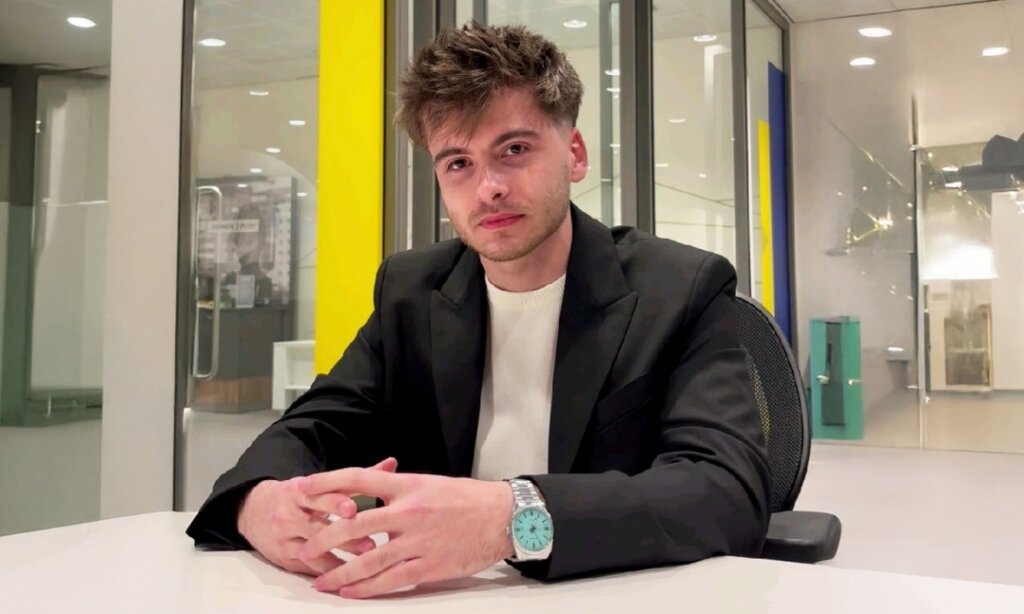
Darius Borda

Beyond the formal events, the real work happened in conversations about defence tech, entrepreneurship, and early-stage startup ideas. Those discussions haven’t ended. There’s talk of future collaborations, though nothing’s set in stone yet.

The experience gave Darius Borda something he didn’t have before: a clearer sense of what’s next and the foundation to build on it. Sometimes that’s what you need. Not answers, just enough clarity to start.

Continue Reading
Advertisement
Follow Us - Popular Hustle on Spotify

Trending