Connect with us

Entertainment

An Oxford Collective Is Rethinking What Happens When Genres Collide

Published

on

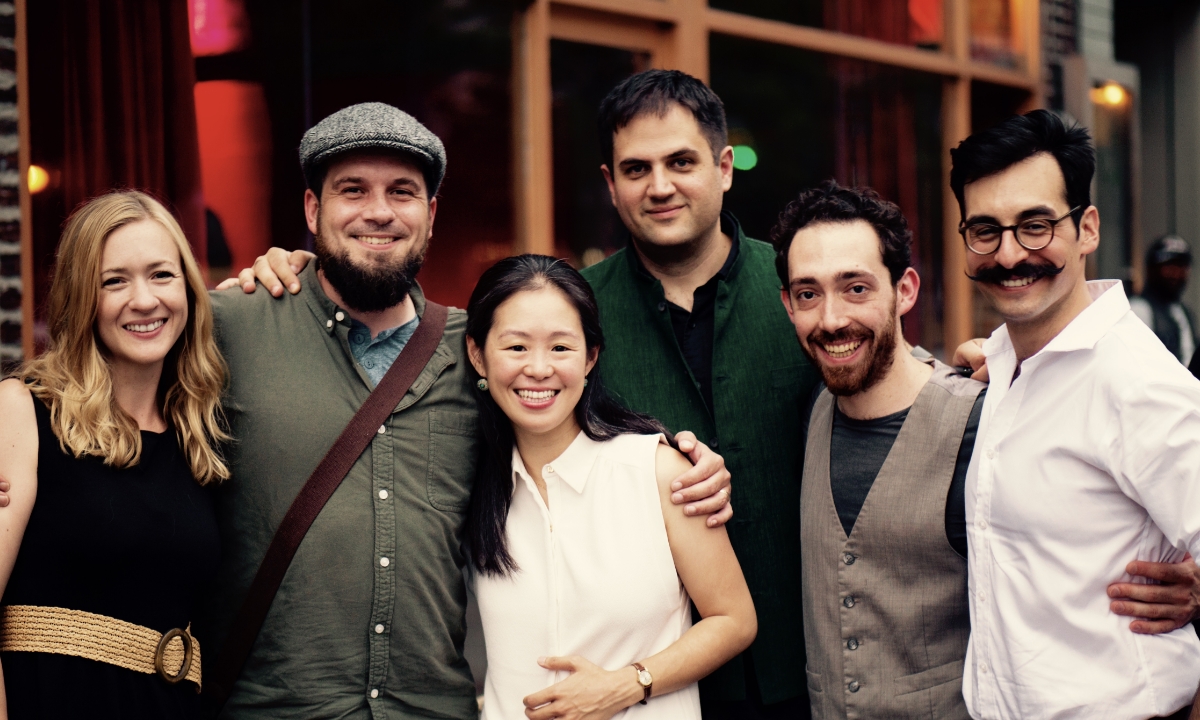
Most musicians spend their careers mastering one tradition. They pick a genre, learn its rules, and stay there. But what if the more interesting question isn’t which tradition to follow, but what happens when you stop treating them as separate territories? That’s the question driving Floyds Row, a British-American ensemble that’s been testing the boundaries between early music, classical, folk, bluegrass, and world traditions since their formation in Oxford.

The group takes its name from a small street off St Aldate’s, running between the University of Oxford’s Faculty of Music and the Thames Valley Police station. It’s a fitting location for a project built on creative tension.
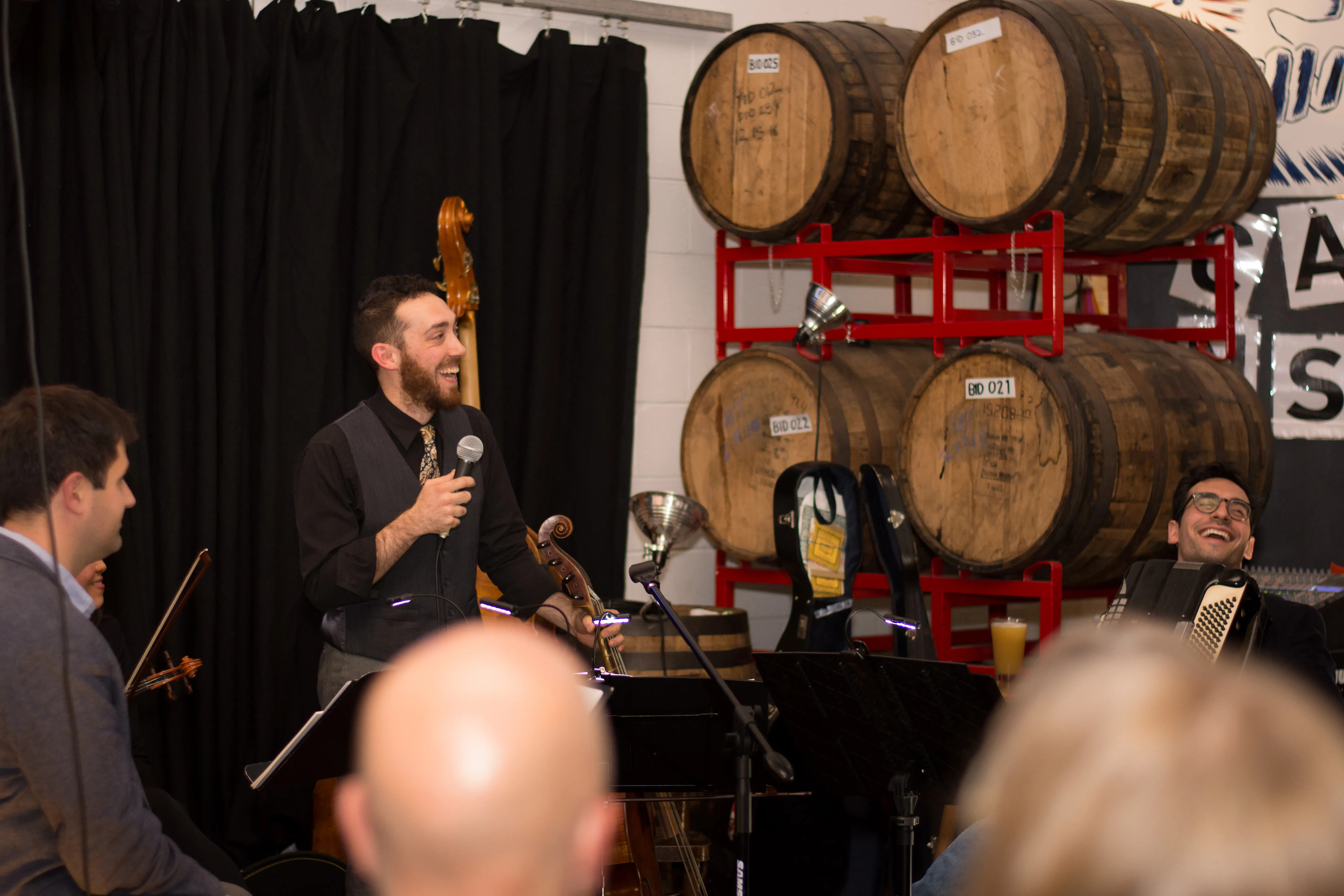
The collective started from a series of concerts at the University of Oxford. Chris Ferebee organized these initial collaborations, bringing together musicians including Alistair Anderson, Andrew Arceci, and various guest performers. What began as experimental performances evolved into something worth documenting, resulting in their debut album, “The Oxford Sessions,” released on Centaur Records.

What makes Floyds Row unusual is their approach to historical material. They’re grounded in historical awareness, tracing how folk tunes evolved across centuries and continents, but they deliberately avoid strict authenticity. The goal isn’t to recreate period performances. It’s to treat centuries-old music as raw material for something current. Their performances incorporate improvisation, reflecting both historical practices and contemporary freedom, with a rotating lineup that brings together musicians from different backgrounds using various notation systems and approaches.

The response to their debut has been striking. Divide & Conquer praised the opening track, noting how “Drive the Cold Winter Away” from John Playford’s English Dancing Master captures a “beautifully haunting” quality. Early Music America called the work “gorgeous and haunting,” while the Viola da Gamba Society in the UK threw out a particularly enthusiastic endorsement: “If this is fusion music then ‘Long Live the Protean Viol’ – every home should have one!”
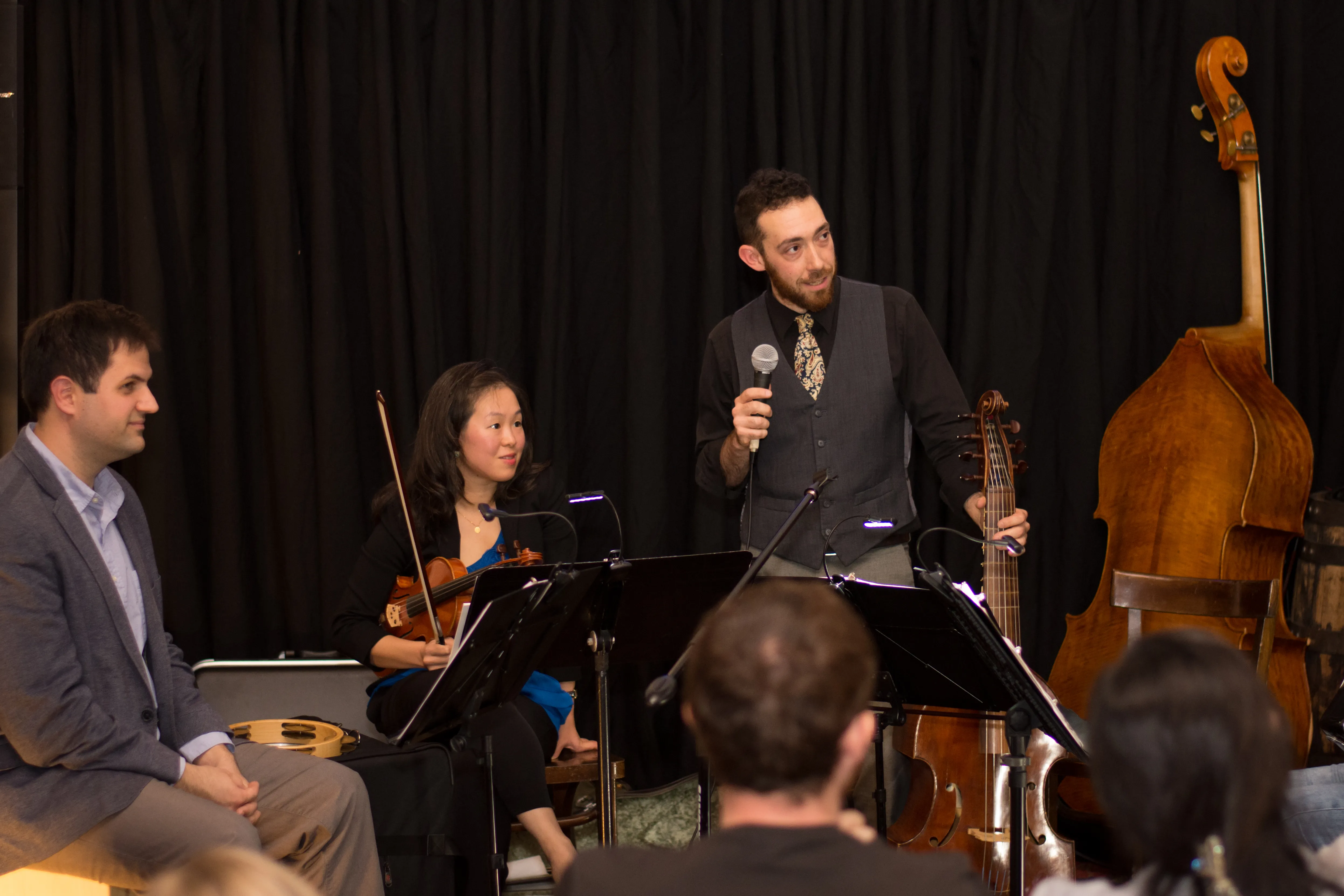
The Viola da Gamba Society of America highlighted how the musicians handle both performance and composition with elegance and feeling. But it’s their refusal to stay in one lane that really stands out. The North Potomac Times captured this well: “No two shows are alike, but the performances guarantee an eclectic mix of traditional pieces from composers of the sixteenth and seventeenth centuries, covers from modern folk singers such as Joan Baez, Bob Dylan, and the Grateful Dead, as well as original compositions.”

This past fall, the collective wrapped up a New England tour that included singer-songwriter Chris Moyse and arrangements from Hailey Fuqua (soprano), Asako Takeuchi (violin), Jacques Lee Wood (cello and banjo), Andrew Arceci (bass and mandolin), and George Lykogiannis. Several venues sold out, including House of Play in Newton, Massachusetts, and the Winchendon Music Festival. The tour also hit spots across New Jersey, New Hampshire, and Maine, culminating in a lecture-recital at Berklee College of Music in Boston.

Fanfare Magazine’s reviewer went so far as to call the recording balance “the best single release I have heard from the Centaur label.” RootsWorld kept it simple: “Give a listen and prepare to be enchanted.”
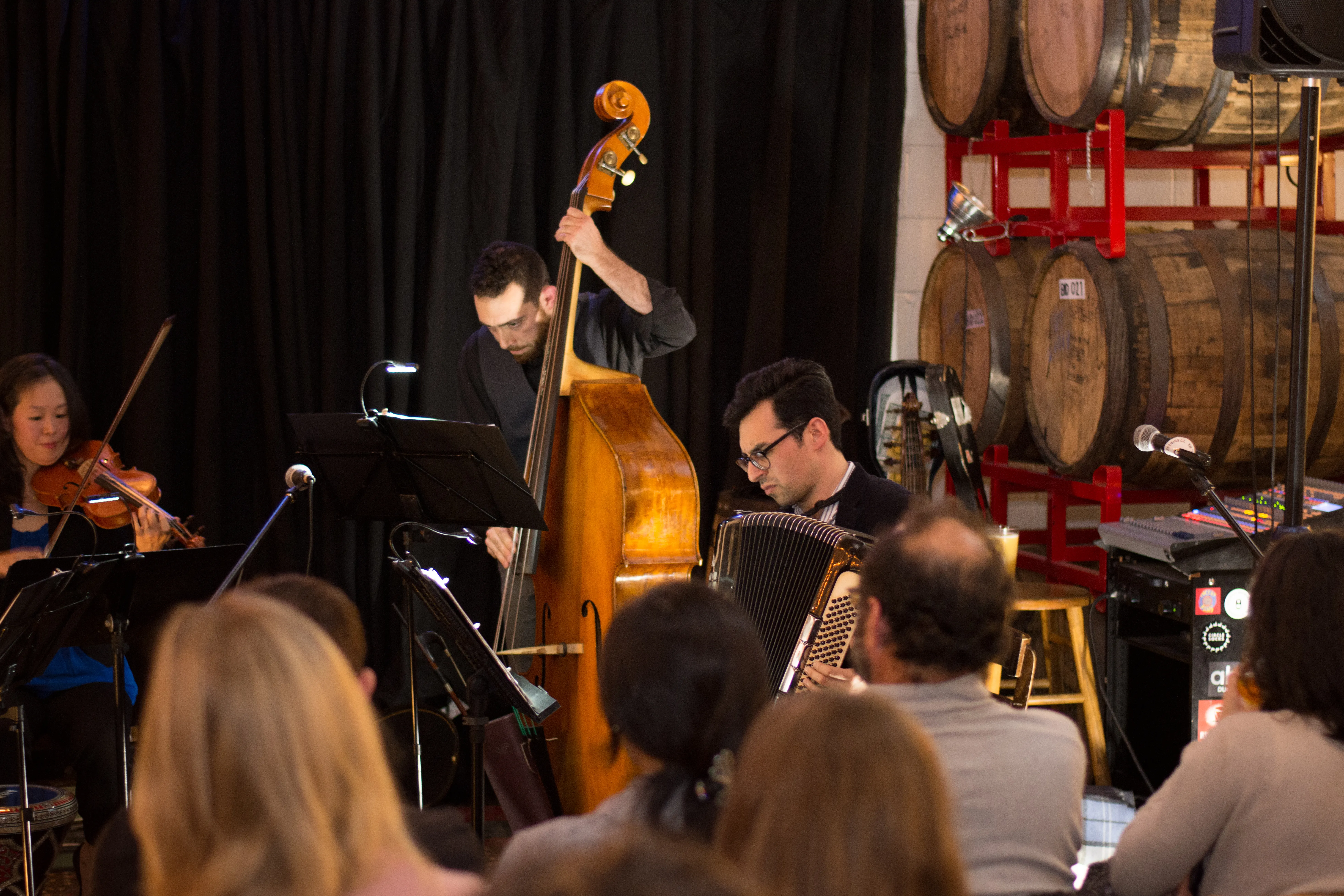
The collective isn’t slowing down. Plans for a 2026 tour are already in motion, along with discussions about another recording project. Culture Spot-Montgomery County labeled them a “genre-fusing ensemble,” which is accurate but maybe misses the deeper point. Floyds Row treats music as a living tradition rather than a museum piece. They’re not preserving folk tunes under glass. They’re asking what those tunes become when you let them breathe in a room with a banjo, a viola da gamba, and whatever else happens to be around.

Maybe that’s the real experiment here. Not whether these traditions can coexist, but whether the walls between them were ever really necessary in the first place.

Those curious can explore more about the ensemble and their work, stream “The Oxford Sessions” on Spotify, or follow their tour updates on their official website and Facebook.

This article contains branded content provided by a third party. The views expressed in this article are solely those of the content creator or sponsor and do not necessarily reflect the opinions or editorial stance of Popular Hustle.

Entertainment

Nodust Writes His Lyrics Last and That’s Exactly the Point

Published

on

Nodust

There’s a moment in Nodust’s creative process where nothing makes sense, and that’s by design. Before a single coherent word hits the track, he’s in front of his mic spitting pure nonsense, syllables that mean nothing but feel like everything. It sounds absurd until you realize it might be the most honest approach to making rap music in 2025.

The artist has built his entire workflow around what he casually calls “gibberish.” He loads a beat into FL Studio, throws on his baseline vocal preset, and starts recording sounds that aren’t words. At this stage, he’s not writing. He’s hunting for something more primal: the melody, the emotional peaks, the places where a vocal effect might hit harder. The lyrics come later, reverse-engineered from the shapes his voice already made.

“I literally spit gibberish in the mic,” Nodust explains. “At this point I’m just trying to create the melody and find key points for vocal emphasis and effects, then I listen back and I write lyrics to the gibberish.”

It’s a technique that flips traditional songwriting on its head. Most rappers start with bars, with meaning, with something to say. Nodust starts with feeling, trusting that the right words will eventually find their way into the spaces his instincts already carved out. The approach raises a question worth asking: in an era where melodic rap dominates, does what you say matter less than how it sounds when you say it?

Nodust

The answer, if you’ve been paying attention to artists like Nettspend, esdeekid, and Xaviersobased, seems to be yes. These are the names Nodust cites when talking about discovering what he calls “ultra technical flows that have never been done before.” Not technical in the traditional sense of dense wordplay or complex rhyme schemes, but technical in the architecture of sound itself. The way a syllable bends. The precise moment a voice cracks into something vulnerable. The texture of a phrase that might not parse grammatically but hits you somewhere beneath language.

Nodust came up through the emoplugg scene, drawing heavy inspiration from artists like D1v, Bladee, and his best friend Kill Red. That foundation taught him something crucial about emotional resonance. He describes certain songs as being “like drugs,” and he’s not using the comparison loosely. “I swear they put drugs in those songs,” he says of D1v’s “Sound of Silence” and Kill Red’s “Notice.” “I’ve had full days of only listening to those songs on repeat all day. Like 8 hours straight.”

That obsessive relationship with music, which he attributes partly to his ADHD, informs everything about how he creates. When he found himself drawn to the trap and jerk beats that exploded over the past year, he noticed a gap. Nobody was bringing that emoplugg melodic sensibility to the new sound. The result was tracks like Clairvoyance with producer 999ines, a song that made him feel, for the first time, like he might actually have a shot at making it.

What makes Nodust’s situation unique is that he’s doing all of it alone. Writing, recording, mixing, mastering, cover art, video editing. There’s no team parsing his gibberish recordings into polished product. It’s just him, often for 14 hours straight, because stopping means the song might never get finished. “If I don’t finish it in one go it’ll never get finished,” he admits.

Nodust

His latest release Numbers, which dropped November 28, continues the formula: massive bass, signature cadence, vocals that prioritize vibe over verbose. It’s music that doesn’t ask you to think. It asks you to feel.

The self-sufficiency extends to his visuals, with videos like M.I.A., Zoot, and Geeked shot by his girlfriend SuziWithAnUzi, who’s established herself in the Toronto scene and serves as both collaborator and proof of concept that this path can actually work.

Nodust is quick to credit the people around him, including producers like Sheepy, his longtime collaborator c0ll!e, and his mom, who genuinely gets pissed if he drops something without sending it to her first. But the creative core remains solitary, almost meditative. He describes making music as “the only time I can actually be in the moment and I’m not worrying about the past or the future.”

There’s something worth noting about an artist who builds songs from meaningless sounds and considers that the most genuine part of the process. In an industry obsessed with authenticity, Nodust has found his by abandoning meaning entirely at the start. The words come last because the words aren’t the point. The point is that high, that feeling, that moment when a syllable lands exactly right even if nobody, including the person who made it, could tell you what it means.

Maybe that’s where rap is heading. Maybe it’s always been there, and we’re just now getting honest about it.

With Toronto shows planned throughout the year, you can keep up with Nodust on Instagram, TikTok, YouTube, X, Soundcloud, and Apple Music.

Continue Reading

Entertainment

Finding Strength in Walking Away Is the Real Message Behind Judy Pearson’s New Single

Published

on

Judy Pearson

Most breakup songs ask you to sit in the sadness. Judy Pearson’s latest single asks you to walk through it. “Heart On The Wall” starts as a gut-punch confession about one-sided love, then quietly transforms into something more powerful: a declaration of self-worth.

The track, clocking in at a tight two minutes and forty seconds, doesn’t waste a single moment. Pearson’s voice carries the weight of someone who’s done the emotional math and finally walked away from a losing equation. But there’s a moment that elevates the song from heartbreak anthem to something closer to a personal manifesto. “I’m already stronger / because I am no longer…” she sings, letting the line hang before the chorus crashes back in. That pause holds everything, the realization that leaving isn’t losing. It’s reclaiming.

The chorus itself, with its repeated message of “just another heart on the wall,” paints a vivid picture of someone who was collected rather than cherished. It’s the kind of imagery that sticks because most people have been there, hanging around waiting to matter to someone who saw them as optional. Pearson doesn’t dress it up with metaphor or soften the blow. She names it directly, and that honesty is what makes the song land so hard.

For a rising artist, Pearson’s work has a remarkably polished feel. The production on “Heart On The Wall” balances warmth with restraint, giving her vocals room to breathe while the folk-infused instrumentation provides a bed of quiet tension. The refreshingly simple music video reinforces the themes of independence, emotional display, and eventual release.

Listeners familiar with the confessional precision of Taylor Swift, the whispered vulnerability of Gracie Abrams, or the sharp emotional edges of Olivia Rodrigo will recognize the territory Pearson operates in. But she’s not simply occupying a lane created by others. Her previous single “Remember Me” showed a writer willing to pull from unexpected sources, weaving historical inspiration into deeply personal storytelling. That same willingness to dig for something real shows up here.

What separates “Heart On The Wall” from the standard sad-song formula is its trajectory. The track doesn’t end in defeat. When that final chorus returns after the bridge, the repetition of “just another heart on the wall” hits differently. It’s no longer a lament. It’s a statement of fact about what she used to be, delivered by someone who’s already moved past it. The song comes full circle, but the narrator doesn’t. She’s somewhere else entirely by the time the last note fades.

Judy Pearson

Pearson has already built a substantial audience, with more than four million streams across platforms and features in Notion, Clout, and Earmilk. She’s become something of a touchstone for listeners navigating their own complicated moments, the kind of artist people return to when they need to feel understood rather than entertained.

With a debut EP expected next year and her recently released Christmas single “Christmas With You” already out, she’s entering a phase where the foundation she’s built will start supporting bigger structures. But even now, with just a handful of songs to her name, Pearson writes like someone who understands that the best breakup songs aren’t really about the other person at all. They’re about who you become when you finally stop waiting to be chosen.

“Heart On The Wall” is available now on Spotify. Follow Judy Pearson on Instagram, Facebook, TikTok, and YouTube.

Continue Reading

Entertainment

Joaquina’s “Freno” Captures the Push and Pull of Letting Go

Published

on

Joaquina

There’s a specific kind of emotional paralysis that “Freno” nails perfectly: knowing you should leave, wanting to leave, but finding yourself stuck in the same place anyway. Joaquina doesn’t just sing about this feeling. She builds an entire world around it.

The Venezuelan-American singer, who took home Best New Artist at the 2023 Latin Grammy Awards, released “Freno” as part of her debut EP “Los Mejores Años,” which also earned a nomination for Best Singer-Songwriter Album that same year. At just 3:34, the track distills a cycle of heartbreak into something achingly familiar. The lyrics circle back on themselves intentionally, with Joaquina admitting she’s “on her fifth try” when the saying goes third time’s the charm. It’s self-aware without being self-pitying, and that balance is harder to strike than it sounds.

‘Freno’ by Joaquina

What makes “Freno” work beyond its confessional honesty is the production’s restraint. Recorded at Miami’s Art House under the direction of 14-time Grammy and Latin Grammy winner Julio Reyes Copello, the track opens with fingerpicked guitar arpeggios that establish a melancholic foundation before Joaquina even enters. There’s no distortion, no heavy effects. Just natural sustain and space, complementing the synth pads and programmed drums underneath.

Colombian session guitarist Ana Liu

The guitar work, performed by Colombian session guitarist Ana Liu, deserves particular attention. A Berklee Presidential Scholarship recipient who studied under Danilo Pérez and John Patitucci, Liu brings a jazz-trained sensitivity to the pop arrangement. Her open voicings evoke hesitation, mirroring the song’s “braking” motif with almost literary precision. When the chorus hits, the guitar shifts to strumming for emphasis, adding percussive weight without ever competing with the vocals. It’s warm, woody, and impossibly tender. Every sustained chord feels like a confession you weren’t quite ready to hear.

That restraint speaks to Copello’s broader philosophy at Art House, where he’s shaped records for Jennifer Lopez, Alejandro Sanz, Marc Anthony, and Ricky Martin. The producer has a gift for knowing when to pull back, for letting a song breathe instead of burying it under layers. With “Freno,” every element exists in service of Joaquina’s voice and the emotional weight she carries. The synths hover rather than push. The drums keep time without demanding attention. It’s the kind of production that sounds simple until you try to replicate it.

Joaquina’s Latin Grammy win for Best New Artist wasn’t a fluke or an industry bet on potential. “Freno” and the rest of “Los Mejores Años” showed an artist who arrived fully formed, with a clear perspective on love, loss, and the messy space between. She writes like someone who’s lived more than her years would suggest, finding specificity in moments that other writers would gloss over. The image of watching someone look at another person from across the room, knowing it shouldn’t hurt but feeling it anyway, that’s not a generic heartbreak lyric. That’s observation. The Recording Academy recognized what listeners already knew: Joaquina isn’t building toward something. She’s already there.

That maturity shows in her songwriting instincts. The best breakup songs don’t dramatize the ending. They capture the long, frustrating middle, where you’re still stuck with one foot on the gas and the other on the brake. Joaquina, barely into her twenties, already knows this.

Continue Reading
Advertisement
Follow Us - Popular Hustle on Spotify
Nodust
Entertainment19 hours ago

Nodust Writes His Lyrics Last and That’s Exactly the Point

Judy Pearson
Entertainment1 day ago

Finding Strength in Walking Away Is the Real Message Behind Judy Pearson’s New Single

Joaquina
Entertainment6 days ago

Joaquina’s “Freno” Captures the Push and Pull of Letting Go

André Marquet & Darius Borda
Business2 weeks ago

Young Romanian Entrepreneur Explores Lisbon’s Thriving Startup Scene

Harbor Current Foundation Inc.
Tech2 weeks ago

Electric Ferries Will Save Money But Harbors Can’t Afford Them, Says Harbor Current Foundation Inc.

Dr. Rasheda Jackson
Business3 weeks ago

Leading With Purpose: How Dr. Rasheda Jackson is Redefining Success for Women in Business

Sean Martin // The Quarantined (Image credit: Alexx Calise)
Entertainment3 weeks ago

The Quarantined Release ‘Aversion To Normalcy,’ An Album Born From War and Survival

Lordos Beach Hotel (credit: lordosbeach.com.cy)
Travel3 weeks ago

Coastal Harmony: Discovering Cyprus with Lordos Beach Hotel as Your Haven

Kaziboii
Entertainment4 weeks ago

Meet Kaziboii, the Afrobeats Artist Mixing Drill Energy With Vibrant Soul

LBE Scar
Entertainment4 weeks ago

LBE Scar on His Two EPs, Loyalty, Fatherhood, and Opening for Bone Thugs-N-Harmony

HundRoses
Business1 month ago

HundRoses Is Building a Dating App Where You Can’t Message Anyone Without Proving You’re Real

Camden Harris
Entertainment1 month ago

Camden Harris Proves the Future of Music and Business Lives in Vision, Not Noise

Levi Lobo
Entertainment1 month ago

Levi Lobo Takes the Lead in New Mexico Indie Thriller “The Weight Of It All”

Nicole Ariana
Entertainment1 month ago

Nicole Ariana Confronts Her Demons on Emotional New Single “Return to Sender”

Allison Fisher & Monty Hobbs
Entertainment2 months ago

Billiards Legend Allison Fisher Teams with Producer Monty Hobbs on TV, Books, and Brand Expansion

Follow Us - Popular Hustle on Spotify

Trending