
Entertainment
Berklee Grad Susanne Phan Makes Waves in LA’s Music Production Scene


In the heart of Burbank’s Media District, Susanne Phan works her magic at Igloo Music Studios. The Swedish-Vietnamese audio engineer and music producer has become a rising figure in Hollywood’s competitive sound industry, her fingers expertly manipulating faders and knobs to craft audio for blockbuster productions.
Susanne’s journey to Tinseltown began in Sweden, where she grew up surrounded by a unique blend of musical influences. Her Vietnamese heritage exposed her to a variety of sounds, laying the foundation for her future career. This multicultural background caught the attention of Berklee College of Music, who awarded her a scholarship to study contemporary writing and production.
After graduation, Susanne took a leap of faith and moved to LA. Her gamble paid off when she landed a gig working on “Babylon” (2022) at Igloo Music, collaborating with Noah Hubbell as an engineer and producer. This breakthrough opened doors to other high-profile projects, including “The Color Purple” (2023), “Dick The Musical”, “The Glory”, and co-producing “Welcome to Flatch” Season 2.

Now based at the Grammy-winning Igloo Music Studios, Susanne’s expertise spans multi-channel film mixes, ADR, voice-over, sound design, and live music production. The facility buzzes with creativity, its halls echoing with snippets of dialogue and soaring scores as Phan and her colleagues work on projects for major studios like Netflix, Disney, Paramount, and Warner Brothers.
But it’s not all Hollywood glamour. Long nights and tight deadlines are part of the job, pushing the growing artist and engineer to constantly hone her skills. Her passion for audio engineering shines through in her pet project, Igloo + Sessions. As head producer and creative director, she’s creating a platform for global artists to showcase their talents through live video recorded sessions.
Susanne’s multi-instrumental background gives her a unique edge in the studio. Her ability to understand musical composition and arrangement from both a technical and creative standpoint has made her a valuable asset in an industry always hungry for fresh perspectives.

As the LA sun sets, painting the sky in cinematic hues, Susanne is often still hard at work. The city’s iconic palm trees sway outside, a silent audience to the audio magic happening within. For this sound alchemist, every day brings new challenges and opportunities to shape the soundscapes of tomorrow’s hit films and TV shows.
In the ever-evolving world of Hollywood sound production, Susanne Phan is carving out her own unique path. From her early days in Sweden to her current role at the forefront of audio engineering, Phan’s journey is a testament to the power of diverse backgrounds in shaping the future of entertainment. As she continues to work on high-profile projects and nurture global talent through Igloo + Sessions, Susanne Phan isn’t just engineering sound – she’s helping to produce the very soundtrack of modern cinema.
Follow and connect with Suanne Phan via her website or Instagram.









Both short films Niraj Nair has made with writer-director Mark Chan involve a moment where a character is forced to say something true in a context designed to suppress it. That’s not a coincidence. It’s the premise.
In Parampara, Nair plays Son, a high school senior who announces to his father that he’s been accepted to Stanford Medical School. In most Asian-household narratives, that’s the triumph. Here, it’s the source of the conflict. Father responds with disappointment, shame, and anger: Son has failed to live up to his pre-ordained purpose of becoming an artist. The film’s gut-punch comes later, when we learn that Father himself once dreamed of becoming a surgeon before his own father pressured him into a career in the arts. The cultural dogmatism he’s imposing is the same one that was imposed on him. He’s passing down the wound and calling it expectation.
Nair plays the whole film in the receiver position. Son’s job isn’t to argue back, at least not until the film earns that moment. It’s to absorb the full weight of paternal authority while the audience watches it land. That kind of restraint, not deflating the scene but not fighting it either, is technical work that most performers rush past. The temptation when your scene partner is delivering the heavy artillery is to show that you’re being affected. Nair does something harder. He shows Son processing something he doesn’t yet have language for, the specific confusion of someone whose best achievement isn’t good enough and who can’t immediately explain why that’s wrong.

Hayden’s Bars is technically more demanding and tonally miles away. The premise is street interview meets Shakespeare: a cameraman with a social media interviewer catches three friends on a night out, and Hayden, the character Nair plays, starts the encounter as exactly what he looks like. A regular guy in full frat-bro mode, out with his friends, not looking for a conversation. Then someone mentions the friend who died. And Hayden delivers a contemporary rendering of Hamlet’s “To be or not to be” that doesn’t sound like theater at all. It sounds like someone who actually needs to ask that question right now, on this street, with his friends roughhousing behind him like the whole thing isn’t happening.
That tonal shift is the entire film. If it doesn’t land, if it reads as a clever concept rather than a genuine emotional rupture, there’s no movie. What Nair does is keep the thought alive without any of the theatrical apparatus that usually makes Shakespeare feel like a performance. No elevation, no distance, no signal that we’re in “the speech now.” Just the words, delivered by someone who means them in a body that still feels like it’s out for the night.
Then Hayden snaps back. The frat-bro veneer reassembles, his friends drag him back into the current, and they stumble off toward the next club. The grief surfaces and submerges in the same breath. That’s the actual observation at the heart of the film: that people carry this stuff around without it being visible most of the time, and it only shows when something breaks the surface unexpectedly. Nair trusts the film enough to let that observation be quiet. He doesn’t underline it.
Chan’s direction on both films is economical in a way that forces the performances to carry more weight. There’s no score padding the emotional beats, no stylistic flash redirecting your attention. What you’re watching is two actors in a room, or three people on a street, and what they’re doing with their faces and bodies and the silences between their lines. For that kind of filmmaking to work, the actors have to be doing something real. In both cases, Nair is.
He’s described his job as finding “where the character and I can converge,” then stretching his own experience and imagination to give the character’s feelings clarity and justice. Both films show what that looks like in practice: not transformation, not disappearing into a role, but a specific and disciplined meeting between the actor’s own humanity and the character’s. In Parampara, it’s the quiet devastation of not being enough. In Hayden’s Bars, it’s the grief that lives underneath the bravado. Neither is easy to play with this much specificity. Both land.

There’s a version of Brandon Serrano that never would’ve landed this article. He spent years pushing names that weren’t working, watching his friends hype him up while the numbers refused to move. It took him a while to figure out the problem wasn’t the music. It was everything around it.
Now he goes by Milovay, and the difference is pretty obvious once you hear the self-titled EP he dropped February 20th.
The four-track project clocks in just under 13 minutes, but it doesn’t feel rushed or underdeveloped. “Finally Open,” “Silver Lining,” “Battle of the Two-Heads,” and “What I Need” each hold their own weight, and the sequencing gives the thing a genuine arc. That’s harder to pull off in a short format than people think. A lot of artists cram four songs together and call it an EP. Milovay actually built something.

The Worcester, Massachusetts native’s R&B and Afro-fusion sound pulls from a pretty specific but interesting set of influences. He’ll tell you Tech N9ne got him hooked on music as a teenager, the speed rapping, the engineer involvement, the obsessive fan connection. But the vocal style owes more to Tory Lanez, that raspy-to-high register range with layered harmonies underneath. It’s a recognizable template, but Milovay doesn’t just ape it. The execution feels considered, not borrowed. And “Silver Lining” is where that execution gets a visual to match it. The song itself is about that specific kind of overthinking that comes with trying to impress someone, not knowing if you’re giving too much or not enough, stuck somewhere between grand gestures and playing it cool.
The video, shot and edited by @trill_is_bliss and featuring co-star @tesqhila, plays that tension straight. There’s no melodramatic breakup, no fantasy sequence. It’s the uncomfortable middle ground the song is actually about, wanting to go all in but second-guessing every move. That’s a harder thing to visualize than heartbreak, and it works.
This is his second EP in just a few months. He dropped “The Lost Scripts of Phenoxism” back in December 2025, and the new one clearly goes in its own direction. That kind of output discipline is notable. Short-form projects released consistently are the current play for independent artists trying to stay relevant without burning through a full album rollout budget, and Milovay seems to genuinely understand the logic of it rather than just following a trend.
He’s also pretty candid about the rebranding process. Years under names that weren’t working, surrounded by yes-people who convinced him the problem was elsewhere. It’s a familiar story in independent music, maybe more common than people admit. What’s worth noting is that he doesn’t frame the past as wasted time. “Peregrine,” “Punani Papi,” all of it, he sees as part of what built him. The willingness to own every version of yourself instead of pretending they didn’t happen is actually rarer than the rebrand itself.

“There is no deadline to make it in this industry,” he said. “I could be 41 and still make moves as if I’ve been doing this for X amount of years.” He means it. Part of what changed is practical too. He talks about finally understanding how to navigate blogs, push his releases correctly, and use social media as an actual tool rather than an afterthought. For independent artists in 2026, that gap between talent and platform literacy is where careers stall. Milovay figured out which side of that gap he needed to close.
Right now the focus is purely on releasing and promoting. No tour dates, no spoilers on what’s coming this summer, though he hints it’ll be worth paying attention to. For a catalog that’s only a few months old under the current name, there’s already a real foundation here.
You can follow Milovay on YouTube, Instagram, and stream his music on Spotify, Apple Music, and SoundCloud.


The best instrumental music makes you feel something you can’t quite name. Brazilian guitarist Andre Correa’s new single “Histórias” works like that, building a narrative without a single word by exploring how stories transform as they pass between people.
The track, which translates to “Stories” in English, draws from baião and fusion to create something that unfolds like a conversation you’re overhearing. Correa structured the composition around the concept of a game of telephone, where a single idea gets reinterpreted through different emotional filters until it returns to something clearer than where it started. The piece swells and contracts, moving through restlessness and conflict before landing somewhere more settled and direct.

“The work invites the listener to create their own interpretation,” Correa explains. “Each person hears a different story within the same music.”
It’s a fitting approach for a guitarist who treats composition as personal archaeology. Correa, a Berklee College of Music graduate now based in Orlando, doesn’t start with theory or structure when he writes. He starts with whatever he’s actually living through, picking up his guitar and trying to translate feeling into sound. One idea leads to another until the piece reveals its own direction. “I only feel comfortable when I can see the full picture and everything feels cohesive, like the music is telling one clear story,” he says.
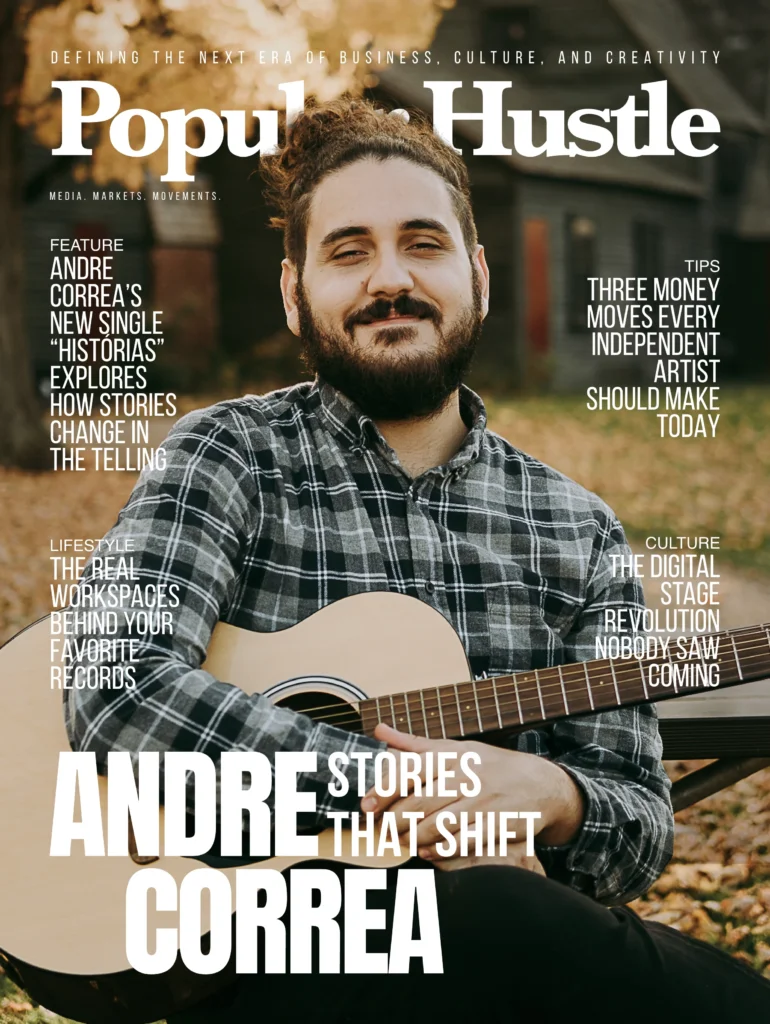
That process shaped his debut album “Seasons,” released November 29, 2025, which documents his years in Boston through seven original tracks. But “Histórias,” releasing in 2026, pushes further into abstraction, examining not just personal experience but the nature of how experience gets communicated and distorted over time. Multiple musical “voices” emerge from a single theme, creating layers that explore the relationship between noise, interpretation, and truth.

Correa was born in Valinhos, São Paulo, and raised in Campinas, learning keyboard from his father at eight before picking up guitar at twelve. Playing in church communities taught him early that music works best as service rather than spectacle, a belief that stuck through his formal training at Berklee, where he studied with faculty including Danilo Pérez, John Patitucci, and Randy Roos. His time at the Berklee Global Jazz Institute took him into hospitals and rehabilitation centers, reinforcing his sense that music exists to create space for something meaningful to happen.
The immigrant experience of rebuilding life in the United States has informed his writing as much as any classroom. Moving countries, learning to navigate unfamiliar systems, processing the particular loneliness of starting over in a new place: all of it feeds into work that prioritizes emotional honesty over technical display.
“I don’t think of my work as just songs or compositions,” Correa says. “I think of each piece as a small narrative, a space where melody, harmony, rhythm, and improvisation work together to express something human: faith, doubt, change, longing, gratitude, conflict, hope.”
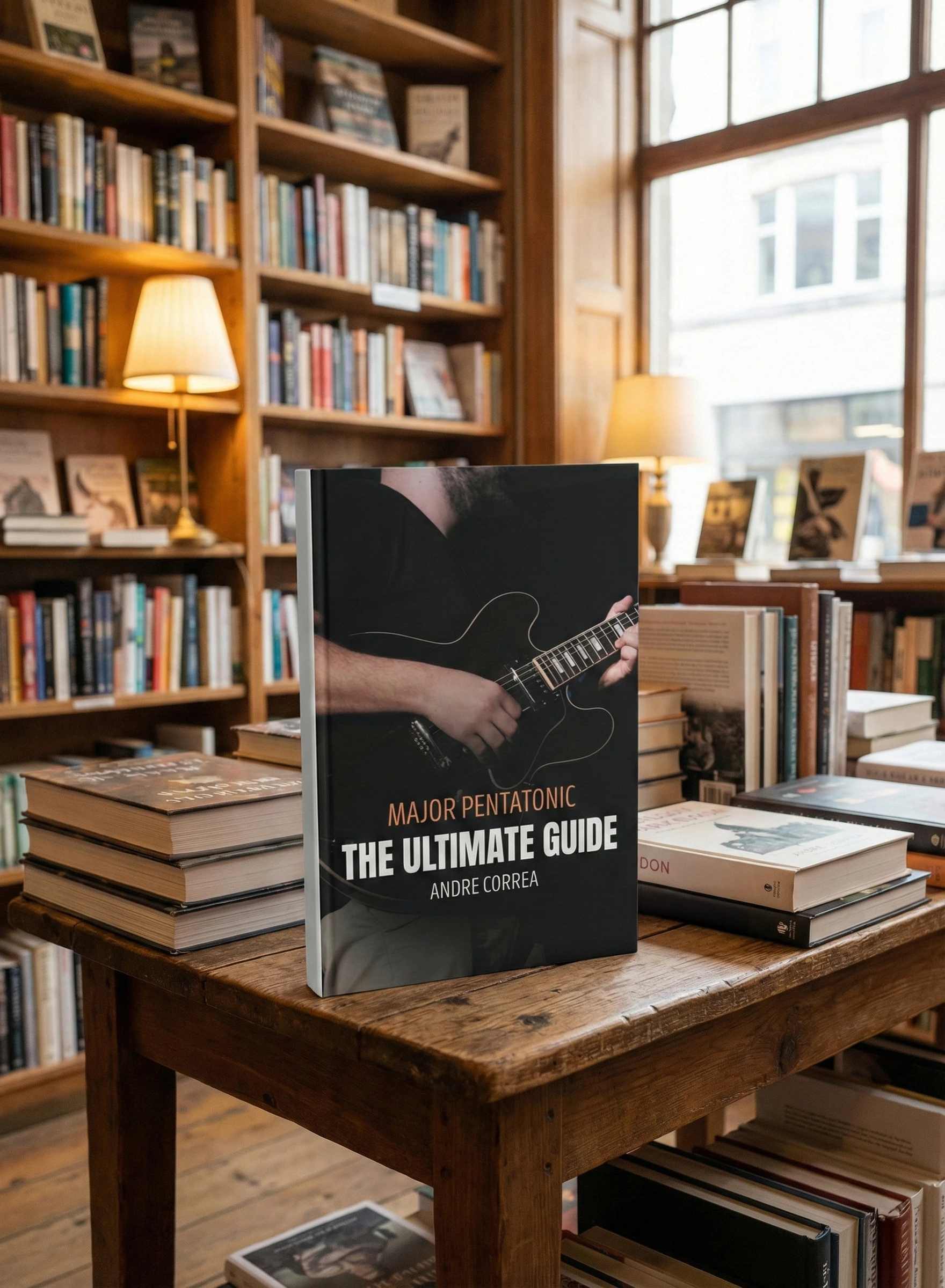
Beyond his recording projects, Correa is preparing to launch an educational book series called “The Ultimate Guide,” with the first volume, “Major Pentatonic: The Ultimate Guide,” scheduled for release in January 2026. The series applies his FCA Method, a framework focused on helping guitarists develop their own musical identity rather than just memorizing patterns. He currently performs regularly at Jazz Tastings in Orlando, where he develops his sound and refines his artistic direction in a live setting.
Correa isn’t chasing anything grand with his music. If someone walks away feeling a little more present, a little more honest with themselves, or simply more connected to their own emotions, he figures the work has done what it was supposed to do.
“Histórias” rewards that kind of attention. The track doesn’t demand you understand it on first listen. It just asks you to sit with it long enough to find whatever story you needed to hear.
Stream Andre Correa’s music on Spotify and Apple Music, and follow his work on Instagram, YouTube, Facebook, TikTok, and LinkedIn. Visit his website for more.


Niraj Nair and Mark Chan Keep Finding the Grief Underneath the Bravado

Milovay Is Done Starting Over and Just Getting Started

Andre Correa’s New Single “Histórias” Explores How Stories Change in the Telling

Miixed Realities Proves Medical Billing Doesn’t Have to Be a Black Hole

GMDCASH Talks Comebacks, Jail Time, and Why He’s Just Getting Started

Meet Lil Deezull, the Cambridge Rapper Finding His Moment

Dennis Dewall Reboards the Spy Genre with International Thriller ‘THE TRAIN’

Saynt Ego on Grief, Mental Health, and Learning to Sit With the Noise

Marloma Talks Learning to Stop Writing in Isolation and Trust the Chaos

Zizzo World Is Building Momentum That’s Hard to Ignore

Yash Kapoor Wants His Records To Feel Like Moments, Not Just Music

Inside the Amazon Reinstatement Process: The aSellingSecrets Approach

Golden Bay Beach Hotel — A Luxury Beachfront Escape in Larnaca, Cyprus

Nodust Writes His Lyrics Last and That’s Exactly the Point

Finding Strength in Walking Away Is the Real Message Behind Judy Pearson’s New Single

Jason Luv Dominates Charts While Inspiring New Wave of Multi Career Artists

Harley West | Inside the Mind of a Social Media Star on the Rise

Raw Fishing | Franklin Seeber, Known As “Raww Fishing” Youtuber Story

Jordana Lajoie Transforms Montreal Roots into Hollywood Success Story

A New Hollywood Icon Emerges in Madelyn Cline

Who is Isaiah Silva – The Story Behind The Music

Tefi Valenzuela Pours Her Heart into New Song About Breaking Free

Gearshift to Stardom: Nikhael Neil’s Revolutionary Journey in the Automotive Industry

Kaia Ra | Perseverance That Built a Best-Selling Author

G FACE Releases His New Single “All up,” and It’s Fire

Holly Valentine | Social Media Influencer & Star Success Story

Kate Katzman | Breaking Into Hollywood and Embracing Change

Thara Prashad | Singer Evolves to Yoga & Mediation Superstar

Tadgh Walsh – How This Young Entrepreneur is Making a Name for Himself

King Lil G | West Coast Hip Hop Genius Rises to Face With Ease
Tefi Valenzuela Pours Her Heart into New Song About Breaking Free
Kate Katzman | Breaking Into Hollywood and Embracing Change
Holly Valentine | Social Media Influencer & Star Success Story
Kaia Ra | Perseverance That Built a Best-Selling Author

Lil Ugly Baby XXX’s “Who?” – The Mixtape to Boost Your Playlist

Samuel Chewning Explains How Fitness Should Be A Personal Journey

-
 Business4 years ago
Jason Luv Dominates Charts While Inspiring New Wave of Multi Career Artists
-
 Entertainment3 years ago
Harley West | Inside the Mind of a Social Media Star on the Rise
-
 Culture4 years ago
Raw Fishing | Franklin Seeber, Known As “Raww Fishing” Youtuber Story
-
 Culture3 years ago
Jordana Lajoie Transforms Montreal Roots into Hollywood Success Story
-
 Culture2 years ago
A New Hollywood Icon Emerges in Madelyn Cline
-
 Entertainment1 year ago
Who is Isaiah Silva – The Story Behind The Music
-
 Entertainment3 years ago
Tefi Valenzuela Pours Her Heart into New Song About Breaking Free
-
 Business3 years ago
Gearshift to Stardom: Nikhael Neil’s Revolutionary Journey in the Automotive Industry