Entertainment
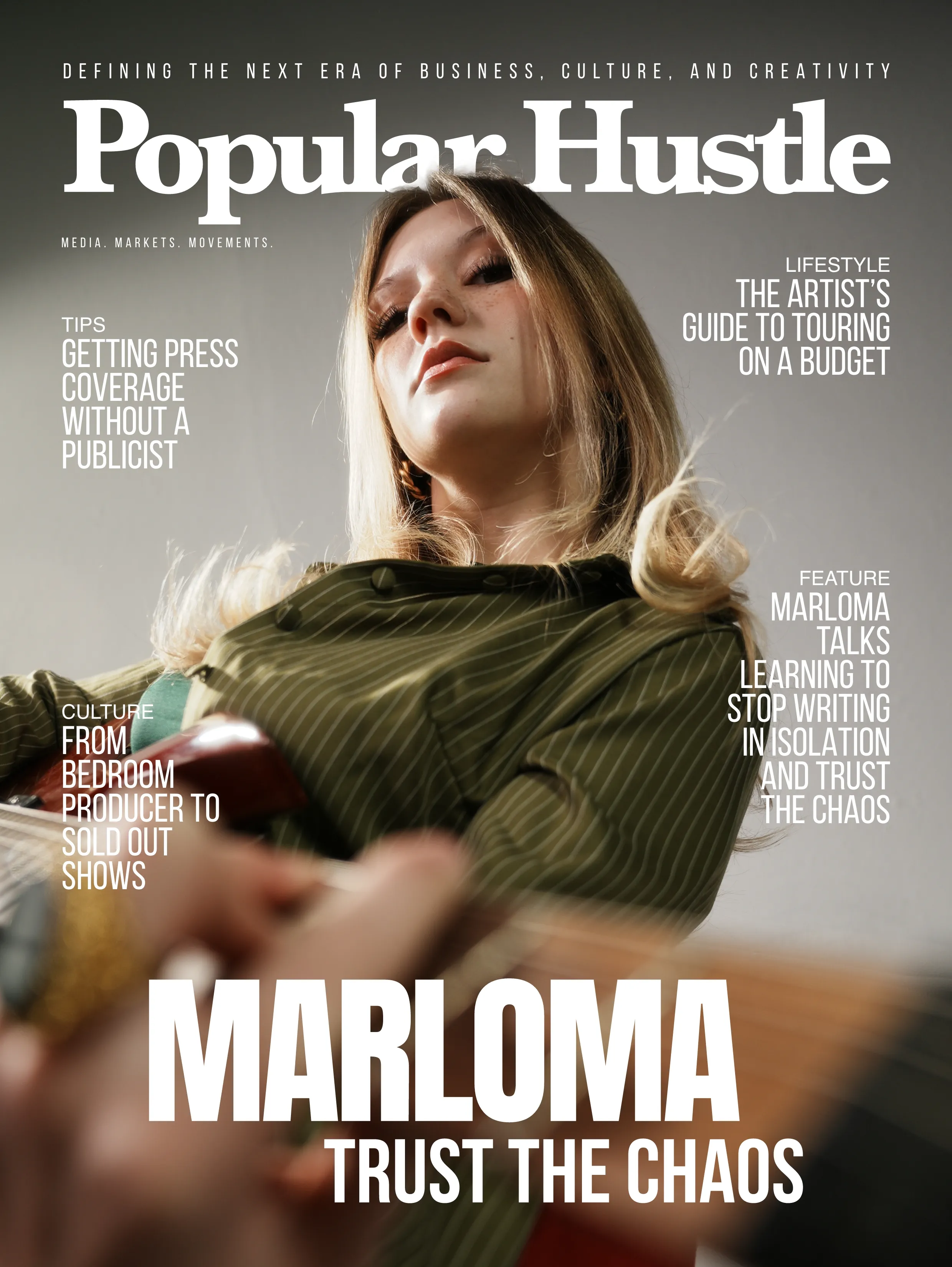
Marloma Talks Learning to Stop Writing in Isolation and Trust the Chaos
Published
2 months agoon

Marloma used to write alone. Locked away with a piano or guitar, wouldn’t present anything until it met exacting standards, followed strict release timelines and marketing strategies. Everything controlled, everything polished before anyone else could hear it. Then came John Curtis-Sanchez, a guitarist and audio engineer whose approach is the complete opposite. He tries everything, isn’t afraid of vulnerability or imperfection in the early stages, lets happy accidents happen before worrying about polish.
It shifted everything. The songs she wrote still came from that place of isolation and perfectionism, but John’s production approach brought something different to the arrangements. Happy accidents in the studio, experimental choices she wouldn’t have made alone. Her songwriting instincts combined with his production sensibility created something neither could have done separately.
That’s essentially the story of Marloma, the Phoenix-based Sad Girl Indie-Pop Rock band that’s gone from a bedroom project to a full collaborative force involving 100 local creatives on their upcoming concept EP. With over 30k+ Instagram followers and a growing reputation across Arizona venues like The Marquee and Crescent Ballroom, Marloma isn’t just one person anymore. The band now includes guitarist and producer John Curtis-Sanchez, bassist and vocalist Kalleigh Gibson, keys player and backup singer Cassidy Brooke, and drummer Angelita Mia Ponce. Together, they’re making music for young women who feel too much and need to hear they’re not alone in it.

You’ve written nearly 300 songs. Take us back to the specific moment when you knew this was what you were going to do.
I have always known I loved writing songs and singing, but the pivotal moment in my life where I decided it was worth pursuing as a career path was when I was 14 years old. My friend of the same age was diagnosed with a rare form of cancer and tragically passed away.
It happened so fast, I still feel completely devastated that she is no longer here to make me laugh. I tried to process my grief the way I process all of my feelings, through songwriting. My mom heard me playing the tribute I wrote and asked to share it.
When my friend’s mom heard it, she asked me to perform it at my friend’s celebration of life. I remember feeling the weight in the air as I walked up to the front and began singing her song. It felt like the one moment that wasn’t absolutely dreadful because I felt that I truly made a connection. Not just with every attendee, but with her.
I was thanking her and making a promise to keep her memory alive and in that moment I kind of really felt like she understood. I don’t know what I believe in terms of anything spiritual but I know what I felt in that moment.
So I decided that even if I wasn’t a doctor or a lawyer, creating art was an important job and I wanted to be one of the people to do it. In fact, the reason that the Marloma brand is so heavily associated with the color green is to honor her. Green is her favorite color and the color of her eyes, which I liked to call her “emerald eyes.”
If someone’s never heard your music before, how would you describe what you do and what you hope they take from it?
I would describe my music as “Sad Girl Indie-Pop Rock” because it comes from a place of deep vulnerability and I think women might resonate with it the most. I truly hope that when people listen to my music they feel validated in any harsh emotions they may try to hide. I want them to really feel the words, which is why I implement prosody in my music. Essentially, I make the melodies match any words that could describe a melody. For example, if I say the word “high” I would make the melody go higher in pitch so that it subconsciously resonates with the listener.
Walk us through how you actually create. Where does it happen? What does the process look like from the first spark to the finished product?
For me, melody lines and lyrics have always come at the same time so I never have to worry about adding music to my lyrics or vice versa in post. Most times I’m home alone and I begin to play a chord progression on an instrument like a piano or guitar. Then, the rhythms and rhymes just kind of happen. Although lately inspiration has been striking me in the car. I have a complete library of single lyrics sung in my voice memos app accompanied by the sound of wind whooshing past my car windows and grainy noise from the air conditioner.
I have to capture it in the moment so I can mold and shape the idea when I’m home in front of my instruments. I never sit down with an idea or situation or feeling in mind when I write a song. In fact, I rarely am aware enough to understand what’s going on in my own head until I listen back to my completed song. That’s when I understand what feelings and tones I’ve been hiding from myself. Songwriting is truly therapeutic.
What’s something you had to figure out the hard way?
I had to learn that some people just aren’t going to take me seriously because I’m a woman in the music industry. And as a matter of fact, if they do, I probably have to earn that respect by doing twice as much as they’d expect. Talent won’t really get you anywhere if you’re not also constantly working on building your audience, honing your skills, educating yourself and making sacrifices. I’m happy to do all of those things, but it does feel like I’m often underestimated regardless.
What are you working on right now that you’re excited about?
I just released my heaviest rock song to date on January 1st, called “Win.” This song serves as the embodiment of female rage and revenge fantasy, so I’m very excited about the music video that’s in its final stages to accompany this song. I really put my trauma on display in this video and it was honestly pretty hard to film and relive but I couldn’t be more proud of how it turned out and the message it gets across. I won’t say too much on the plot but I will say that it is the darkest visual story I’ve ever experimented with and the thesis is that our vulnerability connects and empowers us as women.

The band is also working on a concept EP that’s been in development for five years, a cautionary tale about addiction wrapped in a love letter to Arizona’s creative community. It involves animated music videos, character vocalists, extended comic book lore, and a release show that’ll include instrument raffles and theatrical elements. It’s the kind of project that takes 100 local creatives to pull off, and it’s all building toward a show that’ll rival anything Marloma’s done before.
What started as writing alone in a room, perfecting every detail before anyone could hear it, has turned into something bigger than one person could have created. Each band member brings something different. John’s Punk-Rock guitar, Kalleigh’s Country-influenced bass lines, Angelita’s Latin and R&B drumming, all mixing with alternative-pop sensibility into something that doesn’t fit neatly into any single genre. It’s a “total genre melting pot,” and it works. It’s what happens when you stop trying to control everything and let other people’s strengths shape the sound. The songs that come out of that process, the ones with the happy accidents left in, those are the ones that end up connecting.
Marloma’s music is available on Spotify, Apple Music, YouTube, and SoundCloud. For more information, visit marloma.org and follow the band on Instagram, TikTok, and Facebook. Upcoming show dates are available on Bandsintown.
Popular Hustle is the fastest way to access the latest breaking news from around the world. From business to entertainment, Popular Hustle has you covered. Get ready for breaking news, the latest industry happenings, and trending stories happening at this very moment.
You may like
-
How Niraj Nair Builds Worlds Through the People Inside Them
-
Milovay Is Done Starting Over and Just Getting Started
-
Andre Correa’s New Single “Histórias” Explores How Stories Change in the Telling
-
Miixed Realities Proves Medical Billing Doesn’t Have to Be a Black Hole
-
GMDCASH Talks Comebacks, Jail Time, and Why He’s Just Getting Started
-
Meet Lil Deezull, the Cambridge Rapper Finding His Moment
Entertainment
How Niraj Nair Builds Worlds Through the People Inside Them
Published
2 weeks agoon
March 2, 2026
Niraj Nair has a theory about why theater matters. It’s not about entertainment, not exactly. It’s about philosophy. “For those of us who aren’t career philosophers,” he’s said, “the theater serves our place to consider the big questions — love, morality, power and meaning — without pretension, academic background, or the fear of seeming naïve.” For an actor, that’s a serious thing to believe. It also explains a lot about the choices he makes.
There’s a scene in Arjunilia, writer-director Mark Chan’s original short film, where a father tells his son that getting into Stanford Medical School isn’t something to celebrate. It’s a premise that flips the familiar Asian-household pressure narrative on its head, and it works because of what Nair does in the silence after the news lands. As the Son, he doesn’t reach for the obvious choices. He receives the disappointment the way someone who’s spent a lifetime trying to earn approval actually would: with something complicated, something heavy. It’s the kind of realism that gets noticed at awards season. Niraj Nair just does it quietly, in a film that hasn’t had much press yet.
This quiet dedication defines his trajectory. The New York-based actor, who started out in Singapore before training at NYU Tisch, doesn’t announce himself. He earns it. He’s talked about the early days of figuring out the craft as navigating something “so intangible and seemingly innate,” interning in exchange for acting lessons, seeking out whatever he could find. That hunger is still visible in the range of work he takes on, and in the seriousness with which he approaches each role.

“Reflecting the lives of others with honesty, night after night, is our north star that we work a lifetime towards reaching,” he’s said of the craft. It reads like a mission statement, and nowhere is it more evident than in his performance of Thom Pain (Based On Nothing) at Racket NYC, a 650-capacity venue. Will Eno’s Pulitzer finalist play is a solo monologue about a man who won’t quite let himself be coherent, and sustaining that emotional instability across the performance is technically brutal. Nair structured it as a direct negotiation with the audience, using tempo and rupture with real control, holding attention precisely because he refused to give them the stability they wanted. It’s the theatrical equivalent of making a discordant chord resolve on your own terms. The intimacy he finds in Arjunilia and the command he demonstrates in Thom Pain aren’t separate skills. They’re the same skill applied differently. In both cases, the work is about managing exactly how much you give an audience at any given moment.
That instinct extends just as far into his physical work. In The Thing That Waits for Us, an original movement theater piece by Sophie Rossman staged at Mark Morris Dance Center and produced by RE/VENUE NYC, he played the Thing itself, a wordless manifestation of grief. Working without text, he built a full movement vocabulary from scratch, finding something fluid and springy, monstrous and tender at once. The play performed for over 100 people and deserves considerably more attention than it’s gotten. That same formal discipline carried into his Eno River Players debut at the Obie Award-winning Target Margin Theater, in Thornton Wilder’s The Angel That Troubled the Waters, though the challenge there was almost the opposite: not building a physical vocabulary from nothing, but knowing when to pull back, when the architecture of the piece demands space over presence. Working on the Wilder piece, he said, reaffirmed his belief that actors exist to “illuminate philosophy in captivating, deeply human ways.” The result is the kind of performance that makes Wilder’s philosophical questions actually land.
What’s striking across all of it is how rarely he defaults to the obvious interpretation. In Three Cis-ters, Emily Ann Banks’ Chekhov adaptation staged at the Obie Award-winning Tank for its LimeFest festival, he played Natasha, a character traditionally read as the villain of the piece. His read was sharper: a woman navigating economic struggle, gender-based discrimination, and cultural pressure in a household that already sees her as an intruder. The performance earned him a BroadwayWorld nomination for Best Performance in an Off-Off-Broadway Play. The same instinct for subtext shows up in Hayden’s Night Out, Chan’s short film that drops Hamlet’s “To be or not to be” into a street interview format, where he pulls off a tonal shift from frat-boy bravado to genuine existential weight without a trace of theatrical affectation. And at Free Healthcare, a sketch show at the award-winning A.R.T./New York, he showed authoritative comic control across two pieces, including a BBC reporter bit where his unshakeable deadpan was exactly what made it funny. The range is real.
It shows up in his collaborative work too. Jonathan Journals Spontaneously Combusted, a 10-week workshop with the acclaimed Clubbed Thumb, creatively shaped by Tony- and Obie-winning directors Anne Kauffman and Tara Ahmadinejad, is the kind of wacky, abstracted play that could easily lose an audience. Niraj Nair’s job was to keep the absurdity grounded enough that people could feel their own towns reflected back at them. His Off-Broadway debut in The Flip Protocol at Classic Stage Company, written and performed within 24 hours, required the same grounding instinct from a different angle: building genuine paranoid tension inside a Christmas-industrial-complex nuclear bunker premise. He did it through sheer technical focus, making the ridiculous feel like it had real stakes.
His capacity to establish trust quickly across wildly different formats was already evident in his earlier work with Singapore Repertory Theatre. In Pick A Hero, a bullying-focused web series directed by Pangdemonium’s associate artistic director Daniel Jenkins, he carried a lead role with minimal dialogue, relying on physical precision and emotional nuance that registers equally on stage and screen. Ghost Light, an immersive promenade production at KC Arts Center with the audience surrounding him on all sides, required him to build tension and reveal story entirely through relationship. The room was waiting on every word. He held it.
Which brings you back to that theory of his about philosophy and theater. Niraj Nair has talked about wanting his work to make “nebulous ideas of philosophy physical and personal,” to close the distance between big ideas and the people sitting in the dark trying to make sense of their lives. He recalls a teacher once putting it another way: “My job isn’t to become the character per se, but to lend myself fully towards them so that I might find where the character and I can converge.”
It is a demanding standard to set for oneself. Based on the work, he’s closer than most.
Entertainment
Milovay Is Done Starting Over and Just Getting Started
Published
2 weeks agoon
February 28, 2026
There’s a version of Brandon Serrano that never would’ve landed this article. He spent years pushing names that weren’t working, watching his friends hype him up while the numbers refused to move. It took him a while to figure out the problem wasn’t the music. It was everything around it.
Now he goes by Milovay, and the difference is pretty obvious once you hear the self-titled EP he dropped February 20th.
The four-track project clocks in just under 13 minutes, but it doesn’t feel rushed or underdeveloped. “Finally Open,” “Silver Lining,” “Battle of the Two-Heads,” and “What I Need” each hold their own weight, and the sequencing gives the thing a genuine arc. That’s harder to pull off in a short format than people think. A lot of artists cram four songs together and call it an EP. Milovay actually built something.

The Worcester, Massachusetts native’s R&B and Afro-fusion sound pulls from a pretty specific but interesting set of influences. He’ll tell you Tech N9ne got him hooked on music as a teenager, the speed rapping, the engineer involvement, the obsessive fan connection. But the vocal style owes more to Tory Lanez, that raspy-to-high register range with layered harmonies underneath. It’s a recognizable template, but Milovay doesn’t just ape it. The execution feels considered, not borrowed. And “Silver Lining” is where that execution gets a visual to match it. The song itself is about that specific kind of overthinking that comes with trying to impress someone, not knowing if you’re giving too much or not enough, stuck somewhere between grand gestures and playing it cool.
The video, shot and edited by @trill_is_bliss and featuring co-star @tesqhila, plays that tension straight. There’s no melodramatic breakup, no fantasy sequence. It’s the uncomfortable middle ground the song is actually about, wanting to go all in but second-guessing every move. That’s a harder thing to visualize than heartbreak, and it works.
This is his second EP in just a few months. He dropped “The Lost Scripts of Phenoxism” back in December 2025, and the new one clearly goes in its own direction. That kind of output discipline is notable. Short-form projects released consistently are the current play for independent artists trying to stay relevant without burning through a full album rollout budget, and Milovay seems to genuinely understand the logic of it rather than just following a trend.
He’s also pretty candid about the rebranding process. Years under names that weren’t working, surrounded by yes-people who convinced him the problem was elsewhere. It’s a familiar story in independent music, maybe more common than people admit. What’s worth noting is that he doesn’t frame the past as wasted time. “Peregrine,” “Punani Papi,” all of it, he sees as part of what built him. The willingness to own every version of yourself instead of pretending they didn’t happen is actually rarer than the rebrand itself.

“There is no deadline to make it in this industry,” he said. “I could be 41 and still make moves as if I’ve been doing this for X amount of years.” He means it. Part of what changed is practical too. He talks about finally understanding how to navigate blogs, push his releases correctly, and use social media as an actual tool rather than an afterthought. For independent artists in 2026, that gap between talent and platform literacy is where careers stall. Milovay figured out which side of that gap he needed to close.
Right now the focus is purely on releasing and promoting. No tour dates, no spoilers on what’s coming this summer, though he hints it’ll be worth paying attention to. For a catalog that’s only a few months old under the current name, there’s already a real foundation here.
You can follow Milovay on YouTube, Instagram, and stream his music on Spotify, Apple Music, and SoundCloud.
Entertainment
Andre Correa’s New Single “Histórias” Explores How Stories Change in the Telling
Published
1 month agoon
February 2, 2026
The best instrumental music makes you feel something you can’t quite name. Brazilian guitarist Andre Correa’s new single “Histórias” works like that, building a narrative without a single word by exploring how stories transform as they pass between people.
The track, which translates to “Stories” in English, draws from baião and fusion to create something that unfolds like a conversation you’re overhearing. Correa structured the composition around the concept of a game of telephone, where a single idea gets reinterpreted through different emotional filters until it returns to something clearer than where it started. The piece swells and contracts, moving through restlessness and conflict before landing somewhere more settled and direct.

“The work invites the listener to create their own interpretation,” Correa explains. “Each person hears a different story within the same music.”
It’s a fitting approach for a guitarist who treats composition as personal archaeology. Correa, a Berklee College of Music graduate now based in Orlando, doesn’t start with theory or structure when he writes. He starts with whatever he’s actually living through, picking up his guitar and trying to translate feeling into sound. One idea leads to another until the piece reveals its own direction. “I only feel comfortable when I can see the full picture and everything feels cohesive, like the music is telling one clear story,” he says.

That process shaped his debut album “Seasons,” released November 29, 2025, which documents his years in Boston through seven original tracks. But “Histórias,” releasing in 2026, pushes further into abstraction, examining not just personal experience but the nature of how experience gets communicated and distorted over time. Multiple musical “voices” emerge from a single theme, creating layers that explore the relationship between noise, interpretation, and truth.

Correa was born in Valinhos, São Paulo, and raised in Campinas, learning keyboard from his father at eight before picking up guitar at twelve. Playing in church communities taught him early that music works best as service rather than spectacle, a belief that stuck through his formal training at Berklee, where he studied with faculty including Danilo Pérez, John Patitucci, and Randy Roos. His time at the Berklee Global Jazz Institute took him into hospitals and rehabilitation centers, reinforcing his sense that music exists to create space for something meaningful to happen.
The immigrant experience of rebuilding life in the United States has informed his writing as much as any classroom. Moving countries, learning to navigate unfamiliar systems, processing the particular loneliness of starting over in a new place: all of it feeds into work that prioritizes emotional honesty over technical display.
“I don’t think of my work as just songs or compositions,” Correa says. “I think of each piece as a small narrative, a space where melody, harmony, rhythm, and improvisation work together to express something human: faith, doubt, change, longing, gratitude, conflict, hope.”
Beyond his recording projects, Correa is preparing to launch an educational book series called “The Ultimate Guide,” with the first volume, “Major Pentatonic: The Ultimate Guide,” scheduled for release in January 2026. The series applies his FCA Method, a framework focused on helping guitarists develop their own musical identity rather than just memorizing patterns. He currently performs regularly at Jazz Tastings in Orlando, where he develops his sound and refines his artistic direction in a live setting.

Correa isn’t chasing anything grand with his music. If someone walks away feeling a little more present, a little more honest with themselves, or simply more connected to their own emotions, he figures the work has done what it was supposed to do.
“Histórias” rewards that kind of attention. The track doesn’t demand you understand it on first listen. It just asks you to sit with it long enough to find whatever story you needed to hear.
Stream Andre Correa’s music on Spotify and Apple Music, and follow his work on Instagram, YouTube, Facebook, TikTok, and LinkedIn. Visit his website for more.
How Niraj Nair Builds Worlds Through the People Inside Them
Milovay Is Done Starting Over and Just Getting Started
Andre Correa’s New Single “Histórias” Explores How Stories Change in the Telling
Miixed Realities Proves Medical Billing Doesn’t Have to Be a Black Hole
GMDCASH Talks Comebacks, Jail Time, and Why He’s Just Getting Started
Meet Lil Deezull, the Cambridge Rapper Finding His Moment
Dennis Dewall Reboards the Spy Genre with International Thriller ‘THE TRAIN’
Saynt Ego on Grief, Mental Health, and Learning to Sit With the Noise
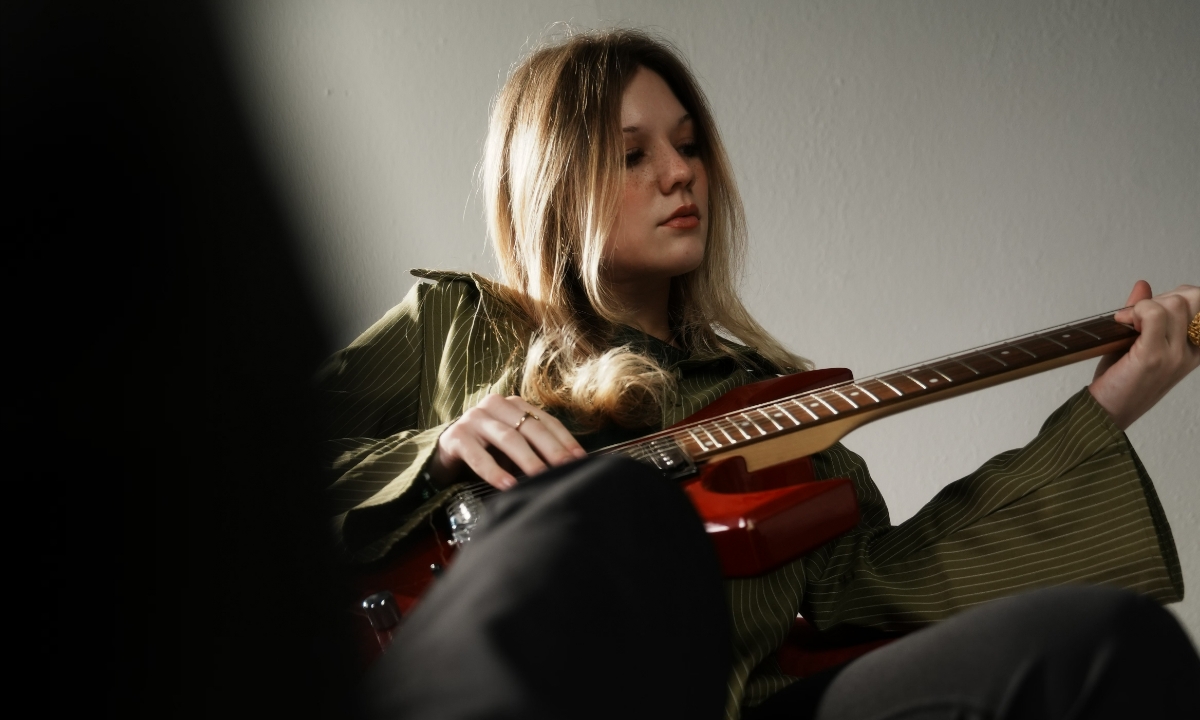
Marloma Talks Learning to Stop Writing in Isolation and Trust the Chaos
Zizzo World Is Building Momentum That’s Hard to Ignore
Yash Kapoor Wants His Records To Feel Like Moments, Not Just Music
Inside the Amazon Reinstatement Process: The aSellingSecrets Approach
Golden Bay Beach Hotel — A Luxury Beachfront Escape in Larnaca, Cyprus
Nodust Writes His Lyrics Last and That’s Exactly the Point
Finding Strength in Walking Away Is the Real Message Behind Judy Pearson’s New Single
Jason Luv Dominates Charts While Inspiring New Wave of Multi Career Artists
Harley West | Inside the Mind of a Social Media Star on the Rise
Raw Fishing | Franklin Seeber, Known As “Raww Fishing” Youtuber Story
Jordana Lajoie Transforms Montreal Roots into Hollywood Success Story
A New Hollywood Icon Emerges in Madelyn Cline
Who is Isaiah Silva – The Story Behind The Music
Tefi Valenzuela Pours Her Heart into New Song About Breaking Free
Gearshift to Stardom: Nikhael Neil’s Revolutionary Journey in the Automotive Industry
Kaia Ra | Perseverance That Built a Best-Selling Author
G FACE Releases His New Single “All up,” and It’s Fire
Holly Valentine | Social Media Influencer & Star Success Story
Kate Katzman | Breaking Into Hollywood and Embracing Change
Thara Prashad | Singer Evolves to Yoga & Mediation Superstar
Tadgh Walsh – How This Young Entrepreneur is Making a Name for Himself
King Lil G | West Coast Hip Hop Genius Rises to Face With Ease
Tefi Valenzuela Pours Her Heart into New Song About Breaking Free
Kate Katzman | Breaking Into Hollywood and Embracing Change
Holly Valentine | Social Media Influencer & Star Success Story
Kaia Ra | Perseverance That Built a Best-Selling Author
Lil Ugly Baby XXX’s “Who?” – The Mixtape to Boost Your Playlist
Samuel Chewning Explains How Fitness Should Be A Personal Journey
Trending
-
Business4 years agoJason Luv Dominates Charts While Inspiring New Wave of Multi Career Artists
-
Entertainment3 years agoHarley West | Inside the Mind of a Social Media Star on the Rise
-
Culture4 years agoRaw Fishing | Franklin Seeber, Known As “Raww Fishing” Youtuber Story
-
Culture3 years agoJordana Lajoie Transforms Montreal Roots into Hollywood Success Story
-
Culture2 years agoA New Hollywood Icon Emerges in Madelyn Cline
-
Entertainment1 year agoWho is Isaiah Silva – The Story Behind The Music
-
Entertainment3 years agoTefi Valenzuela Pours Her Heart into New Song About Breaking Free
-
Business3 years agoGearshift to Stardom: Nikhael Neil’s Revolutionary Journey in the Automotive Industry